Clarios launches Battery-as-a-Service model to reduce fleet downtime
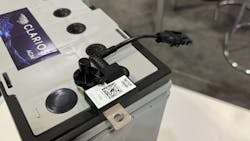
NASHVILLE—Clarios has a new subscription-based battery monitoring platform designed to help fleets predict battery failures and replace units before they cause roadside downtime.
Announced at the American Trucking Associations Technology & Maintenance Council 2026 Annual Meeting, the Battery Manager Pro solution uses sensors and cloud-based analytics to monitor battery health across a fleet remotely. When a battery approaches the end of its useful life, the system alerts the fleet and automatically arranges for a replacement battery to be delivered in advance.
This addresses a common fleet challenge: either replacing batteries prematurely, incurring additional costs and reducing the value of existing batteries, or waiting until failure, which puts vehicles at risk of roadside issues and unnecessary downtime.
Junior Barrett, global director of business development at Clarios, said the biggest benefit of this battery-as-a-service model is that “all your maintenance of batteries happens in your shop, not on the road.”
Battery Manager Pro notifies fleets up to 90 days before a battery is expected to fail, giving technicians ample time to plan a replacement during scheduled preventive maintenance. When the system recommends replacing a battery, technicians pull a unit from the fleet’s existing inventory. Clarios then ships a replacement battery.
“When we tell you to replace the battery, you pull from what’s in stock,” Barrett explained. “Then we’ll ship you one about a week later to replenish that.”
The service is structured as a fixed monthly subscription and is part of the company’s connected services portfolio.
Clarios estimates the service can save fleets roughly $500 per truck annually not only by improving battery replacement timing but also by identifying battery-related issues earlier.
“We're stopping jump starts. We're stopping issues with alternators. We're identifying starter issues,” Barrett said.
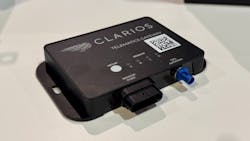
To get the monitoring system up and running, fleets will install hardware comprising four sensors, a wiring harness, and a gateway that transmits battery health data to the cloud. According to Barrett, installation typically takes about 30 to 35 minutes per vehicle.
Clarios said the service is expected to begin rolling out with its first fleet customers this month.
About the Author
 Lucas Roberto
Lucas Roberto
Lucas Roberto is a Senior Staff Writer and producer of multimedia content for Fleet Maintenance magazine. He holds a bachelor's in media production and a master's in communication from High Point University in North Carolina.