Wire repair 101: Tools and techniques
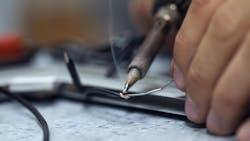
Once you’ve determined a wire can and should be repaired, the next step is making sure it’s done right. The right tools and a solid repair process are key to creating a connection that holds up to vibration, weather, and everyday wear in the field.
Tools for repair and splicing
If it is determined that repairing the wire is the best course of action, the next step is to make sure you have the right tools for the job (see sidebar).
Splicing and repair essentials
A typical wire splicing and repair loadout includes:
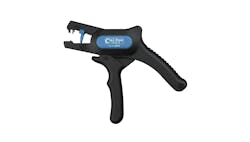
- Wire strippers: Should be self-adjusting. Must not nick strands, as damaged strands increase resistance
- Crimpers: Have a mechanical stop to avoid over-crimping, piercing heat shrink, or smashing conductors
- Soldering irons: Utilize eye protection and other PPE to avoid burns from splatter
- Solder: Never use acid-core solder on vehicle wiring.
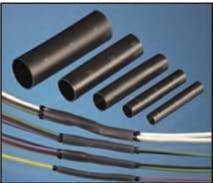
- Heat shrink: dual-wall polyolefin, adhesive barrier to seal against moisture
- Heat gun
Chuck Ralston, director of Truck Care Academy and mechanical services at Love’s Travel Stops, recommends solder and heat shrink for most repairs, but said that high-quality heat shrink crimp connectors can be used when solder and heat shrink aren’t available—if the matching crimpers are utilized.
He also noted that it’s important to keep an eye on OEM parts and guidelines.
“At Love’s, we use what we took off,” Ralston explained. “With all of our OEM partners, we have the same terminals and connectors that the vehicle used when it was new. When it comes to all other repairs of wires, soldering and heat shrink is the best method.”
These tools should also have the right features to enable tight repairs. A damaged strand has increased resistance and weakened conductivity, leading to heat buildup and failure over time. According to TMC RP 186, a wire stripper should remove insulation cleanly without nicking the conductor strands underneath. Side cutters or utility knives can scar the wire and compromise the connection.
Look for self-adjusting wire strippers that sense insulation thickness and strip only the jacket, not the copper.
Especially for non-insulated and heat-shrink connectors, use crimpers with a wider crimping surface to avoid puncturing the heat-shrink sleeve. They should also have a mechanical stop or ratcheting action to prevent over-crimping. Poor crimps reduce sealing performance and increase the risk of moisture intrusion and corrosion.
Making a durable splice
Remember the goal is to restore both mechanical strength and electrical integrity. A repaired wire must be sealed afterwards to protect against moisture, vibration damage, and accidental contact with surrounding metal, or you will be making the repair again down the line. Here are some final tips.
The American Trucking Associations’ Technology & Maintenance Council (TMC) Recommended Practice (RP) 186 on wire and cable repair is a good place to start.
Splicing for inline repairs
TMC RP 186 details the process for twist splices, which involves intertwining the existing wiring. This works well when space is limited. One common method is the J-hook. Before joining, heat-shrink should be slid onto one side of the wire. About ⅜” of insulation is stripped off each wire, taking care not to nick strands. A “J” is then formed with the ends as they are intertwined and twisted together.
Another method is the lineman splice, which is similar but strips ½” of insulation and crosses the wires over each other before intertwining. Both interlock the exposed conductors and wrap them tightly to create a strong mechanical joint. The splice should always be pull-tested for strength so vibration won’t separate the connection later.
Solder for electrical integrity
With the wires mechanically joined, solder will complete the electrical bond. The iron should be properly heated, with the tip placed against the copper, allowing solder to cover the entire area of exposed wire. It can cool naturally before sealing.
Butt connectors for controlled splices
Butt connectors are common when replacing a wire section or when a structured splice is preferred. The connector must match the wire gauge and be crimped with the correct tool so strands aren’t crushed or the insulation punctured. Each side should be pull-tested after crimping.
Seal the repair against the elements
The final step before testing, sealing turns a splice into a long-term repair. Dual-wall heat shrink is commonly used because the outer layer protects against abrasion while the inner adhesive melts to form a moisture barrier. The tubing should fully cover the repair.
A heat gun is then used to completely shrink the tubing, allowing glue to ooze out of the ends, fully sealing the repair area.
Skipping this step is a common cause of wiring failure, Ralston said, as “it causes corrosion intrusion, issues of resistance, or wire damage.”
Test the repair
Making a clean repair is only half the job—verifying that repair under real electrical load is what determines whether the fault stays fixed or ends up rolling back into the bay.
“A temporary fix restores function,” explained Kristy Coffman, director of the commercial vehicle group at Mitchell 1. “A professional repair restores integrity—mechanical strength, environmental sealing, correct conductor size, and repeatable diagnostics.”
To confirm that current is flowing, technicians should energize the circuit and measure voltage drop. “It is always important to perform a load test and a test of the appropriate signal/voltage to ensure a proper repair,” enforced Jack Tussing, advanced technical support specialist for Cojali. “Once the wires have been tested, it would also be advisable to test the component in the same real-world conditions that caused the fault code to help determine if this issue is in fact resolved.”
This is where many techs fail, as continuity does not equal a solid repair. The method of testing a repair can also depend on the application and circuit being tested.
“For a light, a simple consumer volt drop test can be performed,” said Ralston. “For higher current draw circuits, other tools may need to be used, such as a carbon pile tester.”
In any case, a wire repair isn’t finished when the splice cools; it’s finished when the circuit survives real operating conditions.
About the Author
 Lucas Roberto
Lucas Roberto
Lucas Roberto is a Senior Staff Writer and producer of multimedia content for Fleet Maintenance magazine. He holds a bachelor's in media production and a master's in communication from High Point University in North Carolina.