Aw rats! How to stop hungry rodents from taking a bite out of fleet uptime
Key Highlights
- Regularly inspect and clean vehicles to remove food and attractants that lure rodents.
- Use physical barriers such as sealed vehicle covers to prevent rodents from accessing wiring and engine compartments.
- Avoid relying solely on traps, bait, or scent deterrents, as rodents can adapt or be attracted to carcasses and bait residues.
- Maintain a clean parking lot environment by removing trash and avoiding landscaping that attracts rodents, like fruit or nut trees.
- Implement routine vehicle movement and minimal idling to disturb rodent nesting habits and reduce infestation risks.
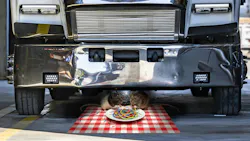
A parking lot filled with fleet vehicles is like a luxury condominium complex for rodents. Not only are there dry and warm engine compartments and glove boxes to nest in, but the complex also comes with dental amenities in the form of endless feet of wires to gnaw. Rodent damage to vehicles and the cost has increased over the years as replacement parts and labor costs for vehicle repairs continue to rise. Add to this the complexity of meeting tight schedules dependent on the vehicle availability, and the problem magnifies.
The problem is only getting worse. According to a recent study published in the journal Science, 69% of cities studied, including Washington, D.C., San Francisco, New York City, Oakland, Buffalo, Chicago, Boston, Kansas City, and Cincinnati, had significant increases in rat populations in the period studied. Warmer temperatures extending breeding seasons and growing populations in cities are just two of the factors contributing to more rats, and more rodent problems for fleet managers.
Controlling rodent damage starts with good habits
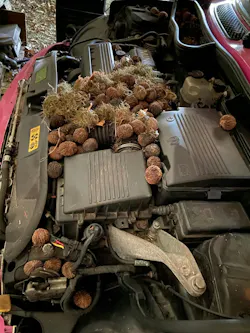
Due to the increase in rodent related claims in recent years, more insurance companies are excluding rodent damage from the comprehensive claim coverage than there were 5 years ago. This means fleets need to be even more vigilant at protecting vehicles from rodents. This can start with a few basic maintenance habits.
- Don’t store food in the car that could attract rodents and park them 50 yards away from garbage cans. When vehicles are returned to the storage lot at the end of a shift or end of the day, they should be checked for food and wrappers.
- Move vehicles routinely. While not a fool-proof way to keep rodents from invading a vehicle, regularly moving vehicles or running them for a few minutes (avoid allowing the engine to get warm) can disturb rodents and force them to find a quieter, less mobile place to nest.
- Keep parking lots clean and free of trash and food scraps that can attract rodents. Avoid planting landscaping that can also attract rodents like fruit or nut trees.
How some methods make infestations worse
It is natural to think that solving a rodent problem should start with traps and poison to keep populations in check. However, setting traps and using rodent bait can make infestation problems even worse. Can rodent traps catch rats and mice? Yes. But rodents are cannibals, so a dead mouse is also food for its brethren, and one caught in a trap for a few hours can smell like a delicious meal to other rodents. Rodent bait can also be effective. Rodents will eat it and die from the poison. But there are downsides to this method. Animals like hawks, owls, and cats can ingest poisoned dying rodents and similarly get poisoned. When they die nearby, rodents are attracted to the carcass, and the cycle continues.
Internet hacks: A temporary fix
Irish Spring soap flakes, mothballs, peppermint oil, feline spray, and dryer sheets are all rumored to be effective methods of deterring rodents on online forums. But they must be reapplied after a period, and a vehicle must be covered in the scent for it to work as a holistic method of protection. Spraying a few spritzes in the engine compartment is not going to do anything to protect the wiring harness that runs the length of the car. Also, rodents live in sewers and garbage dumps, which are some of the worst-smelling places on earth, and they thrive there. They quickly get used to bad smells.
Noisemakers and strobe lights are also often recommended as a line of defense. In 2014, the University of Arizona published a paper that added more evidence to a growing body of studies on the effectiveness of these devices. Their conclusion was that they were “not effective”. Another study conducted in 2002 for the Journal of Agricultural and Urban Entomology found them to decrease the amount of rodent presence for 2 to 3 weeks before the rodents became used to the environment.
What does work?
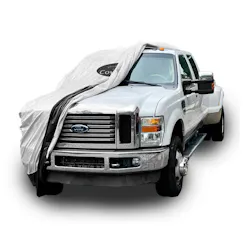
Keeping vehicle interiors clean and free of food or other rodent attractants is step one. Well-placed traps can cut down the available infestation population, but they need to be checked and cleaned regularly to avoid simply attracting more rodents. A physical barrier is the best option for limiting rodent damage to fleets. Parking in a garage can reduce access points for larger rodents, but mice can still be a problem. A weighted vehicle cover, like CoverSeal, completely covers a vehicle and has a weighted ring sewn into the base of the cover that encircles the car or truck and seals to the ground. Rats and mice are unable to lift the cover, effectively blocking their access to it. Other cover options enclose vehicles within a sealed bag. These are costly, hard to get the vehicle in/out of, and create concerns for mold growth and the buildup of fumes from the battery, oil, brake, and power steering fluids.
There is no guaranteed method for preventing all rodent damage. Protecting fleets from rodent damage is an ongoing challenge. But taking preventative steps can help mitigate risks and, most importantly, reduce costly repair bills.
About the Author
Ken Huening
Ken Huening is the inventor and CEO of CoverSeal. An avid collector of exotic and classic vehicles, Ken has experienced rodent damage on more than one occasion. To his dismay, most solutions on the market to deter rodents were either impractical or ineffective. He created CoverSeal as an easy and complete protection solution. For more information, visit www.getcoverseal.com and use promo code COVER24 for 15% off orders.