Roadcheck readiness: A practical guide to vehicle cleaning and inspection prep
Key Highlights
- Regular cleaning helps fleet operators spot leaks, corrosion, and damaged parts early, preventing costly repairs and violations.
- Cleaning the wheels, undercarriage, and lights improves visibility for inspections and maintenance tasks, especially for tire and brake checks.
- Integrating vehicle washes with routine inspections ensures issues are identified and addressed promptly, supporting safety and compliance.
- A consistent cleaning schedule tailored to operating environments enhances vehicle readiness and reduces last-minute inspection stress.
- Proper documentation, combined with cleaning and inspections, ensures compliance and facilitates quick responses to roadside checks.
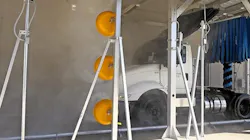
For fleet operators, roadcheck prep usually brings to mind brake checks, tire inspection, cargo securement, the paperwork pile, and routine preventive maintenance. Most people treat vehicle cleaning as a side task. It can feel more about appearance than safety.
In practice, a clean vehicle is easier to monitor and inspect. It is also simpler to service and
keep track of over time. Dirt, road grime, grease, mud, and stuck debris build up quickly. That kind of mess can hide a small fluid leak, a worn or broken part, early corrosion, or other issues that should be caught early.
Washing a vehicle does not, by itself, make it meet any rules. Still, proper cleaning can help you spot risks sooner. Those risks have less chance of turning into failed inspections.
2026 Roadcheck results
The Commercial Vehicle Safety Alliance’s 2026 International Roadcheck included 54,575 commercial motor vehicle and driver inspections across North America. Inspectors placed 10,350 vehicles or combinations (19%) and 3,184 drivers (5.8%) out of service.
Of the 44,047 Level I, II, and V vehicle inspections, 23.5% resulted in an out-of-service vehicle or combination. Inspectors identified 13,924 vehicle out-of-service violations.
Top five vehicle out-of-service violations:
- Brake systems: 3,379 (24.3%)
- Tires: 2,914 (20.9%)
- 20% defective brakes: 2,072 (14.9%)
- Cargo securement: 1,724 (12.4%)
- Lights: 1,659 (11.9%)
Cargo securement was the 2026 vehicle inspection focus, accounting for 1,724 out-of-service violations and ranking fourth among vehicle violations.
What does roadcheck actually look at?
The Commercial Vehicle Safety Alliance’s (CVSA) International Roadcheck is a three-day inspection and enforcement initiative covering commercial motor vehicles, drivers, and cargo throughout North America. The primary inspection is the North American Standard Level I Inspection, a 37-step procedure that examines both driver requirements and vehicle mechanical fitness.
Vehicle inspections can cover a wide range of components, including:
- Brake systems
- Tires and wheels
- Cargo securement
- Coupling devices
- Steering and suspension
- Lighting devices
- Fuel and exhaust systems
- Frames
- Driveline and driveshaft components
- Windshield wipers
The exact areas getting more focus can shift each year. In 2026, for example, CVSA selected cargo securement as the vehicle focus. At the same time, ELD tampering, falsification, or manipulation was the driver topic.
The takeaway for fleet managers is simple: Roadcheck should not turn into a last-minute rush a few days ahead of the event. A better way is to keep trucks and other vehicles ready for inspection year-round.
Cleaning can help support that approach.
Why vehicle cleaning belongs in inspection preparation
Nobody expects an inspector to judge a truck simply because it has picked up dirt on the highway. Commercial vehicles work in demanding environments, and a certain amount of grime is inevitable.
The issue is what the grime can hide.
Dirt builds up in places most people do not notice. Oil, grease, mud, and road salt can collect on parts and under the vehicle. When buildup gets thick, a new leak or a worn part may not stand out. Corrosion and other damage can also be difficult to notice. A regular wash helps restore visibility.
It is like wiping a windshield before you check for issues. A wash does not solve the root cause on its own. Still, it helps drivers and service technicians spot what is going on. For people who manage fleets, this matters most when washing is scheduled alongside routine checks. If it is done at the same time, it is less of a standalone chore.
Commercial vehicles can benefit from establishing a consistent washing routine based on vehicle type. Large vehicles that operate through construction areas, winter conditions, or muddy roads may require more frequent cleaning than vehicles operating primarily in dry conditions.
What should a pre-roadcheck cleaning include?
A roadcheck prep wash does not have to be an elaborate detailing session. The objective is visibility, cleanliness, and access to areas that need inspection.
1. Start with the exterior
Remove accumulated dirt and road film from the body, cab, trailer, and other exterior surfaces. Pay particular attention to areas where grime tends to collect. A clean exterior makes it easier to identify obvious damage, loose components, corrosion, or problems with lights, etc.
2. Pay attention to wheels and tires
Rims and tires need more than a quick water splash. Remove mud and heavy buildup so technicians and drivers can easily examine tread, sidewalls, wheels, and related components. When the wheel area is clean, it also helps prevent dirt and debris from interfering with routine maintenance work. This matters a lot when wheels or lug nuts need to be removed.
This still does not replace checking tire pressure, measuring tread depth, or doing a real mechanical review. It simply makes the visual portion of that inspection easier. This is important because tires remain a major roadcheck concern. In the 2026 results, tire violations accounted for 20.9% of vehicle out-of-service violations in North America. Brake-related violations were even more significant.
3. Clean around the undercarriage when appropriate
The underside of a commercial vehicle can collect an impressive amount of grime. If the right vehicle lift and/or the right wash method are used, you can also clean the undercarriage. This helps remove dirt and road salt from spots that are checked during service. Technicians can notice leaks, early rust, or parts that look bent or worn.
4. Keep lights and visibility components clear
Headlights, taillights, marker lights, reflectors, and other visibility equipment should be inspected for proper condition and operation. Cleaning is particularly useful when dirt, mud, or road film has accumulated over lighting surfaces. A clean light needs to work properly, but a dirty one can make an otherwise straightforward visual check more difficult.
5. Don’t forget the cab and driver area
Inspection preparation isn’t only about what happens underneath the truck. Drivers should also have required documents and records organized and readily available. The cab should be orderly enough that important information can be accessed without a last-minute search. You may also get the vehicle washed during the same visit.
Build cleaning into the fleet’s normal maintenance rhythm
A common error is treating roadcheck like a one-time job. Fleet teams should set a consistent wash plan that fits each vehicle. Mileage and operating environment matter, too. For big fleets, it can be easier to use a commercial wash plan. That can keep the work steady and on schedule.
A simple routine could look like this:
- Daily: Drivers perform the required pre- and post-trip inspections and report any defects or unusual conditions.
- Weekly or according to operating conditions: Vehicles receive a more thorough cleaning, particularly around wheels, lights, body surfaces, and areas prone to heavy buildup.
- Before scheduled maintenance: Review clean vehicles or affected components where practical so that technicians can work with better visibility.
- Several weeks before a major inspection event: Review maintenance records, inspection reports, repair histories, and outstanding defects. Increase attention to vehicles with recurring issues.
- Immediately before dispatch: Complete the normal pre-trip inspection rather than relying on the fact that the vehicle was recently washed or serviced.
The important distinction is that washing and inspection should complement one another, not replace one another
Pair cleaning with a mechanical inspection
Federal guidance calls for systematic inspection, repair, and maintenance of commercial motor vehicles to keep them in safe operating condition.
Once the vehicle’s clean, technicians zero in on parts that really count for safety and compliance. Things like brakes, tires, wheels, suspension, steering, lights, coupling devices, cargo securement, fuel and exhaust systems, and anything else that applies. Honestly, the real benefits of thorough cleaning jump out when you’re looking for signs of trouble. Take leaks, for example. Spotting a fresh fluid trail on a clean surface is a lot easier than hunting through layers of grime. Same goes for finding corrosion, cracks, or damaged lines.
This is exactly why cleaning isn’t just for looks. It actually backs up your preventive maintenance.
Don’t let cleaning create a false sense of security
There is an important caveat here: a clean truck is not necessarily a safe truck.
A polished exterior cannot compensate for worn brake components, underinflated tires, unsecured cargo, defective lighting, or missing documentation.
It is easy to fall into the trap of thinking that a vehicle looks “ready” because it has just come out of the wash. Roadside inspectors are evaluating safety and compliance, not showroom appearance.
The right sequence is therefore:
Clean → Inspect → Repair → Document → Reinspect
If cleaning reveals a leak, damaged light, corrosion, or another concern, stop treating it as a cosmetic issue! Have the condition evaluated and repaired according to the fleet’s maintenance procedures.
Likewise, if a mechanic identifies a defect during inspection, make sure the repair is properly documented and that the vehicle is reinspected before returning to service when required
A simple roadcheck readiness checklist
Fleet managers can make preparations easier by combining cleaning and inspection tasks into one repeatable process.
Vehicle condition:
- Wash exterior surfaces and remove heavy road grime
- Clean wheels and tires
- Remove buildup from areas requiring visual inspection
- Check for visible fluid leaks
- Look for corrosion or damaged components
- Clean headlights, taillights, and marker lights
- Inspect windshield, wipers, and washer system
- Check mirrors and other visibility equipment
Mechanical inspection:
- Inspect brake systems
- Check tire pressure, tread, and sidewalls
- Examine wheels, rims, and lug nuts
- Inspect suspension and steering components
- Check coupling devices
- Examine fuel and exhaust systems
- Inspect frame and visible structural components
- Verify required lights and electrical components operate correctly
Cargo:
- Verify cargo is properly secured
- Inspect tie-downs, chains, straps, and other securement devices
- Check that doors and other load-containment components are properly secured
Documentation and driver readiness:
- Review required driver credentials
- Verify inspection and maintenance records
- Review outstanding defects and completed repairs
- Confirm required hours-of-service
- Make sure drivers understand the current inspection focus areas
Make inspection readiness a year-round habit
The best roadcheck strategy is not to prepare for roadcheck; it’s to keep your fleet ready for inspection every single day, whether it’s a random Tuesday in February, a soggy Thursday in October, or any other day an inspector stops to look at the vehicle.
That’s all about sticking to scheduled maintenance, making sure drivers do their inspections every time, keeping paperwork up to date, and fixing problems as soon as they pop up. Not only do clean trucks look better, but it’s easier to spot issues when you’re not looking past a layer of grime.
The 2026 International Roadcheck results prove why a broader approach matters. The results showed 44,047 Level I, II, and V vehicle inspections, with 10,350 vehicles or combinations placed out of service. Top violations included brake systems, tires, cargo securement, and lights.
Just washing schedules cannot eliminate those mechanical risks. But a fleet that is routinely cleaned, inspected, maintained, and documented is in a much stronger position to identify problems before they become roadside injuries.
About the Author
 Jordan McDowell
Jordan McDowell
Jordan McDowell is a writer and content strategist. He specializes in technically-oriented B2B and B2C content and writes for companies like NS Corporation.