Corrosion denied by Accuride’s ProShield XGT coating
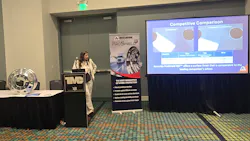
As commercial vehicles roll down the road, they face an increasing amount of harsh de-icing chemicals, along with rocks and other debris. At best, their shiny exterior will look dirty and less lustrous, and at worst, will succumb to small fissures that invite filiform corrosion to spread across the surface. This type of corrosion feeds off moisture and oxygen and branches out like toxic roots across organic-coated steel and aluminum surfaces. A proprietary new coating from Accuride called ProShield XGT (eXtended Gloss Technology) promises to curb that growth before it gets a foothold.
“Pro Shield XGT is the sort of enemy of filiform corrosion,” explained Jayne Orr, Senior VP of Sales at Accuride, who announced the coating at the Technology & Maintenance Council's 2026 Annual Meeting. “It isn't just a coating; it's a patent-pending metal conversion process that bonds directly with the aluminum microstructure. So that's a fancy way of saying it becomes part of the wheel itself.”
This also means if the wheel is damaged, the coating’s properties will remain intact.
Aside from stopping filiform corrosion, the coating’s hydrophobic properties resist all manner of unwelcome dirt, grime, and oil, allowing the wheels to become squeaky clean with only soap and water.
More specially, XGT provides triple-layer protetection, defending against mechanical, thermal, and chemical damage.
Mechanical: chip-resistant surface, with a 95H hardness rating, that reflects gravel and road debris
Thermal: The gloss holds up against heat up to 400 degrees F, so even high-heat environments and heavy breaking will not dull the wheel
Chemical: Resists acids, bases, oils, fuels, brake fluids, and harsh road salts
Orr, a 27-year veteran of Accuride, said the coating is so resistant that the company had to develop a new type of glue to get the XGT label to stick to the wheel.
ProShield, produced at Accuride’s Erie, Pennsylvania plant, will be available in Q2 2026, first for part nos. 43644XGT and 42362XGT. By the end of June, Accuride expects availability for sizes 19.5”, 22.5” and 24.5”.
Torture tested; fleet approved
Orr explained that the chemical composition of the snow and ice melt products used by municipal fleets to keep roads safe “are more aggressive than they used to be.” Truck and trailer operators relayed this to Accuride and the company set out to develop a product that would “redefine durability, resilience and performance in the harshest environments.”
Once they found the right formula, “we basically put Pro Shield XGT through boot camp,” Orr said. “We intentionally damaged [the XGT-coated wheels] all the way down to the base metal, because if we didn't do it, the real world definitely would. Then we threw them into 80 cycles of temperature swings, humidity, drying, and then a delightful chemical cocktail featuring magnesium, calcium, sodium, potassium fluoride—in other words, the world's worst Martini.”
This simulated eight years of abuse and the coating held up where other failed, Orr said.
To test the mechanical toughness, Accuride used a gravelomoter, a machine that pelts the wheel with small rocks. It passed that gauntlet and the temperature test that followed. Finally, the engineers poured diesel fuel, motor oil and all manner of solvents.
After all this, the aluminum wheels could still be cleaned with just soap and water.
For nearly 12 months, fleets have been running the wheels and reports so far are positive, Orr noted. Accuride is preparing to do another 1-year test with the fleets to verify durability.
As of now, Accuride is confident the XGT coating is a real breakthrough that will save fleets from spending time and sweat scrubbing wheels and allowing tractor-trailers to have more road time—and look good doing it.
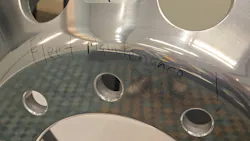
Orr did invite the media at the press briefing to write on the wheel with a Sharpie, and the permanent marker barely adhered to the wheel, and could be wiped off with little effort. In our opinion, ProShield XGT does seem to be a permanent solution to the ever-present problem of corrosion.
“It's rare that, you know, you get to say we reinvented the wheel, but we actually reinvented the wheel coating,” Orr asserted.
About the Author
 John Hitch
John Hitch
Editor-in-chief, Fleet Maintenance
John Hitch is the award-winning editor-in-chief of Fleet Maintenance, where his mission is to provide maintenance leaders and technicians with the the latest information on tools, strategies, and best practices to keep their fleets' commercial vehicles moving.
He is based out of Cleveland, Ohio, and has worked in the B2B journalism space for more than a decade. Hitch was previously senior editor for FleetOwner and before that was technology editor for IndustryWeek, and managing editor of New Equipment Digest.
Hitch graduated from Kent State University and was editor of the student magazine The Burr in 2009.
The former sonar technician served honorably aboard the fast-attack submarine USS Oklahoma City (SSN-723), where he participated in counter-drug ops, an under-ice expedition, and other missions he's not allowed to talk about for several more decades.