Essential tire inflation equipment technicians need for safe truck maintenance

Commercial tire technicians can improve inflation safety and accuracy with proper gauges, clip-on chucks, and inflation equipment.

Key Highlights

  • Technicians need accurate air gauges and inflate-thru valve caps for effective tire pressure maintenance.
  • Clip-on chucks and in-line pressure controls help technicians adjust tire pressure safely and accurately.
  • Proper hose length keeps technicians outside the tire’s sidewall trajectory during inflation.
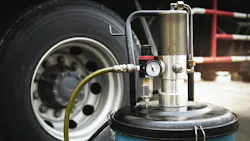
Proper tire inflation is vital to both controlling tire costs and keeping fleet equipment on the go, according to Kevin Rohlwing, the SVP of training for the Tire Industry Association (TIA), in a recent article for FleetOwner’s July magazine.

Vital equipment for commercial truck tire inflation

Rohlwing claims fleets need two pieces of equipment to support a successful inflation-pressure maintenance program.

  1. All tires need an inflate-thru valve cap. This allows technicians to monitor and adjust tire pressure without additionally needing to remove and reinstall the valve cap.
  2. A quality air gauge is also important. The price and manufacturer don’t matter as long as the air gauge is accurate. To ensure accuracy, technicians can use an inflation gauge check station with a dial gauge. This allows the pressure on the handheld gauge to be double-checked quickly. 

Adjusting truck tire inflation safely

For adjusting inflation pressure, Rohlwing recommends the following tools and equipment that help technicians and meet all regulatory requirements from the Occupational Safety and Health Administration (OSHA):

  • An inflation device with a clip-on air chuck. This allows technicians to temporarily attach the chuck to the valve stem instead of having to hold it. 
  • The inflation device must have an in-line valve with a pressure gauge or presettable pressure regulator. The in-line valve helps technicians control airflow, and the pressure gauge allows techs to conduct a pressure check without needing to remove the clip-on air chuck. 
  • A sufficient length of hose is needed between the clip-on chuck, in-line valve, or the regulator. This is to keep technicians outside of the sidewall’s trajectory during inflation. Most devices have hoses that are 6 or 10 feet long. 

You can read the original article from Rohlwing and FleetOwner, a Fleet Maintenance affiliate publication, here.

About the Author

Kevin Rohlwing

Kevin Rohlwing

Senior Vice President of Training

Kevin Rohlwing is the Senior Vice President of Training for the Tire Industry Association (TIA). He started in the tire business more than 32 years ago as a technician in his family’s dealership in Elgin, Illinois, where he also worked as a salesman and service manager.

In 1996, he joined the International Tire and Rubber Association (ITRA), the predecessor of TIA, as the Director of Commercial Tire Service. Kevin created and produced the Association’s training and certification programs that have educated more than 90,000 technicians since 1997.

In 2011, he was awarded the Silver Spark Plug for excellence in fleet maintenance from the Technology and Maintenance Council of the American Trucking Assns.

Sign up for our eNewsletters
Get the latest news and updates