NACFE releases new guidance on idle reduction technologies

For the first time in more than a decade, the North American Council for Freight Efficiency (NACFE) has released a comprehensive report on idle reduction. The free downloadable confidence report, The Idle-Reduction Playbook: Operational Strategies for Modern Trucking Fleets, is a follow-up to NACFE’s 2014 initial study and details how fleets are using various fuel-saving equipment while the Class 8 truck, typically a sleeper, is idling.
The non-profit noted a Class 8 truck idling for six to eight hours per day burns up to 1,800 gallons annually. At the same time, fleets have to keep their drivers safe and comfortable during their off-duty hours. Managing what methods will do this most effectively depends on several operational variables. According to NACFE, this report helps contextualize the variables and challenges to provide a practical way to reduce idle time.
The researchers assigned ROI estimates and testing guidance for a variety of options, including:
- Diesel APUs
- Electric APUs
- Fuel-operated Heaters
- Fuel-operated Coolant Heater
- Intelligent Engine Management Systems
- Thermal Management Systems
- Vehicle Controls & Driver Behavior
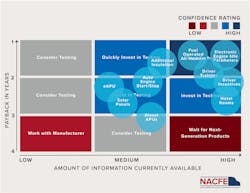
Fuel-operated heaters and electronic engine idle parameters had the highest level of confidence for the amount of time and money invested. NACFE also advises fleets monitor idle time and implement training for drivers while also incentivizing them to idle less.
“Fleets should take a holistic approach to deploying idle reduction strategies. The most effective programs usually combine operational policies, driver engagement, and technology,” says Dean Bushey, NACFE’s director of programs and lead author of the report.
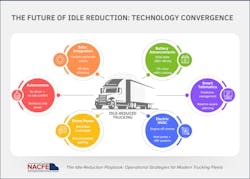
The report also looks to the future, covering the next wave of idle-less tech, including plugging into shore power at truck stops and using autonomous vehicles, which circumvent the need to for hours of service breaks.