As CARB plans more emissions checks, telematics provides automated solution
Key Highlights
- Clean Truck Checks in California will double from two to four annually starting October 1, 2027.
- Zonar's V4 telematics device enables remote, CARB-approved emissions testing, reducing vehicle downtime and operational disruptions.
- Early fault detection through telematics helps fleets address issues proactively, avoiding penalties and costly repairs.
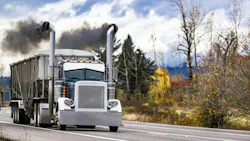
Commercial truck operators in California have one year before the state's Clean Truck Check (CTC) doubles from two emissions compliance checks a year to four. The new interval frequency begins Oct. 1, 2027, and applies to heavy-duty diesel vehicles (>14,000 lb. GVWR). Operators have up to 90 days to complete each required check. Non-compliance will result in California Air Resource Board fines ranging from $1,000 to more than $10,000 per day.
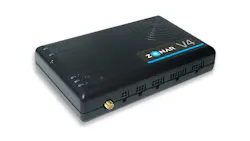
Tests can be done at a CARB-credentialed tester or by having a mobile test done on-site. For fleets already pressured to ensure assets stay moving while managing planned and unplanned maintenance demands, this adds an additional stressor. A telematics solution from Zonar using the company’s V4 control unit can remove much of the hassle by enabling a remote test. It was the first CARB-approved telematics solution for CTC OBD testing and removes downtime from the equation.
Other telematics provider with CARB-certified solutions include:
- Geotab
- Motive
- Pacific Track
- Samsara
- Verizon Connect
The V4 device connects to the vehicle’s engine and onboard diagnostics system and is able to remotely perform the required emissions scan regardless of where the vehicle is operating. Based on the registered asset’s VIN, the Zonar software determines the compliance window and sends the required data to CARB. CARB then returns a pass/fail result, which Zonar records and provides to the fleet.
"We automatically start doing the check at the beginning of the 30-day window," explained Rachel Trindale, chief marketing officer with Zonar. "So, if there are any problems, they have time to actually address that, and they don't ever have to get off the road."
Critically, the system serves as an early warning system to stay compliant and avoid penalties.
“You have 90 days to pass a test before your deadline,” noted Tehan Jansz, product marketing specialist at Zonar. “If your vehicle is entering into that compliance window with a fault, like a check engine light, very likely, almost certainly, you will fail a CARB emissions CTC scan.”
The telematics data gives fleets “a heads up” by providing the fault code data and likely cause with enough advance notice to resolve the issue, he added.
CARB charges a $32 annual fee, but the extra costs add up quickly.
“We've talked to some companies that are saying it's about $200 for them every time they have to do the check,” Trindale said, noting the driver will also have to stop at an in-house or outside repair shop and wait for the test and approval process. “[Considering] all the dispatch work that has to go into that, it can be pretty costly for people.”
Trindale also noted that CTC still applies to out-of-state trucks, even though the EPA tried to weaken CARB’s purview.
“Back in January, the EPA did a partial disapproval of California's treatments of out-of-state trucks,” she explained. “However, California is still enforcing it, and it's still under judicial review, so basically, you can still feel the penalties of it if you don't comply.”
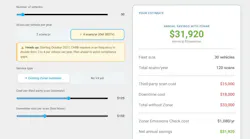
If a vehicle has an emissions-related fault code, Zonar can identify it through the telematics system and alert the fleet. That gives maintenance personnel time to investigate and repair the issue before the vehicle reaches its compliance deadline.
That can also help fleets prioritize repairs across a larger group of vehicles.
A fleet manager could pull up a report of vehicles with emissions faults, see which ones have upcoming CTC deadlines, and find time for those repairs in scheduled maintenance. Instead of waiting until a truck fails a check, the fleet can address the problem while the vehicle is already in the shop.
Zonar also has integrations with maintenance platforms, allowing diagnostic information to be connected with other repair data.
The company said this can be particularly useful for school bus fleets, which may have dozens or hundreds of vehicles operating from the same yard. Rather than bringing in a third party to test groups of buses as their individual compliance windows arrive, the telematics system can handle the scan while the buses are operating their normal routes.
The company said automated monitoring can instead be incorporated into its telematics service for about $5 per month.
As CTC moves to four checks a year, the difference between occasional testing and having emissions information available all the time will become even more noticeable.
“We’re moving more towards just continuous testing, essentially,” Trindale said.
About the Author
 Lucas Roberto
Lucas Roberto
Lucas Roberto is a Senior Staff Writer and producer of multimedia content for Fleet Maintenance magazine. He holds a bachelor's in media production and a master's in communication from High Point University in North Carolina.