OEMs and aftermarket clash over competing Right-to-Repair bills
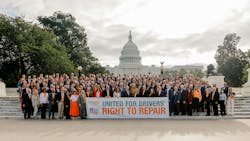
The Right to Repair debate has entered a new phase in Washington, and this time it’s less about wrenches and more about data. What was once a dispute over access to service manuals and diagnostic tools now takes telematics, software controls, and cybersecurity into consideration.
Two competing proposals—the REPAIR (Right to Equitable and Professional Auto Industry Repair) Act and the SAFE (Safety as First Emphasis) Repair Act—both promise to protect consumer choice and preserve competition. But they differ on how repair access should be structured, how vehicle-generated data should be handled, and where to draw the line between open access and intellectual property protection.
REPAIR Act at a glance
- Requires OEMs to provide owners and independent repairers equal access to vehicle data, repair information, and tools
- Prohibits technical or legal barriers that restrict diagnosis, repair, or maintenance outside OEM-authorized networks
- Protects the right to choose repair facilities and aftermarket parts
- Prevents OEMs from mandating specific brands of parts, tools, or equipment
- Protects competition in the aftermarket for parts, tools, and diagnostic equipment
- Establishes strict limits on how vehicle-generated data may be used, shared, or retained
- Allows de-identified vehicle data to be used for research and development under defined safeguards
SAFE Repair Act at a glance
- Ensures customers and shops have access to data and tools needed to properly diagnose and repair
- Allows customers to choose repair location and insist OEM-recommended repairs are followed
- Empowers repairers to follow OEM procedures
- Promotes regular safety inspections and post-collision repair inspections
- Increases consumer choice in aftermarket parts
- Applies OEM part safety and recall rules to aftermarket, with clear disclosures of prior alterations or repairs when selling used vehicles
- Establishes guardrails around data privacy and cybersecurity
The case for the REPAIR Act
The REPAIR Act was first introduced in 2022 as H.R. 6570, and reintroduced in February 2023 (H.R. 906), then again last April (H.R. 1566). The latest iteration has more bipartisan co-sponsors—43 to 16—and has been tweaked to include more IP protection and other concessions, but still waits in the House Committee on Energy and Commerce. The Senate version, S. 1379, was also referred to the Committee on Commerce, Science, and Transportation last April.
Time is of the essence, REPAIR Act proponents insist, as vehicles are getting more sensors and more connected every model year.
“What we try to explain to lawmakers is that we’re just seeing the beginning of these [modern vehicles] coming out of warranty now,” explained Lisa Foshee, SVP of government affairs and the general counsel for the Auto Care Association. “And if you don’t obligate the manufacturers to provide this repair and maintenance data, it is going to be like Pandora’s box, because the way the manufacturing cycles work, we’re not going to be able to get it five years from now, if you don’t require them to do it now.”
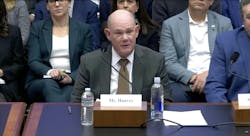
There’s no indication Congress has the same urgency, but headway was made Jan. 13 when the House Subcommittee on Commerce, Manufacturing, and Trade heard from experts on 16 bills involving technology, safety, and right to repair.
Bill Hanvey, the ACA’s CEO and president, represented the aftermarket side, which has been championing R2R for many years. Hilary Cain, SVP of policy for the Alliance for Automotive Innovation, spoke on behalf of the SAFE Repair Act. They also fielded questions on other issues such as autonomous vehicles and catalytic converter theft.
In his testimony, Hanvey argued that indie shops don’t have the access to the data they were promised and it’s costing the customer.
“Vehicle manufacturers are increasingly restricting access to critical repair and maintenance data to owners and independent repair shops, forcing vehicle owners into franchise dealer repair facilities, where costs are, on average, 36% higher and repair wait times are significantly longer,” he testified.
For a business relying on commercial vehicles, like a plumber, three days of downtime means “three days of lost productivity and many disgruntled customers,” he said.
In addition, the executive also cited a 2024 ACA study of indie shops that found one in five repairs are sent to dealers “due to repair data restrictions, costing consumers upwards of $3 billion in added repair expenses.”
He gave examples such as one vehicle needing to be placed in dealer service mode to swap windshield wipers, while in another case, during a battery changeout on a new model, a dealer code was needed to reset the Electric Control Module.
More than half of indie shops surveyed by ACA said they send one to five vehicles to dealers for repairs every month.
All-makes tools have to work with each OEM’s “non-standardized methods of getting to the security systems,” and with fixed innovation budgets, aftermarket developers have to “pick and choose” what they can and cannot access, offered Ben Johnson, VP of general automotive repair segment for Repairify, a provider of diagnostic and ADAS calibration tools.
That leads to some makes and models being left out.
Sometimes auto makers do give enough access, and sometimes not enough to get into security-enabled modules, explained Johnson.
“If you pass the gate, you can get into any make and model and get to whatever you needed to get,” he said. The most reliable way to do this is buy the OE-specific tool, which can cost $2,000. Johnson noted all-makes shops can’t afford to buy 22 different versions. “It becomes pretty unrealistic to expect them to be able to do that,” he said.
Johnson said generally the auto side is good about compliance, though mentioned some European brands are “awful” in this regard.
Fleets and commercial shops have a tougher time.
“As far as I know, it’s been very difficult to get a non-dealer shop access to OE diagnostic tools in that commercial side,” he said.
Hanvey asserted why accessibility and supply chain integrity are crucial reasons to pass the REPAIR Act. Hanvey also noted there are 235,000 independent shops “on the corner of every Elm and Main Street of every town in this country,” versus 17,000 authorized dealers. These are far more accessible and available, especially to rural customers who might drive 100 miles to buy a vehicle but not to get it maintained.
Foshee agreed.
“If you’re hauling medical supplies across Nebraska and your truck breaks down, you can’t have it towed three hours to get to the nearest dealership,” she said.
Sources we interviewed also agreed data is being gatekept.
“[The OEMs are] shutting down key access to complete the repair,” insisted Shari Pheasant, who co-owns a 12-bay shop in Sparks, Nevada, called A Master Mechanic with her husband Jeff. They service a 60/40 split of consumer to fleet customers, and she said sometimes their diagnostic technicians “get about 75 to 80% of the way through” before the scan tool says a dealer code is needed to complete the repair. The shop must then send the vehicle to a dealership.
“And our dealerships are two months out [for service] right now,” added Pheasant, who was named 2025 Female Shop Owner of the Year by Women in Auto Care, an ACA offshoot.
While keeping some data from shop technicians, Hanvey alleged the OEMs “monetize [their telematics] data by selling it to third parties like insurance companies, ticket sellers, coffee shops and fast-food restaurants, or anyone else willing to pay for it.”
The case for SAFE Repair Act
While REPAIR Act proponents say they are working in the best interest of indie repairers, the Automotive Service Association, which comprises thousands of independent repair shops, helped author the SAFE Repair bill. All three signed the 2023 agreement to keep the 2014 data-sharing policy in place with OEMs.
At the hearing, Rep. Tom Kean, Jr. (R-N.J.), submitted the testimony of a few shop owners opposed to the aftermarket bill, including a letter from Gerald "Jerry" McNee.
![“Repair decisions should be guided by safety and technical requirements, not [insurance] reimbursement formulas,' said Hilary Cain, SVP of policy, Alliance for Automotive Innovation.](https://img.fleetmaintenance.com/files/base/ebm/fm/image/2026/02/699dbe4726e02672f1e97345-hilary_headshot.png?auto=format,compress&fit=max&q=45?w=250&width=250)
“The REPAIR Act doesn’t provide independent shops like mine with anything we don’t already have to properly fix your vehicle,” wrote McNee, a member of the SCRS. He noted his shop invests in all the tools and training needed to safely repair vehicles to OEM standards.
“The idea that independent repairers are being ‘locked out’ by automakers is not true,” he added, calling the lack of access a “myth” propagated by special interests such as large insurance companies and corporations that profit off alternative parts sales. He wrote the SAFE Repair Act, conversely, ensures access to info, tools, and training, while addressing the “real challenges” that customers and small shops endure, while supporting shops that “refuse to cut corners.”
According to Cain’s testimony, besides providing only the necessary diagnostics and repair data to consumers and indie shops, the SAFE Repair Act would ensure customers can choose between OEM and aftermarket parts, keep insurance companies from deciding where and how repairs are done, safeguard IP, and strengthen cybersecurity.
She noted in her written testimony that the SAFE Repair Act “does not limit repair access or favor franchise dealers over independent repair shops.”
This version would also provide parts transparency, the former director of innovation for Toyota argued.
The SAFE Repair Act, as explained by Cain, would also benefit potential vehicle buyers by notifying them via a repair history report of any “prior repairs, alterations, or deviations” contrary to OEM recommendations.
That is something Cain alleged happens today. In some instances, she said a safety system failed after repair because the shop skipped a step or used a cheaper part than what OEM guidelines called for.
“In many of these cases, the deviations were driven not by consumer preference or technician judgment, but by insurance reimbursement models that incentivized lower-cost, faster repairs rather than complete and proper ones,” she testified.
One specific case involved John Eagle Collision Center in Dallas. The shop did not follow Honda Fit roof replacement guidelines after it was damaged by hail and used adhesive glue instead of shop tack-welding it. In 2013, the car was T-boned by a hydroplaning Toyota Tundra. The owners were trapped inside, receiving severe burns.
Because the incorrect repair affected the crashworthiness of the compact car, a jury decided John Eagle was 75% liable for the couple’s injuries, and on the hook for $31.5 million in damages. Shop manager Boyce Willis testified in 2017 they “were guided by insurance” to make the cheaper repair. Not following their wishes could result in them “not paying the bill,” Willis said.
Aaron Schulenburg, executive director of the SCRS, said “the SAFE Repair act preserves consumer choice and puts the decision-making in the hands of the consumer,” not the insurers. He was quick to point out that several insurers, as well as the lobby group American Property Casualty Insurance Association, support the REPAIR Act and have spent lobbying money on HR. 1566.
Cain also theorized language within the REPAIR Act would open the data floodgates too wide and unleash “vehicle data far beyond what is necessary to perform safe repairs [and] potentially undermine intellectual property protections.” This means instead of licensing the rights to produce OE-compatible parts, the aftermarket has the data they need to make their own—without putting in the billions of dollars in R&D like the OEMs have.
The subcommittee was generally concerned with China, both competing with their auto manufacturing technology and preventing them from stealing ours.
“We are seeing a lot of intellectual property theft and counterfeit parts coming out of China, and our fear would be that…reducing the intellectual property protections in the law may encourage more of that,” Cain asserted.
Sorting out the truth
It’s important to reiterate that the current R2R debate is about what’s in a federal repair bill, not it’s existence. This is evidenced by lobbyists on both sides drafting a federal repair bill. A July 2025 poll done by the Tarrance Group on behalf of the CAR Coalition, a pro-REPAIR Act lobby group, indicated 83% of vehicle owners also support R2R.
“When you talk to the folks at the manufacturers or in the repair shops, everybody wants to get to the same place, which is getting their customers back on the road,” ACA’s Foshee said.
She noted aftermarket repair shops perform 70% of out-of-warranty repairs, and OEMs support that.
And aftermarket scan tool providers continue to grow in the current environment, with Noregon tracking the aftermarket and OE diag tool sectors having an even split of the market share by 2028. It was 100% OE in 1990.
And even dealers rely on all-makes tools, as Freightliner dealers will fix an older Kenworth while and vice versa.
Now if you ask the top brass of those OEMs, they would still recommend staying with your own team throughout the life of the truck. It’s not a conspiracy, though, just quality control, according to Johann Agebrand, director of product marketing at Volvo Trucks North America. He explained in the case of Mack and Volvo dealers, their techs are specifically trained and develop an expertise on those specific brands, along with models’ “issues or quirks” that come up. “We can also put demand on [dealership service centers] to actually do training enough to have true knowledge, which, with the right-of-repair service, you might not be able to control,” Agebrand offered.
Meanwhile, he explained they are confident their OE-level parts provide optimal safety and reliability, because they engineered and tested them.
And the OEMs are actually part of the aftermarket. Shop owner Pheasant pointed out, “in many cases, aftermarket parts are made by the same manufacturers, in the same factories, as OE parts; they are just put in different boxes.”
All this is to say the aftermarket and OEMs will continue to work together.
“I don’t think the working relationships are as broken as some lobbyists in D.C. make it out to be,” Schulenburg opined. “I see a positive relationship in the real world between dealers and independents, independents and automakers, and vice versa. I think ‘right to repair’ legislation that is about companies trying to gain access to more vehicle data will do little to impact how repairs are conducted, or the quality of those working relationships.”
He also feels confident the SAFE Repair Act will find a sponsor.
Foshee, meanwhile, is optimistic some resolution will be achieved.
“I continue to believe that there is, or there must be, a way to resolve this, because everyone does want the same end goal,” Foshee explained to Fleet Maintenance in October. “We’ve been unable to do it so far, so maybe I’m a little Pollyanna about it.”
Pheasant is adamant it will. “I think something has to be done,” she said. “It very much is about freedom and choice.”
She sends letters to legislators and encourages her customers to do the same. The staunch REPAIR Act-ivist also went to Capitol Hill twice last year to talk to members of Congress.
But Pheasant’s idea of freedom won’t come easy. She said before meeting with House members, the side lobbying against the REPAIR Act prepped members with questions critical of the REPAIR Act. They also allegedly paid for box trucks emblazoned with anti-REPAIR Act messaging to drive around the Capitol Hill grounds.
Foshee alleged the OEMs have spent “millions and millions of dollars” in lobbying fees. And Pheasant said this worked in the ACA’s favor, as the contingent had a chance to rebut each and every talking point.
But the shop owner noted the OEMs “have a lot of money behind what they do.” The indie side, meanwhile, defends its stance with “time, people, and energy,” though “that wears out easier than money does,” Pheasant offered.
But considering the massive size and scale of the aftermarket, this fight is less David vs. Goliath and more Goliath vs. Godzilla, with the winner still uncertain.
For now the REPAIR Act continues to dangle in limbo while the SAFE Repair Act waits on a champion to appear. Neither side seems willing to give an inch, expecting the other to flinch—with no sign of repair in sight.
About the Author
 John Hitch
John Hitch
Editor-in-chief, Fleet Maintenance
John Hitch is the award-winning editor-in-chief of Fleet Maintenance, where his mission is to provide maintenance leaders and technicians with the the latest information on tools, strategies, and best practices to keep their fleets' commercial vehicles moving.
He is based out of Cleveland, Ohio, and has worked in the B2B journalism space for more than a decade. Hitch was previously senior editor for FleetOwner and before that was technology editor for IndustryWeek, and managing editor of New Equipment Digest.
Hitch graduated from Kent State University and was editor of the student magazine The Burr in 2009.
The former sonar technician served honorably aboard the fast-attack submarine USS Oklahoma City (SSN-723), where he participated in counter-drug ops, an under-ice expedition, and other missions he's not allowed to talk about for several more decades.