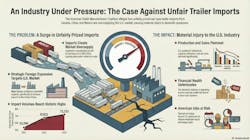
Are trailers manufactured in Mexico and Canada doing real harm to domestic trailer builders? The U.S. International Trade Commission is deciding that issue, with a ruling that could reshuffle the top 10 leading brands’ rankings.
The commission’s vote, initially scheduled for Jan. 5, has been postponed for 20 days to continue to analyze data submitted by both sides "because it is not clear from the petitions whether the industry support criteria have been met."
The gist: A group made up of three of the top five U.S. trailer manufacturers is challenging imported van and reefer trailers priced and sold unfairly in the domestic market, targeting other OEMs in the Top 10 in the 2024 TBB Trailer Output Report. Both the petitioners and trailer importers presented their cases during a preliminary conference on the matter before the U.S. International Trade Commission on Dec.11.
The American Trailer Manufacturers Coalition (ATMC), representing U.S. producers including Great Dane, Stoughton Trailers, and Wabash National Corporation, filed comprehensive antidumping (AD) and countervailing duty (CVD) petitions with the ITC on Nov. 20, targeting van-type trailers and their subassemblies from Canada, Mexico, and the People’s Republic of China.
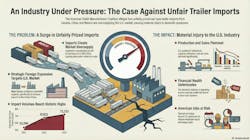
The coalition alleges that these dumped and subsidized imports have caused and threaten to cause material injury to the U.S. domestic industry, which produces the trailers considered the "lifeblood of American freight,” according to the petition. As a result of this injury, the number of domestic trailer and van manufacturers has contracted, and those that remain are forced into a "pricing death spiral," just to keep up.
Additionally, the coalition argued that foreign producers are also fabricating subassemblies in non-market environments and shipping them to the U.S. or Canada for assembly, again putting pressure on domestic fabricators.
The respondents—including Hyundai Translead, Utility Trailer Mfg., and Vanguard—contend that the domestic industry is ignoring the macroeconomics of the "Great Freight Recession" to justify protectionist measures. According to Hyundai Translead CEO Sean Kenney, the woes of domestic producers have more to do with the demand for trailers creating during the pandemic, which drew in foreign companies to pick up the slack when domestic producers couldn't meet that demand.
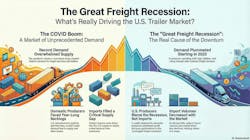
The respondents also argued that current imports don't exceed demand because they build trialers based on orders, while dealers only maintain modest inventories.
For more details on the arguments from both sides, including the nuances on partial component imports, Candadian negligibility, and loopholes, see the story, Trailer trade war: unfair competition or a tough downcycle?, on Fleet Maintenance's sister publication, Trailer|Body Builders.