The TCO factor hiding in your trailer's welds
Key Highlights
- Weld quality can affect trailer uptime, maintenance needs, and total cost of ownership.
- Proper welding procedures can help reduce rework, repeat repairs, and trailer downtime.
- Training and welding technology can improve consistency across trailer manufacturing and repairs.
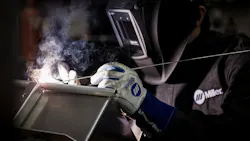
For fleet owners, trailer total cost of ownership (TCO) is typically measured through factors such as maintenance costs, uptime, lifecycle, and resale value. While components like tires, brakes, and suspension systems often receive the most attention, another critical factor begins influencing TCO long before a trailer ever hits the road: weld quality.
Every trailer relies on hundreds, if not thousands, of welded joints. These welds hold together structural members, axles, lift gates, cargo bodies, tanks, and countless other components. When weld quality is high, fleets benefit from longer service intervals, fewer repairs and improved asset reliability. When weld quality is inconsistent, the consequences can ripple throughout a trailer's lifecycle, increasing costs from manufacturing through maintenance and repair.
To understand the full impact of weld quality on trailer total cost of ownership, it's important to look beyond the finished product and examine how welding decisions made during manufacturing can influence performance, maintenance, and repair costs throughout the trailer's service life.
Why weld quality matters on the road
Trailers operate in demanding environments where vibration, loading cycles, road shock, weather exposure, and corrosion continuously stress welded joints. Areas that experience repeated loading, such as lift-gate assemblies, axle connections, and other structural components, are particularly sensitive to weld quality. Over time, small discontinuities can become fatigue cracks. What begins as a minor imperfection may eventually require a significant repair or component replacement.
For fleet operators, the financial impact extends beyond the repair itself. When a trailer is in the shop, it is not generating revenue. Every unplanned repair creates costs associated with technician labor and parts while also reducing equipment availability. Depending on the application, downtime can result in delayed deliveries, reduced utilization, and the need for substitute equipment.
This is where weld quality directly connects to TCO. A trailer built with consistent, high-quality welds is more likely to remain in service longer without interruption, reducing maintenance demands and maximizing productive operating hours. But achieving those long-term benefits begins with the quality and consistency of the welds made during manufacturing — not when the trailer first enters service.
The cost of getting welds wrong the first time
In manufacturing environments, weld defects are expensive long before a trailer reaches a customer. Common issues such as porosity, undercut, insufficient fill, or inadequate penetration can require significant rework. Correcting a faulty weld often involves grinding out the original weld, preparing the joint again, and performing a complete reweld. Each step consumes labor, materials, and production time.
The costs become even greater when defects are discovered later in the manufacturing process. A weld that appears acceptable during fabrication may reveal problems after painting or finishing. At that point, technicians must remove coatings, address the weld issue, and repeat finishing operations, compounding labor and material expenses.
While manufacturing rework costs may not appear directly on a fleet’s maintenance ledger, weld defects that go undetected or are not properly corrected can compromise the reliability of the finished trailer and create problems years later in service.
Repairing welds for long-term reliability
Once a trailer enters service, weld repairs may become necessary due to fatigue, corrosion, or collision damage. The quality of both the original weld and the subsequent repair can significantly affect long-term costs.
Corrosion-related repairs are particularly challenging because weld areas may have been exposed to years of moisture, road salt, and contaminants. Collision repairs can be equally complex, often requiring component replacement and structural evaluation to ensure the trailer can safely return to service.
Material type adds another layer of complexity. Aluminum, stainless steel, and carbon steel each respond differently to heat and welding procedures. For example, aluminum requires thorough cleaning to prevent contamination-related defects, while excessive heat input on stainless steel can compromise corrosion resistance. A repair approach that works well on one material may create new problems on another.
Perhaps the costliest mistake occurs when technicians focus solely on the visible damage rather than the underlying cause. A recurring crack may indicate fatigue loading, heat-related material degradation, or an earlier repair that failed to fully address the issue. Treating the symptom instead of the root cause can lead to repeat failures, additional downtime, and higher lifecycle costs.
In many cases, the most economical repair is also the most thorough one. Replacing damaged material, addressing underlying issues, and following material-specific welding procedures can help fleets avoid recurring repairs and extend trailer service life.
Building consistency through training and technology
The welding industry continues to face workforce shortages and high employee turnover. As experienced welders retire, manufacturers and repair operations must find ways to help newer technicians produce consistent results.
Many organizations are addressing this challenge through a combination of standardized procedures, structured training programs, and advanced welding technologies. Clearly defined welding procedures help ensure operators use appropriate settings, shielding gases, and welding parameters for each application. These standards create greater consistency across shifts and skill levels.
Modern welding equipment can also play a role. Advanced power sources increasingly provide guided setup assistance, process recommendations, and technologies designed to improve weld consistency. Features such as pulsed welding processes can help reduce heat input and provide more forgiving operating characteristics, making it easier for technicians to achieve repeatable results. For example, the Dynasty platform offers precise arc control and process flexibility across a range of materials, helping manufacturers and repair facilities maintain consistent weld quality while addressing diverse trailer applications.
However, technology is not a substitute for training. Successful operations combine capable equipment with thorough onboarding, training, and quality-focused work practices that help welders understand not only what to do, but why specific procedures matter.
Weld quality as a TCO strategy
For fleet operators evaluating trailer performance, weld quality may not be as visible as other maintenance metrics, but its influence is significant. The quality of a weld can affect manufacturing efficiency, structural durability, maintenance frequency, repair complexity, and equipment uptime. Every stage of a trailer's lifecycle, from fabrication through years of service, is influenced by how well those welded connections are produced and maintained.
Ultimately, reducing total cost of ownership goes beyond minimizing repair expenses. It is about maximizing the time trailers spend on the road doing productive work. Consistent weld quality helps make that possible by supporting longer service life, fewer repeat repairs, and greater reliability throughout the asset's lifecycle.
About the Author
 Mike Adrian
Mike Adrian
Mike Adrian is welding engineer focusing on precision welding solutions for Miller. He has worked in the industry since 2013.