Why renewable diesel still matters

Renewable fuel producers have contended with numerous challenges over the past year, including increasing raw material costs, uncertain regulatory backing, and escalating geopolitical tensions, among other factors, all creating heightened market volatility. In spite of these hurdles, long-term demand for renewable fuels remains robust, driven by supportive policies in key markets, such as North America and Europe; as well as companies voluntarily adopting renewable solutions to reduce their greenhouse gas (GHG) emissions. Renewable diesel continues to replace petroleum diesel on the US West Coast, where state-level policies incentivize utilization.
Renewable diesel and its advantages
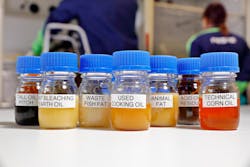
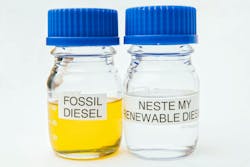
For fleet owners, switching to renewable diesel can mean reducing GHG emissions immediately. Fossil diesel is derived from crude oil, which accelerates climate change by moving sequestered carbon from underground into the atmosphere through its production and use, whereas renewable diesel is produced from renewable raw materials, including waste and residue materials such as used cooking oil and animal fat waste, which helps limit the amount of new carbon released into the atmosphere. Hydrotreatment technology specially adapted for processing renewable materials allows carbon molecules that already exist in the environment to be used over and over again to create renewable diesel. As a result, the use of renewable diesel can reduce GHG emissions significantly compared to using fossil diesel over its lifecycle.
Read more: Is renewable diesel right for you?
Real-world example: Diesel Direct
RD supplier Neste and on-site fueling company Diesel Direct West (DDW) joined forces in March 2018 to pioneer the shift from traditional fossil diesel to renewable diesel along the West Coast. DDW is not only a wholesaler and distributor, but also a customer. When the partnership was first established, some of the 100,000 gallons that Neste supplied to DDW were used in its own fleet.
This real user experience allows DDW to educate potential customers on the benefits of renewable diesel both from personal experience and existing customer testimonials, in addition to sharing the company’s own detailed service maintenance records. Since renewable diesel has near-zero aromatics and a higher cetane number than fossil diesel, DDW was able to report that all of their trucks ran more efficiently than before, with no issues during transition. They also experienced longer diesel particulate filter (DPF) service intervals, saving maintenance costs. Today, DDW reduces its carbon footprint by powering 100% of its California fleet with renewable diesel.
Neste and DDW continue to elevate their partnership to a new level—by innovating ways to transport sustainable aviation fuel (SAF) to one of Neste's aviation customers. In June 2025, Neste reached an agreement with Amazon to supply Neste MY Sustainable Aviation Fuel to support Amazon Air cargo operations at San Francisco International Airport and Ontario International Airport. This agreement made Amazon the first company to purchase and use SAF at Ontario International Airport, one of the top 10 cargo airports in the U.S.
For Amazon Air’s operation at Ontario International Airport, DDW delivered SAF by trucks from Neste’s SAF terminal facilities in Los Angeles. Moreover, DDW used Neste’s renewable diesel to fuel trucks dedicated to the SAF deliveries to further reduce GHG emissions from SAF transportation. This example demonstrates how renewable fuels can help customers easily reduce greenhouse gas emissions across multiple transportation modes.
Market certainty and policy support
Policy support is crucial to continue to grow both renewable fuel demand and production. In the last year, Neste saw positive developments in biofuel regulation both in the U.S. and EU, largely supporting long-term renewable fuels demand.
For example, in the U.S., 45Z was the only Inflation Reduction Act-created credit the government extended and expanded in the One Big Beautiful Bill (OB3), clearly showing a commitment to stimulate renewable fuels. The EPA’s proposed renewable volumes obligations (RVOs) for 2026 and 2027 for biomass-based diesel are commendable and appropriately recognize the growth of the industry.
In California, renewable diesel, along with other solutions, is helping the state reduce GHG emissions from transportation. According to the California Air Resources Board, the increased use of biofuels by heavy-duty trucks helped reduce GHG emissions by 17% in 2023.
Renewable diesel and biodiesel accounted for roughly 64% of California’s diesel pool in Q3 2025, which is tracked under the Low Carbon Fuel Standard requirement. Nearly all domestically produced and imported renewable diesel is used in California because of economic benefits provided under the LCFS.
Besides California, LCFS-style programs have been helping Oregon and Washington reduce GHG emissions from their transportation sectors by incentivizing solutions like renewable diesel. To further increase the adoption of renewable diesel, similar policies will need to be implemented across more regions. Renewable diesel is a proven, ready-now solution that will remain vital in the effort to reduce GHG emissions from road transportation. Strong policy frameworks can help set the stage for more abundant and more cost-competitive fuel choices for American businesses.
Despite the challenges most renewable producers encountered in 2025, the need to reduce GHG emissions from hard-to-abate sectors still underscores the vital and essential contribution of renewable fuels to the worldwide shift toward an economy with a lower climate impact. Neste firmly believes that renewable diesel will continue to be a key solution for achieving substantial reductions in GHG emissions within the road transportation sector, this year and for the foreseeable future.
Neste, a global producer of renewable diesel with refineries in Finland, Singapore, the Netherlands, and the U.S., has produced the biofuel since 2007 and has been selling the fuel in the US since 2012.
Neste’s renewable diesel has a similar chemical composition to fossil diesel, making it a true drop-in solution for all ASTM D975 and EN15940 approved diesel engines without requiring any modifications to current infrastructure. Trusted OEMs also certify engine compatibility and performance with renewable diesel produced by Neste. Fleet operators can leverage this turnkey solution to reduce the carbon footprint of their fleet without costly investment in new equipment or interruptions to business.
About the Author
 Heidi Herzog
Heidi Herzog
Heidi Herzog is Director of Renewable Diesel Sales & Trading for the Americas at Neste. Heidi joined Neste in 2024 and is responsible for the execution of the company’s renewable diesel sales & trading commercial strategy, business development, portfolio growth, and customer engagement within the Americas region.
Heidi has 30 years of experience working in the energy industry. Prior to joining Neste, Heidi was the Vice President, New Energies and Head of Commercial and Business Development at Vopak Americas, where she was responsible for revenue delivery and organic and inorganic business growth for bulk liquids, gases, and renewable products. Before that, Heidi held commercial roles at Phillips 66, BP, Enron, and others. Heidi holds a BA in Economics and Finance from Simpson College and an MBA from Washington University in St. Louis.