Gaining efficiencies with downspeeding
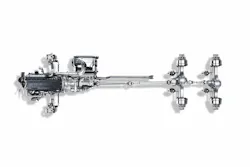
As the trucking industry continues to strive for greater efficiencies, one trend that has positively impacted fuel efficiency is downspeeding. While there are various definitions for downspeeding, for this discussion, we will classify it as: operating an engine – and powertrain – at lower rpm for the benefit of lowering fuel consumption.
For instance, if you drive at 62 mph, your Greenhouse Gas 2014 (GHG14) engine is probably tuned to operate at 1,350 rpm. But if you run the same engine – this one with a “downsped rating” – at the same speed, it can now operate at 1,250 rpm, but still maintain the power and torque necessary to deliver the load.
This savings of 100 rpm will result in about a 1.2-percent savings in fuel consumption.
To truly gain all of the benefits associated with downspeeding, fleet and maintenance managers need to also consider the specs of the truck when placing the order, as well as how the truck is operated. This is because, ultimately, downspeeding is not just about operating the engine slower, but about the overall powertrain.
Spec’ing for Downspeeding
Downspeeding creates the need for automated manual transmissions, axles with lower gear ratios and more robust drivetrains, and this should all be considered when spec’ing a truck with a downsped powertrain.
Today, there are many different options, including:
- The Volvo XE package, which was the first to market, and which uses the Volvo D13 diesel engine and iShift overdrive transmission.
- The Cummins/Eaton SmartAdvantage Powertrain, which uses the Cummins IXS15 diesel and the Eaton Fuller Advantage 10-speed Automated Transmission.
- The integrated Detroit Powertrain, which uses the Detroit DD15 diesel and the Detroit DT12 direct-drive transmission.
Ultimately, all of these solutions are designed to achieve the same goal – better fuel economy.
Engine Rating
A fundamental difference with a downsped powertrain is the engine rating. No longer is horsepower king. Torque is now king.
All of these downsped powertrains have engine ratings with lower horsepower (400 hp to 450 hp) and higher torque (1,550 ft/lbs to 1,750 ft/lbs) that are tuned to deliver most of the power and torque much lower in the rpm range. This will get the load moving and keep it rolling down the road.
Because of this change in engine rating and the lower rpm operating range, downsped powertrains also need more robust drivelines and lower axle ratios to deliver power. With the engine turning at approximately 1,250 rpm, the drive axle ratio needs to match the slower rpm and the driveline needs to be strong enough to handle the increased torque.
What does this mean? It necessitates that fleet managers spec axle ratios in the mid to low 2s (2.64, 2.41, and 2.28), if not lower, for the best results.
It also means more robust drivelines, which will add weight to the truck set-up, but are necessary to ensure the driveline stands up to the increased torque demands created by the downsped powertrain.
Driver Training for Performance
With all of the advancements in technology, design and spec’ing, the driver is still the most important variable when it comes to fuel economy.
That’s why, in addition to spec’ing the right powertrain, driver training is critical to achieve optimal downspeeding performance. Drivers need to grasp that the fuel economy sweet spot is now much lower than with previous technology, and that the transmission manages the entire powertrain for efficiency.
It’s also important that drivers understand not only how the system operates, but how it can help them achieve a smoother ride and reduce fatigue, making the advantages of downspeeding even more appealing.
Many of the benefits of a downsped powertrain are dependent on the driver operating the system as it is intended to work. In most cases, this means putting the automated manual transmission in drive and allowing the powertrain to work.
Part of this dependency is the need for the driver to increase his/her time in cruise control. The more a driver operates the powertrain in cruise control, the more time will be spent in top gear, resulting in even greater fuel efficiency.
So, to make sure your operation is taking full advantage of the downsped powertrain that it took such care in spec’ing, you will also need to take that same care when training your drivers.
With all of the advantages that come with downspeeding, the trend is going to continue to gain momentum and impact the way we build, spec and drive trucks.
Brad M. Williamson is the manager of powertrain marketing for Daimler Trucks North America (DTNA). Williamson has been actively involved in the transportation industry for more than 15 years. DTNA (www.daimler-trucksnorthamerica.com), headquartered in Portland, OR, is the leading heavy duty truck manufacturer in North America. It manufactures, sells, and services commercial vehicles under the Freightliner, Western Star, Detroit and Thomas Built Buses nameplates.