Building better welds: Tools and training
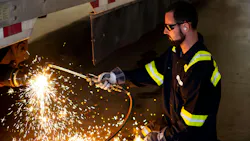
Truck and trailer welds are constantly under attack from vibration, heavy loads, weather, and corrosion, making them a critical factor in vehicle safety and uptime. When these welds begin to fail, the damage can escalate quickly, showing up in high-stress areas like frames, suspensions, liftgates, and trailer structures.
While early warning signs such as cracks, rust, and misalignment can help prevent major failures, avoiding them in the first place depends on more than inspection alone. It comes down to having the right equipment, proper preparation, and well-trained technicians performing the work.
Tools
Without the correct tools, welds may lack the penetration or strength required to support heavy loads.
Key equipment used in welding repairs includes:
- MIG welders for steel repairs
- TIG welders for precise or aluminum welding
- Flux-cored welding equipment for outdoor work
- Plasma cutters for removing damaged metal
- Grinders and wire brushes for cleaning surfaces
- Clamps and fixtures for proper alignment
- Personal protective equipment (PPE) such as helmets, gloves, and ventilation systems
Fonseca emphasized the importance of proper preparation before welding begins. “Technicians should use welding helmets with good visibility, properly prepare the material, and perform test welds on scrap metal before starting the repair,” he advised.
Selecting the correct welding machine is also critical, according to Vanair Manufacturing, a Lincoln Electric Company. Engine-driven welders, for example, must be matched to the welding process and required output. Key considerations include fuel type, welding output and duty cycle, auxiliary power output, engine manufacturer, and additional functionality when selecting welding equipment.
Training
Training is equally important and should include classroom education, hands-on welding instruction, and industry-recognized certifications so skilled welders can perform high-quality structural repairs.
Technicians should receive instruction in:
- Welding techniques for different metals
- OEM repair standards
- Welding safety procedures
- Repair practices for trucks and trailers that meet structural requirements and industry safety standards
Welding may not always be visible once a truck or trailer returns to service, but it plays a vital role in maintaining the structural integrity of commercial vehicles. From frame repairs and crossmember replacements to liftgate installations and trailer reinforcements, welds must withstand heavy loads, vibration, and environmental exposure every day.
Welds may be small in size, but their impact on safety, reliability, and cost control is enormous. By understanding where welds are used, where they fail, and how to spot early warning signs, fleets and service providers can reduce downtime, improve safety, and extend the life of critical equipment.
Certifications
One of the biggest challenges facing the commercial vehicle industry is attracting, training, and retaining skilled welders. To help address this need, the NTEA Work Truck Industry Welder Certification Program was developed in partnership with Lincoln Electric and the National Coalition of Certification Centers (NC3).
The program delivers a customized training curriculum tailored specifically to work truck industry companies. Through the Lincoln Electric Education Partner Schools (LEEPS) program, businesses can develop and certify welders in-house, creating a consistent pipeline of qualified professionals.
Available certifications span a wide range of skills, including welding safety, principles of welding, SMAW, GMAW, FCAW, GTAW, thermal cutting processes, welding math, print reading, fabrication, pipe welding, and robotics. Some certifications focus on knowledge-based assessments, while others include hands-on performance evaluations.
To participate, companies must become NC3 Industry Members and complete a Train-the-Trainer initiative. Once completed, trainers gain ongoing access to NC3’s learning management system, certification exams, and updated training resources. The program helps fleets ensure repairs meet industry standards while strengthening the long-term skill base of the work truck industry.
For more information on the NTEA Work Truck Industry Welder Certification Program, visit: www.ntea.com/events/work-truck-industry-welder-certification-program
About the Author
 Seth Skydel
Seth Skydel
Seth Skydel, a veteran industry editor, has more than 41 years of experience in fleet management, trucking, and transportation and logistics publications. Today, in editorial and marketing roles, he writes about fleet, service, and transportation management, vehicle and information technology, and industry trends and issues.