Demands of new NOx sensor technologies
As the EPA 2027 emissions standards approach, NOx sensors will operate within increasingly sophisticated aftertreatment architectures. Part of the new regulations relates to cutting NOx down 82% from current standards, while the other aspect deals with useful service life.
“To meet 2027 EPA standards, some engine manufacturers are using dual SCR substrates to increase efficiency,” Steven Hoke, president of Diesel Emissions Services, explained. “Others are adding heaters to the exhaust stream, along with more efficient turbochargers and EGR systems.”
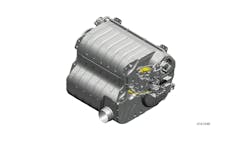
Cummins, for example, will use a Twin Module aftertreatment system with parallel exhaust flow to reduce backpressure. The new aftertreatment system will incorporate 5kW electric heaters powered by a 48V alternator.
“The purpose of the heating system is to directly add thermal energy to the aftertreatment system, ensuring that the catalysts operate at optimal temperatures,” said Raymond Parrish, product leader, Cummins Components business segment.
Even with the changes, Cummins states that the modular design will make the engine more serviceable and configurable to various chassis.
International Motor’s EPA27-compliant S13 Integrated Powertrain does not have the heaters, but also uses a dual-stage SCR and smart DEF dosing. International is adding an Ammonia Slip Catalyst NOx sensor, which takes into account if the SCR is getting too much DEF and the unreacted ammonia ought be oxidized.
Volvo’s EPA27 NOx sensor has a new sensing-head design with primary benefits on the controls side.
“Previous-generation NOx sensors required a delayed activation on cold start to allow exhaust condensation to clear, which limited early control authority,” Duane Tegels, product marketing manager at Volvo Trucks North America, explained. “The new design is dewpoint-free and activates very rapidly after engine start, enabling earlier and tighter control of both the engine and exhaust aftertreatment systems.” He added the NOx sensor meets or exceeds the MY2027 useful-life requirement of 650,000 miles.
In February, DTNA announced its Gen 6 Detroit HD engines will employ a pre-SCR module with an additional NOx sensor.
About the Author

Seth Skydel
Seth Skydel, a veteran industry editor, has more than 36 years of experience in fleet management, trucking, and transportation and logistics publications. Today, in editorial and marketing roles, he writes about fleet, service, and transportation management, vehicle and information technology, and industry trends and issues.