13 top DTCs and how to resolve them

The United States now comprises 50 states and several territories, but it all started 250 years ago with 13 colonies. To King George III, they were the most troublesome in the whole British Empire. He and Parliament failed to diagnose the troubles brewing in the New World, from the Boston Tea Party to the publishing of Thomas Paine’s “Common Sense.”
This, of course, resulted in a catastrophic loss for the Brits. And we couldn’t be happier at their loss. But when a maintenance department fails to recognize the warning signs signaling a serious equipment breakdown, that makes us sad—and is simply something we cannot abide.
With that in mind, and to honor those 13 upstart colonies, we thought now is the perfect time to highlight the 13 top diagnostic trouble codes in trucking.
These are recurring points of trouble that show up across systems, OEMs, and duty cycles, each representing a different kind of operational hold-up.
However, we must note that there is no universal ranking of DTCs across the industry, no fixed list of “most common” failures. And as Sean McGee, VP of maintenance at Samsara, notes, “the sheer volume of codes makes it hard for fleets to know which ones actually matter.”
Additionally, many common codes fly under the radar as they don’t often result in an asset out of commission, and the records of many service management and diagnostic data companies may only include codes that result in service events.
“The fault data we get is a subset of what is happening and only involves those situations that involve the vehicle going into the shop,” explained Rob Ziemba, VP of marketing for Decisiv.
But what does rise to the surface consistently is a handful of system-level failure categories that can quickly turn into downtime.
Based on diagnostic data and input from fleet techs and telematics providers, the following 13 DTCs represent recurring fault points across heavy-duty trucks, trailers, and refrigeration units. Each one reflects a different issue, what typically triggers it, how severe it can become, and what it takes to troubleshoot and fix it before it takes a truck off the road.
Think of them as the industry’s modern “troublesome 13”—not a ranking, but an idea of where fleets most often have to respond when uptime is on the line.
Aftertreatment
Aftertreatment systems are not only highly sensitive but constantly evolving, leading to frequent fault codes and downtime when left untreated.
“Aftertreatment is the system that people have the most problems with,” said Jack Tussing, customer support and technical assistance at Cojali. “It’s changing a lot, all the time, and techs don't really like the idea of the system to begin with, so learning about it is kind of a pain to them.”
But ignore these codes at your own peril, as they can often result in derates and even engine failure if left untreated.
Here are many of the top codes as provided by our sources.
1. P2463 / SPN 3720 – Diesel Particulate Filter (DPF) soot accumulation
- System: Aftertreatment (DPF)
- Common causes: Frequent short-trip driving, EGR faults, injector issues, and use of low-quality or incorrect engine oil
- Risk: Moderate → Severe (if ignored)
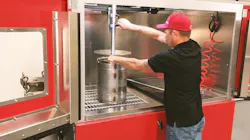
According to the DPF Guys, that clogged DPF creates backpressure that may force exhaust back into the engine, and cause damage to the turbocharger, cylinder head gasket, and other components, with the potential for complete engine failure.
- Fix: Use a scan tool to verify regeneration history, inspect basic sensor wiring, and confirm whether the restriction is real or sensor-driven. If confirmed, perform a passive or forced regeneration based on the severity of soot overload. But as DPF Guys note, you will likely need to clean or replace the DPF itself, as regens are merely a stop-gap measure.
2. SPN 5246 FMI 0 – SCR inducement / NOx efficiency degradation
- System: SCR/aftertreatment compliance
- Causes: DEF quality issues, electrical faults, moisture or heat damage
- Risk: Severe
According to Diesel Scanners, the issue can lead to progressive derates and speed limitations if the underlying SCR issue is not corrected.
-
Fix: First, check for additional aftertreatment fault codes that may identify the root cause. From there, technicians should verify DEF quality, inspect for DEF crystallization or contamination, test DEF pump pressure and dosing operation, and validate NOx sensor readings before evaluating SCR catalyst performance.
3. P20EE / SPN 4364 / 3582 – SCR efficiency below threshold
- System: SCR catalyst performance
- Causes: Aging catalyst, dosing issues, exhaust leaks
- Risk: Severe
Unresolved SCR efficiency faults can trigger engine derates and reduced vehicle performance as the ECM attempts to maintain emissions compliance. -
Fix: Begin with a full DEF system inspection, including checking DEF quality and looking for crystallization or contamination. Next, test the DEF injector, verify NOx sensor readings, inspect for exhaust leaks ahead of the SCR catalyst, and evaluate catalyst efficiency if all other components look fine.
4. SPN 4374 / 4334 – DEF pressure low
- System: DEF dosing system
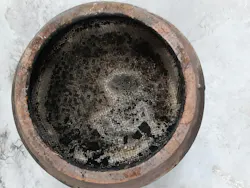
- Causes: Pump failure, clogged lines, crystallization
- Risk: Moderate → Severe
According to NH Repairs, low DEF pressure can prevent the SCR system from delivering the proper amount of DEF into the exhaust stream, eventually leading to engine derates.
-
Fix: Perform a pressure test to confirm whether the pump is building pressure correctly. Technicians should also inspect DEF lines and filters for restrictions or crystallization, check for leaks in the supply system, and verify electrical connections to the DEF pump and dosing module. The DEF pump or dosing module may require replacement if the pressure remains low after inspection.
5. DEF metering module / dosing system malfunction (OEM-specific fault code)
- System: DEF dosing hardware (OEM-specific)
- Causes: Electrical failure, metering module, DEF filter or pump
- Risk: Moderate - Severe
Improper DEF delivery affects SCR operation and emissions compliance, and the vehicle may eventually enter derate conditions if the system cannot maintain proper pressure or dosing performance.
-
Fix: Cojali's Tussing said technicians should start by performing a DEF priming pump test to verify the dosing system is building proper pressure and to check for leaks in the DEF lines. If system pressure is within spec, the next step is typically a metering test to confirm the injector is activating correctly and delivering a consistent spray pattern and volume.
6. P205B – DEF tank temperature sensor issue
- System: DEF tank/sensor network
- Causes: Sensor failure, wiring issues, freezing cycles
- Risk: Moderate
When the DEF tank temperature sensor signal is out of the expected range, the SCR dosing strategy may be disabled or reduced, potentially leading to emissions system warnings and progressive derate conditions if left unresolved.
-
Fix: Verify DEF temperature reading on scan tool against ambient temperature (cold soak). Then, inspect the connector and harness for damage/corrosion. Perform voltage reference, ground integrity, and continuity testing of the sensor circuit per OEM wiring diagrams, and replace the sensor or tank module if readings remain off.
Fuel system
Along with aftertreatment, Samsara’s McGee pointed to fuel system codes as some of “the most prevalent and consequential” for heavy-duty trucks.
“Left unaddressed, these codes can trigger derates, inducements, or even a full vehicle shutdown, turning a manageable maintenance issue into a costly operational disruption,” he explained.
When fuel system codes appear, they tend to demand attention quickly. Issues tied to fuel rail pressure can lead to immediate performance problems, from power loss to full derate conditions. The challenge is diagnosis.
According to Tussing, what looks like a major component failure can sometimes trace back to something simpler, like air intrusion in the fuel system or a wiring issue affecting sensor readings, making proper diagnostics essential.
7. P0087 – Fuel rail pressure low
- System: High-pressure fuel system
- Causes: Weak lift pump, clogged filters, injector leak-off
- Risk: Severe
Low fuel rail pressure can quickly lead to loss of power, drivability issues, and engine derate conditions. -
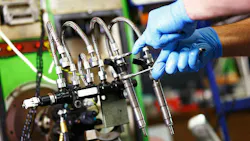
Fix: Start with fuel filters and replace if service interval is due or contamination is found. Check for air in the fuel system and verify lift pump operation. Then, perform a fuel return test on injectors if the pressure is still low. If supply and injectors test fine, inspect the high-pressure pump and related control components.
8. SPN 1077 FMI 0 – Fuel rail pressure high
- System: Fuel system
- Causes: Rail sensor faults, air in the fuel system
- Risk: Moderate → Severe
High fuel rail pressure conditions can lead to rough running, poor drivability, and potential engine protection events, including derate, as the ECM attempts to bring pressure back within safe operating limits.
-
Fix: Start by verifying that there is no air in the fuel system, according to Tussing. “This can be confirmed with a sight glass installed in the fuel system at a different location,” he explained. “If no air is found in the system, then we would want to make sure that we are not getting incorrect readings due to a wiring issue.”
Exhaust Gas Recirculation (EGR)
EGR-related faults are among the most persistent issues in commercial vehicle systems, and while they don’t always trigger immediate shutdowns, they can be hard to pinpoint.
According to Ben Osborne, marketing communications director at Noregon, these codes are among the faults the company sees most often, and ones “in-house techs say are often difficult or lengthy issues to troubleshoot/repair.”
9. P0401 – EGR flow insufficient
- System: EGR
- Causes: Faulty sensor, carbon buildup, stuck valve
- Risk: Moderate
Insufficient EGR flow can reduce exhaust gas recirculation effectiveness, leading to higher combustion temperatures, increased NOx emissions, and potential emissions-related fault codes or derate conditions if not corrected.
-
Fix: Inspect and clean the EGR valve and associated passages for carbon buildup. Then, check intake and EGR piping for restrictions, and verify EGR valve movement and sensor feedback using scan tool data. Replace the EGR valve or related components if cleaning does not restore proper flow.
10. 1866 – EGR differential pressure erratic
- System: EGR measurement system
- Causes: Faulty sensor, clogging, damaged wiring
- Risk: Moderate
Erratic EGR differential pressure readings can indicate unstable or inaccurate exhaust flow measurement, which can disrupt EGR rate control and lead to increased emissions, drivability issues, or fault-related engine derate if the condition persists.
-
Fix: Inspect the EGR differential pressure sensor and crossover tube for faults or restrictions, Noregon advises.
Engine
11. SPN 132 FMI 16 – Engine intake air mass flow rate
- System: Air intake / engine air management
- Causes: Boost leaks, dirty MAF sensor, turbo inefficiency, EGR flow imbalance
- Risk: Moderate → Severe
This can lead to reduced engine efficiency and cascading effects into fuel system management and aftertreatment performance, potentially resulting in derate conditions if unresolved.
-
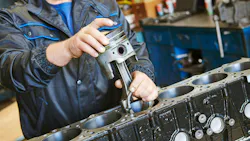
Fix: Inspect the intake system for air leaks, including charge air cooler and boost piping. Then, verify mass air flow sensor readings and clean or replace if contaminated and check turbocharger operation and actuator response. Inspect the EGR system for abnormal flow that may be affecting intake air measurement.
Electrical / communication
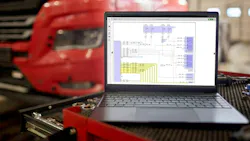
Isolating electrical and communication faults may prove challenging as they don’t always point to a single failed component. A J1939 communication fault, for example, can stem from anything from damaged wiring to a failing module.
As Tussing noted, these faults are often low severity and may not immediately show symptoms or impact the vehicle’s operation, often more of of a nuisance than a failure.
12. J1939 communication fault (SPN 639-type)
- System: Vehicle network
- Causes: According to Tussing, the root cause is typically a damaged wire or a module/component that is causing interference in the CAN communication channel.
- Risk: Low → Severe (depending on affected components)
The issue can range from minor intermittent data loss to critical loss of communication with essential engine or aftertreatment modules. If key control modules are affected, the fault can escalate quickly into engine derate, shutdown, or loss of vehicle functionality due to missing or corrupted network data.
-
Fix: First, determine “if there are any other fault codes that will help narrow down the modules/components that are involved,” Tussing said. “The next step would be to start checking CAN wiring between modules/components for incorrect voltages/resistance. This will help isolate the issue to determine the root cause.”
Trailer systems
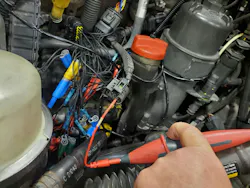
Decisiv’s Ziemba noted that brake-related systems frequently rank among the top VMRS categories seen in fleet maintenance data. Within that category, the company’s VP of product enablement Robert Nordstrom added that what technicians typically encounter in brake-related faults is more about electronic components tied to ABS systems.
“Hard parts on brakes don't fail very often, but the electronics around them, like the tone wheels, the ABS sensors, the ABS control unit, the sensors in the air system, those are what tend to fail.”
13. ABS wheel speed sensor fault (SPN 84 FMI variants)
- System: Trailer ABS
- Causes: Damaged wheel speed sensors, ABS modulator faults, or chassis wiring issues can trigger trailer ABS faults and illuminate the ABS warning lamp.
- Risk: Moderate (inspection failure risk)
ABS wheel speed sensor faults can disable proper wheel speed monitoring, which may result in loss of ABS functionality and reduced braking stability in certain conditions. While base braking remains, the trailer may be placed out of compliance and fail safety inspections if the ABS warning lamp remains active.
-
Fix: Sensor replacement, wheel-end inspection - If troubleshooting indicates that the basic ABS components are not malfunctioning, then it could be chassis wiring or other complex issues that would require in-depth troubleshooting to get to the root cause, according to Bendix.
*Fault code descriptions are based on SAE J1939 SPN/FMI definitions and OEM service information, supported by data from diagnostic platforms
About the Author

Lucas Roberto
Lucas Roberto is a Senior Staff Writer and producer of multimedia content for Fleet Maintenance magazine. He holds a bachelor's in media production and a master's in communication from High Point University in North Carolina.