Finding your forever toolbox: A purchasing guide
Key Highlights
- A technician's toolbox is a long-term investment that should accommodate future growth and evolving tool needs.
- Experts recommend choosing expandable storage options to prevent costly replacements and maximize space efficiency.
- Budget considerations are crucial; avoid overspending on large, underfilled boxes or financing that incurs high interest rates.
- Starting with a smaller, manageable toolbox allows for growth without unnecessary debt, especially for new technicians.
- Balancing cost, capacity, and future needs ensures a versatile toolbox that supports a technician's career development over many years.
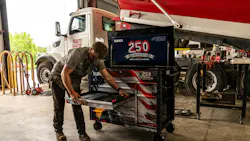
A technician’s toolbox is likely the biggest single purchase of their career. And it’s more than just a metal box with drawers; it’s an investment for the future. In that way, the buying process has more similarities to buying the home you want to raise a family and grow old in, versus merely purchasing a box to put your tools.
And for that reason, you’ll have to consider how much tool storage you’ll need now and many years into the future, advised Pablo Vasquez, business development, Sonic Tools USA, a company that offers lines of tools and boxes that can expand as the technician’s skill level increases.
Nick Trawicki, product marketing manager for storage at Milwaukee Tool, agreed, encouraging techs “to think about storage as a long-term investment; it is not just a purchase for today.”
It’s hard to predict all the sizes of hand tools and types of specialty tools that will be needed in, say, 2040, just as you might not be sure how many kids, pets, and/or hobbies you might want. The major thing is to ensure you have the room to grow. You don’t want your potential to be limited by a lack of space, nor do you want to continually have to swap out costly boxes.
For Felipe Salazar, Jr., auto body painter and technician at Gerber Collision & Glass, that lesson didn’t come all at once. When he first started his career, storage wasn’t a major concern. His modest set of tools easily fit into carts, and the basic setup got him through the day.
That changed when his father-in-law, a former UPS maintenance technician, gifted him a Snap-on Classic toolbox as a wedding present.
“Once he gifted me that toolbox, that’s when I started buying more tools, trying to fill up the toolbox a little bit,” Salazar said.
Thirteen years later, Salazar has since upgraded to a larger Milwaukee toolbox. His experience reflects a common reality in the shop: a toolbox is more than just storage, it’s a homebase that technicians grow into, outgrow, and continue to renovate and remodel as their careers evolve.
And the decisions that come with it, like how much to spend and how much room to leave for the future, mirror the same tradeoffs found when buying a home for the long haul. Here are some considerations to help technicians find the forever home toolbox they can put their roots down in.
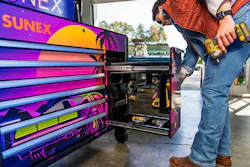
Mortgaging your future
Premium toolboxes built to last a career can cost tens of thousands of dollars, making the decision about far more than drawer space. They must compromise based on which box meets both storage needs and offers a payment plan that won’t break the bank.
When Salazar began to think about upgrading from his first toolbox, he knew he wanted something that fit his budget without putting unnecessary strain on his finances.
“I didn’t want to go into debt buying a toolbox,” he said. “There are some really nice toolboxes out there, but when you look at those price tags, I didn’t really want to spend $20,000 when I also have two little girls—I’m trying to plan ahead for their future as well.”
Tommy Crenshaw, fleet maintenance technician at McKee Foods Transportation, had a similar mindset, warning young techs to do their research and get their finances in order before shelling out the big bucks.
“As cool as the tool truck is, it is very expensive,” he said. “A lot of people don’t realize that 17% interest isn’t good.”
He cautioned that a $5,000 or $10,000 toolbox can ultimately cost thousands more once financing charges are factored in. Plus, the box isn’t the only thing a new tech is spending money on.
“Does that leave you enough money to buy tools?” Crenshaw posed, “Because you don’t need a new box every week, but you may need a new tool every week.”
He has also seen techs purchase far more storage than they actually need, citing a former peer who bought an 86-in. box without enough tools to fill even a quarter of it.
“Now he has a $10,000 payment,” he said. “It looks pretty, but it’s useless.”
Finding the right balance often means investing in a toolbox that can grow alongside a tech’s career without consuming resources that could be spent elsewhere.
For newer technicians in particular, Tyler Gallardo, mobile mechanic and owner of Ty The Car Guy, recommends resisting the temptation to buy the largest toolbox available right away. Reflecting on his first purchase, he said a smaller setup gave him room to grow without taking on unnecessary debt.
“I think [my first toolbox] was a good starting place, considering so many schools and dealerships, they fall into that misconception of, ‘Oh, you’ve got to get the biggest, baddest toolbox,’” he said. “But what people don’t realize is, yes, you feel nice while you’re at work, but having a car payment for a toolbox, no matter which way you look at it, whether you can afford it or not, I’m sure the funds could be spent elsewhere.”
About the Author
 Lucas Roberto
Lucas Roberto
Lucas Roberto is a Senior Staff Writer and producer of multimedia content for Fleet Maintenance magazine. He holds a bachelor's in media production and a master's in communication from High Point University in North Carolina.