How the NASCAR approach helps fleet maintenance win on the road and in the shop
Key Highlights
- Fleetio partners with NASCAR team 23XI Racing and driver Corey Heim, giving the company a firsthand look at how race teams prepare for the unexpected. Those same principles can be applied to fleet maintenance.
- Develop flexible maintenance plans that account for unexpected events, enabling quick responses and minimizing operational disruptions.
- Prioritize issues based on safety, asset criticality, and operational impact to make informed, high-pressure decisions efficiently.
- Ensure comprehensive visibility across maintenance operations with centralized, real-time data to facilitate better decision-making.
- Leverage historical data and service history to anticipate failures and prepare resources proactively, much like a pit crew pre-stages for a race.
- Regularly review decisions and outcomes to identify areas for improvement, turning individual experiences into organizational knowledge.
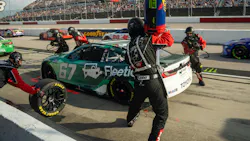
A NASCAR team can spend days preparing for a race, with engineers analyzing data, crews developing pit strategies, and drivers studying how the car is likely to respond as conditions change. All this ensures that by the time the green flag drops, there’s a plan for fuel, tires, pit stops, and countless other variables.
Then a few laps in, a caution comes out earlier than expected. Maybe tire wear accelerated because of higher-than-expected track temperature. Maybe another car made contact around a turn and caused damage. Suddenly, the strategy that made sense at the start is no longer the best path forward. Fleet maintenance teams operate in a similarly unpredictable environment.
Fleetio also partners with NASCAR team 23XI Racing and driver Corey Heim, giving the company a firsthand look at how race teams prepare for the unexpected. Those same principles can be applied to fleet maintenance to help them stay ahead of the pack.

Build a flexible plan
Race strategy is rarely built around a single sequence of events, which is why teams prepare for different possibilities. That preparation allows them to respond quickly when circumstances change. While they cannot predict exactly when a caution will occur or how conditions will evolve, they can determine how they should respond in advance.
Maintenance planning can work the same way, starting with maintenance schedules establishing what should happen under normal circumstances. An adaptable maintenance operation also considers what happens when those circumstances change. For example:
- If a technician is unexpectedly unavailable, which jobs can be reassigned and which are priority?
- If a commonly used part is out of stock, is there another vendor or, for multilocation fleets, does another depot have extra available?
These decisions are easier to make before the pressure is on. Establishing escalation procedures, identifying backup vendors, enabling inspection item failures to alert managers in real time, and determining which maintenance activities can safely be rescheduled gives teams a framework for responding instead of forcing them to invent a solution each time something goes wrong. That doesn’t necessarily mean creating a contingency plan for every possible disruption, but rather identifying the situations most likely to interfere with the operation and determining who should make the call when they occur.
Know which problems require immediate action
One of the most visible decisions during a race is whether to pit or stay on the track. Pitting may address worn tires, damage, or fuel needs, but it also costs track position, while staying out preserves position but may create additional risk. The crew chief has to weigh what is happening now against what is likely to happen next.
Maintenance teams constantly make their own version of that decision. An asset may arrive to the shop with several open issues, but those issues don’t necessarily carry the same urgency. Ideally, all issues could be fixed during scheduled downtime, but that’s simply not always possible. A safety-related defect may require the asset to be taken out of service immediately, while another repair may be important but able to wait until the asset's next scheduled service.
That’s why prioritization is so important and should go beyond which request arrived first. Fleets need to consider safety, asset criticality, repair severity, and operational impact together. Clear prioritization standards also help remove uncertainty from high-pressure decisions. Technicians and managers know which problems should trigger an escalation, which assets take precedence, and who has authority to approve additional work. That way, instead of spending valuable time determining how a decision should be made, the team can focus on making it.
Give decision-makers the full picture
A crew chief and their team monitor asset performance, fuel consumption, tire condition, weather, track position, and what competitors are doing. Any one of those variables can change the decision made. Fleets also need context. Knowing that an asset needs a repair is useful—but knowing that two similar assets are already down, the necessary part is backordered, and the assigned technician has several higher-priority jobs provides a much clearer picture of the operational impact. This requires visibility across the maintenance operation, including inspection results, open issues, work order status, parts inventory, technician capacity, service history, and asset availability.
When that information is scattered across spreadsheets, paper records, emails, and separate systems, fleets can lose valuable time simply establishing what is happening. Centralized, real-time maintenance information allows fleets to spend less time searching for context and more time determining the best response.
Prepare for the next move before you take it
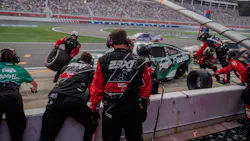
Watch a pit crew before a car arrives and much of the work has already happened. The tires are already staged and equipment is at the ready while each crew member knows their responsibility. The stop itself may last only seconds because the team prepared before those seconds mattered.
Fleets can apply the same principle by choosing actions based on the historical data of assets. This includes things like looking into frequently used parts so they can be stocked according to historical demand or even having alternative suppliers in case a primary vendor has a shortage. Service history can make that preparation more precise. If certain assets repeatedly experience similar component failures, for example, the maintenance team can investigate the pattern, adjust stocking decisions, or schedule inspections before the next failure occurs.
If emergency work consistently interrupts preventive maintenance (PM), fleets can examine whether technician capacity, PM intervals, or scheduling practices need to change. Preparation creates options so that when something unexpected happens, the team already knows what resources are available and what actions it can take next.
Review the decisions as well as the results
After a race, teams look at where the car finished, review how the race unfolded, and evaluate the decisions that produced the result. A strategy can be sound even if circumstances ultimately produce a poor finish. Conversely, a good finish does not necessarily mean every decision was optimal. Reviewing both helps teams improve the next time they encounter a similar situation.
Likewise, after an emergency repair or significant scheduling change, fleets can ask what caused the disruption, how quickly the team recognized it, and whether the response created additional delays elsewhere. A late part might reveal the need for another supplier, while a recurring emergency repair could point to an inspection, PM gap, or even a component that just can’t handle the workload as well as another brand.
“Even successful responses deserve examination, though,” explained John Byron, maintenance advisor at Fleetio. “If an important asset was kept moving because an experienced technician knew exactly whom to call for a part, that knowledge can become a documented process rather than remaining dependent on one person's experience. Over time, these reviews turn individual disruptions into operational knowledge, allowing fleets to become better prepared not because unexpected events stop happening, but because fewer situations are truly unfamiliar.”
Adaptability is the edge
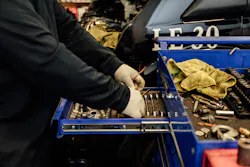
Neither a NASCAR team nor a fleet maintenance operation can control every variable. Just as a race can change with a single caution flag, a maintenance schedule can change with one unexpected repair. High-performing fleets distinguish themselves by what happens next. They have clear roles and predefined ways to escalate problems. They understand which work matters most to the operation and prepare alternatives before they are needed.
The lesson from the racetrack is that the best strategy leaves room to adapt. For fleets, building that adaptability into everyday processes can mean faster decisions, less confusion, and fewer disruptions that turn into unnecessary downtime.
About the Author
 Rachael Plant
Rachael Plant
Rachael Plant is a content marketing specialist for Fleetio, a fleet management software company that helps organizations track, analyze and improve their fleet operations.