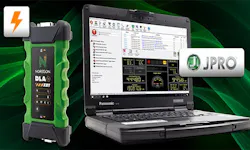
Learn about Noregon's 30-year history helping the industry maximize uptime and advance technician skillsets. OTHER Learn about Noregon's 30-year history helping the industry maximize uptime and advance technician skillsets. OTHER Get diagnostics tips, training updates, and product updates delivered to your inbox. Unnecessary and costly parts replacements Increased service/labor hours That’s the old-school way of solving network issues. That’s the old-school way of solving network issues. Throughout this blog, we’re going to cover CAN bus diagnostics, the issues associated with it, and Noregon’s solution to one of the industry’s biggest problems. What is the CAN Bus? The controller area network, also known as CAN, is the communication system that allows electronic control units, also known as ECUs, throughout a vehicle to communicate with each other. Instead of having every system within the vehicle work independently, the CAN Bus network connects components like the: Engine Transmission ABS ADAS Body controllers As vehicles advance, these systems rely even more on consistent communication across the network, and when communications throughout the vehicle occurs, CAN bus symptoms impact multiple systems at once. That’s why diagnosing CAN bus issues is one of the most confusing tasks a technician encounters. The Growing Problem with CAN Diagnostics While newer vehicles rely on CAN communication, diagnosing network issues is still a challenge because the symptoms rarely pinpoint the issue itself. As a result, technicians can end up replacing good parts because the network issue disguises itself as a component problem. Common signs of a CAN-related issue can include: Intermittent shutdowns – The truck can randomly lose power or shut down inconsistently, making the root cause difficult to identify. Unrelated fault codes – Several unrelated fault codes can appear across the engine, transmission, ABS, ADAS, and other systems. Communication loss between modules – When there is a loss of communication between modules, network communication issues can occur. Irregular electrical behavior – Components like warning lights or gauges can behave unpredictably due to network instability. Inconsistent diagnostic connections – Diagnostic tools may have trouble establishing or maintaining communication with the vehicle. Aftertreatment systems have long tested technicians with challenging fault diagnosis. Today, CAN bus communication issues are creating many of the same challenges and confusion in the shop. This webinar discusses real-world CAN bus communication failures, common troubleshooting mistakes, and faster ways to disgnose network issues. Why Traditional CAN Problem-Solving Falls Short Traditional CAN workflows often fall short because technicians need multiple tools and manual testing methods to confirm a CAN network issue. A traditional workflow involves: Pulling fault codes from multiple ECUs – If technicians don’t realize the CAN bus network is the issue, they can waste time clearing the wrong faults. Using multimeters and oscilloscopes – Using oscilloscopes to view network activity or multimeters to verify resistance or circuit voltage requires several steps, technical knowledge, and switching between tools. Tracing wiring throughout the truck – By manually inspecting harnesses and connectors, technicians can identify intermittent communication failures. Switching between multiple tools and platforms – Using multiple scan tools, multimeters, oscilloscopes, and OEM software slows down the diagnostic process and increases the chance for mistakes. While these are all common ways to solve CAN Bus network issues, they’re time-consuming, costly, risky, and outdated. Why Shift to Network-Centric Diagnostics? As vehicle technology continues to advance, technicians can actually view the health of the network itself, and that shift toward network-centric diagnostics is changing how technicians handle communication issues. Instead of wasting time troubleshooting individual vehicle components, technicians can focus directly on the CAN network to understand what’s contributing to the problem, to identify if it’s a communication issue, electrical, or something else. This approach eliminates the need to switch between tools and diagnose the issue much faster. This approach helps shops: Create a more repeatable diagnostic process across techs Reduce dependency on advanced scope and electrical troubleshooting expertise Keep more repairs in-house instead of sending vehicles to dealers Reduce diagnostic bottlenecks around senior technicians Minimize wasted labor hours and unnecessary parts replacement Keep bays moving and vehicles in service And for many techs, it also brings confidence and pride back into solving complex electrical issues themselves instead of guessing, swapping parts, or escalating the repair. Noregon's Modern Approach to Network Diagnostics Noregon offers technicians the chance to identify CAN bus diagnostic issues through the CAN bus diagnostics feature in JPRO, or for those without JPRO, our dedicated CAN bus diagnostics tool, CAN Mentor , helping technicians identify communication issues within heavy-duty vehicles faster than traditional methods. Graph CAN-related data items Measure voltage and resistance Identify high impedance and Gain visibility into grounding, shorts, opens, impedance, and overall CAN network health. Traditionally, diagnosing the source of CAN bus issues required multiple tools like an oscilloscope or a multimeter, but today, JPRO helps to simplify the process by giving technicians guided access to CAN Bus diagnostics. Tying it All Together The future of diagnostics is understanding the overall health of the vehicle network, not just the components connected to it. But as CAN bus systems become more complex, technicians no longer have the time to dig through or swap between tools, and the industry needed a simpler way to understand and perform CAN bus diagnostics. At the same time, it’s no secret that the technician shortage continues to be an ongoing problem, making it important for shops to move toward modern CAN bus network diagnostics that require less time and resources for technicians. For shops already using JPRO, CAN bus diagnostics are built directly into the platform, so a separate CAN Mentor license isn’t needed. For shops that don’t have JPRO, CAN Mentor provides a standalone solution for diagnosing CAN bus communication issues. A Modern Approach to CAN Bus Diagnostics Why traditional CAN bus diagnostics fail and how modern diagnostics identify faults faster. Guide to CARB’s Clean Truck Check Learn about California’s Clean Truck Check program and how to stay compliant with new requirements. A Technician’s Guide to DPF Regens Learn the importance of DPF regens and the costs and consequences of running them unnecessarily. Small Town Shop Offers Big-Time Services Learn how Van Cleef Auto Parts uses TaaS to provide leading service, versatility, and customer satisfaction. This whitepaper explores the 2026 economic outlook, industry trends, and customer research findings. 10 Steps Before Clearing Fault Codes Learn the 10 steps to take before clearing a fault code to avoid recurring issues. Streamline the Diagnostic Process As shops take inventory of their diagnostic tools, it's vital to consider the importance of tech-to-tool ratios. Differences Between OE and SAE Fault Codes Learn the differences between OE and SAE fault codes and how JPRO can simplify fault code analysis. Ways to Recruit & Retain Skilled Truck Drivers Explore the most effective ways to recruit and retain the backbone of the American economy: truck drivers. ©Noregon. JPRO, NextStep, and TripVision are registered trademarks of Noregon. All Rights Reserved. A Modern Approach to CAN Bus Diagnostics Why traditional CAN bus diagnostics fail and how modern diagnostics identify faults faster. Guide to CARB’s Clean Truck Check Learn about California’s Clean Truck Check program and how to stay compliant with new requirements. A Technician’s Guide to DPF Regens Learn the importance of DPF regens and the costs and consequences of running them unnecessarily. Small Town Shop Offers Big-Time Services Learn how Van Cleef Auto Parts uses TaaS to provide leading service, versatility, and customer satisfaction. This whitepaper explores the 2026 economic outlook, industry trends, and customer research findings. 10 Steps Before Clearing Fault Codes Learn the 10 steps to take before clearing a fault code to avoid recurring issues. Streamline the Diagnostic Process As shops take inventory of their diagnostic tools, it's vital to consider the importance of tech-to-tool ratios. Differences Between OE and SAE Fault Codes Learn the differences between OE and SAE fault codes and how JPRO can simplify fault code analysis. Ways to Recruit & Retain Skilled Truck Drivers Explore the most effective ways to recruit and retain the backbone of the American economy: truck drivers. ©Noregon. JPRO, NextStep, and TripVision are registered trademarks of Noregon. All Rights Reserved.