Dude, where’s my asset? Fleetio Fleet Map answers that and speeds up maintenance decisions
Key Highlights
- Fleetio’s Fleet Map unifies real-time asset location with maintenance workflows, improving uptime decisions.
- Geofencing automates status updates and reduces manual tracking, speeding maintenance coordination.
- Integrated vendor + telematics data helps fleets close communication gaps and avoid maintenance delays.
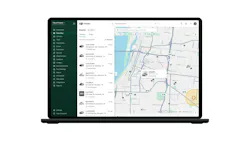
CLEVELAND—Fleetio has added a new feature to its fleet maintenance platform called Fleet Map. Not only can fleet managers access real-time locations of assets without leaving the platform, but the map view also provides nearby service providers, job sites, and includes vital maintenance context to help them make faster decisions to improve uptime. After service, geofencing events will then automatically change asset status to allow managers to see what has been handled.
The feature is now active for all Fleetio customers.
When also using Fleetio’s automated approvals at any of the 110,000 repair shops in its Maintenance Shop Network, a fleet can save three hours for every 10 transactions, the company estimated.
Fleet Map connects source-agnostic asset tracking data, either from telematics or directly from Fleetio, and wraps it into the Fleetio ecosystem, which contains a wealth of maintenance and service data.
“Accessing location data has largely been a solved problem, but location data often lives outside of the main maintenance workflows around servicing and vendor decisions,” asserted Stefano Daneri, fleet ecosystem strategist at Fleetio, who presented the news during the media day at the NAFA 2026 Institute & Expo.
He offered that Fleet Map can help managers navigate around lingering questions that GPS data alone cannot answer.
“Most fleets are still struggling to answer some pretty key questions like, ‘Where are my assets? What's nearby? Do I have availability at nearby job sites? And who can help what to do next?’”
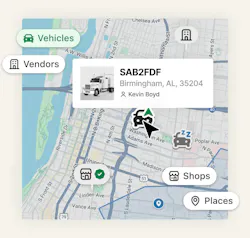
By clicking on the map view, this becomes clearer, Daneri offered.
“We want to bring the decision-making layer inside of Fleetio, where most fleets are working today, to manage their assets, manage the maintenance life cycle, manage their cost, and really make sure that they are driving a profitable fleet,” he explained.
He also noted this move is just the beginning in helping fleets overcome current maintenance bottlenecks that Fleetio identified in its recent benchmarking report, where 600 fleets were surveyed. Daneri noted on-time maintenance was highly impacted by communication gaps, and those gaps may exist more frequently because more than half of the fleets surveyed use a hybrid maintenance model.
“So not only are they managing an in-house garage team with their own technicians, they're also responsible for managing a whole network of third-party providers,” Daneri said.
A fleet manager likely has to negotiate rates and ensure quality control with these vendors, while jumping between telematics platforms, breakdown directories, and maintenance platforms.
“That's just not an efficient way to scale, especially as you bring in more stakeholders and more tooling,” he said. “It's really where execution breakdown can happen.”
Fleet Map at a glance
According to Fleetio, Fleet Map helps fleet leaders improve on:
- Transparency: Keep work visible across job sites through a single, customizable view of asset locations and open alerts, combining supported telematics devices, fuel data, and core maintenance workflows in Fleetio.
- Speed: Prevent service delays and strengthen vendor coordination by filtering and layering the map to prioritize in-progress work, upcoming service, and overdue items.
- Automation: Reduce manual updates and keep teams automatically aligned with geofence-driven automation that updates asset status and surfaces alerts when assets enter or exit key locations, including shop arrivals and departures.
- Consistency: Maintain higher asset utilization through consistent maintenance oversight, with fleets like Beach Timber managing hundreds of assets and achieving approximately 80% utilization through disciplined preventive maintenance.
About the Author
 John Hitch
John Hitch
Editor-in-chief, Fleet Maintenance
John Hitch is the award-winning editor-in-chief of Fleet Maintenance, where his mission is to provide maintenance leaders and technicians with the the latest information on tools, strategies, and best practices to keep their fleets' commercial vehicles moving.
He is based out of Cleveland, Ohio, and has worked in the B2B journalism space for more than a decade. Hitch was previously senior editor for FleetOwner and before that was technology editor for IndustryWeek, and managing editor of New Equipment Digest.
Hitch graduated from Kent State University and was editor of the student magazine The Burr in 2009.
The former sonar technician served honorably aboard the fast-attack submarine USS Oklahoma City (SSN-723), where he participated in counter-drug ops, an under-ice expedition, and other missions he's not allowed to talk about for several more decades.