Got an unsolicited offer to buy your shop? Consider an M&A advisor to maximize profits
Key Highlights
- M&A advisors can help trucking business owners create competitive sale processes and improve deal outcomes.
- Unsolicited acquisition offers may not reflect a company’s full market value without proper evaluation.
- A complete deal team helps owners navigate valuations, negotiations, and due diligence during exits.

While at Fullbay’s Diesel Connect conference this past May, I spoke confidentially with shop owners considering an exit. For key context here, I’m not a buyer; I advise on exit strategy. To that point, every single owner told me that unsolicited acquisition offers are common. Private equity is the usual suspect.
The instinct to take advantage of the offer is understandable, and it usually rests on three assumptions:
- A buyer in hand removes the need for a competitive process
- Retaining a mergers & acquisitions advisor will exceed the value created
- Existing legal counsel and CPAs are sufficient to get the optimal deal
Owners may assume these to be true, but this can cost you and your employees later.
A solid resource to help navigate an unsolicited sale is the 56-page peer-reviewed study called “Does Hiring M&A Advisors Matter for Private Sellers?”. It offers guidance on how to think about inbound offers vs. creating a one-time private outbound market for exit. As someone who deals with M&A on a regular basis, I thought it beneficial to break down the report and provide my own insights, so if and when you receive an unsolicited offer, you will be prepared to get the best deal possible. This often means partnering with an M&A advisor.
What the study quantifies
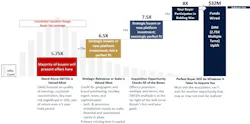
- Acquisition premiums range from 6% to 25% when a seller engages an M&A advisor to assist with an exit
For example, an unsolicited offer of $30 million with no M&A advisor could prevent a seller from realizing $1.8-$7.5M in additional deal premium or value.
- 65% of deals with top M&A advisors are considered predominantly “cash deals” vs. 44% with no representation
Earnouts, seller notes, and equity roll shift the remaining deal value as a risk onto the seller.
- Acquirer returns decline by ~7% when sellers are represented
How M&A advisors generate a 6% to 25% acquisition premium uplift
- Valuation analysis: The advisor “can provide the valuation analysis needed by the seller to evaluate the reasonableness of a buyer’s potential offer.”
- Identifying buyers the seller cannot reach: Advisors “often have extensive proprietary M&A databases that can be used to identify potential strategic buyers that a private seller is unaware of.”
- Credibility via a sell-side M&A advisor: “The presence of an M&A advisor adds credibility or gravitas to the sell-side of a deal and can affect the attitudes and behavior of the bidder’s management and advisors.”
- Information-sharing that lifts perceived synergies: M&A advisors “can glean valuable information from the seller’s management during preliminary due diligence that, when skillfully shared with buyers, can persuade a bidder to increase its valuation of the synergies from acquiring the business.”
- Real competitive tension: "If a seller only has one strategic buyer interested in purchasing the company, using an M&A Advisor can give the prospective buyer the impression that there are competing strategic buyers against which it must compete to acquire the seller.”
- Multiple negotiations: “The sell-side of a deal can potentially strengthen its negotiating position by using an M&A Advisor’s soft skills and knowledge of the M&A process to pace negotiations with multiple bidders.”
The soft side of transactions
A study can’t tell you everything. Here are some more insights gleaned from my time helping clients.
Workload: An M&A advisor will spend 300 to 400 hours on average, sometimes many more, per transaction.
Buyer questioning and posturing usually starts to tax sellers around month five with an M&A advisor. Without one, this occurs fast. Key advice for sellers: expect issues to arise across data gathering and quality, financial and operational review, questioning, and posturing, LOI negotiation, quality of earnings (QoE), purchase agreement negotiation, and so on. If humor finds you well, consider due diligence as a colonoscopy without anesthesia.
Engaging the buyer pool
Identifying buyers, making contact, negotiating NDAs, having preliminary calls between the M&A advisor and buyers then between the seller and buyer pool is very time consuming. Many sellers simply do not have the time to run this process themselves and still operate their business.
A structured and timely process exists when a seller has representation
Time kills deals. When buyers are making multiple acquisitions at the same time, when issues arise that cause a slowdown, or when buyers simply have competing priorities, the timeline extends. M&A advisors force buyers to stick to the timeline.
Building leverage into the deal from the start
Leverage is the most important piece of any transaction. Skilled M&A deal teams continually focus on this from start to finish. A botched deal can’t be fully unwound: the original buyer pool will know the deal didn’t go through, your employees probably have a hint, you have seller fatigue, and by this time, the business may have a slowdown in its last-twelve-months’ performance.
The LOI
Buyers submitting unsolicited offers look at letters of intent as a placeholder while sellers perceive LOIs as etched in stone. My deal team and I have 93-95% of the deal terms negotiated in the LOI before execution, which helps to avoid surprises later. These have included:
- Purchase agreement draft (survival periods, reps and warranties, indemnity caps, etc.)
- Rollover equity draft (“second bite of the apple”) structure
- Employee matters
- Working capital negotiation
- Work in progress
- Addbacks negotiation
- Real estate
Once the LOI is executed, all other interested buyers are moving on. The seller gets expert LOI negotiation at no hourly cost (remember M&A advisors are success-fee based) vs. having their attorney do this for them at expensive hourly rates.
The full deal team
More experienced sellers know that M&A advisors, attorneys, accountants, and due diligence teams make up the full deal team.
If you ask your financial advisor about an exit, they usually refer you to several M&A advisors for consideration. A financial advisor that tells you to accept an unsolicited offer or to go at it alone would most likely not be providing you with sage fiduciary advice.
Fees
M&A advisors make the vast majority of their compensation from success fees, as opposed to attorneys who charge a flat hourly rate regardless of whether the deal falls apart the night before close.
Conclusion for potential sellers of private companies
Know that if you have an unsolicited offer(s) on the table and accept one without running a full process with representation, you are most likely achieving a suboptimal deal, if a deal at all. The empirical evidence should be taken seriously.
Inbound offers are usually accompanied by dinner and nice wine, commitments to your legacy, and sales pitches. Be confident about the business you’ve built and what the data on achieving a premium outcome is telling you. This is your journey that should be controlled by you with the help of a full deal team.
About the Author

Chandler Kohn
Principal
Chandler Kohn is an investment banker with FOCUS Investment Banking’s Automotive Aftermarket team, where he leads the firm’s Heavy-Duty Truck Parts and Service industry coverage. He advises clients on sell-side and buy-side M&A transactions and capital raising initiatives, with a focus on helping owners scale or successfully transition their businesses.
Kohn is also the host of Know to Grow: A Light to Heavy-Duty Podcast, where he interviews owners, CEOs, and senior executives on best practices and forward-looking strategies for building durable, scalable businesses. The podcast is the only industry-specific platform focused on scalability and valuation within the heavy-duty parts and service sector.
With deep automotive industry expertise, a broad executive network, and extensive transaction experience, Kohn serves as a trusted advisor to small and middle-market business owners pursuing partial or full exits, buy-side strategies, or growth capital solutions.
Coming from a multi-generational family of entrepreneurs whose business employed up to 70 people at its peak, Kohn brings firsthand understanding of the realities of building and operating a small business. This perspective, combined with his deal experience, enables him to create effective one-time private transaction markets for clients, with a focus on readiness, risk, legacy, and outcome.
Kohn lives in Charleston, South Carolina, with his wife and daughter. Outside of work, he enjoys spending time with his family, saltwater fishing, fitness training, and exploring Charleston’s culinary scene. He holds a Master of Science in Finance from Tulane University and a Bachelor of Science in Business Administration from the College of Charleston, and maintains FINRA Series 63 and 79 licenses.