Rush leaders win big by engaging with techs at Rodeo and in the shop
Key Highlights
- Effective technician retention relies on daily engagement and meaningful communication between management and techs.
- Company events like the Rush Tech Skills Rodeo foster team building, recognition, and loyalty among technicians.
- Leadership should walk the shop floor, understand technicians' challenges, and treat them with respect to build trust and improve morale.
- Understanding the pressures and complexities of technicians' roles helps managers make better operational decisions and support their teams.
As many in the industry continue to struggle with the technician shortage and retention concerns, even while shops increase pay and focus more on technicians, there's still a divide between the bay and the office that can undermine efforts to attract and keep techs.
And Victor Cummings, VP of service operations for Rush Enterprises, believes he knows what’s causing it.
“I think there's a disconnect at times between the technician and management and not fully understanding each other's roles,” said Victor Cummings, VP of service operations for Rush.
To bridge that divide, Cummins has a solution.
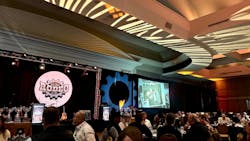
“There's no substitute for engagement, and I think that is by far the most important component to tech retention," Cummings asserted. He spoke with me in Nashville about it during the 20th Rush Tech Skills Rodeo, which is a major way Rush builds that engagement and strengthens the company culture. The teambuilding event is open to all of Rush’s 2,900 techs, and 95% took the qualifying test. Getting that percentage of participation in any corporate initiative indicates a strong level of engagement.
Those who performed best on the qualifiers—about 240 techs in all— were invited to the skills competition, where they put their experience and knowledge to good use, attempting to win prizes and commiserate with colleagues from across the country. And every facet of maintenance is included, with awards for everything from engine know-how by make to parts and paint.
Most years, it’s in San Antonio, which is 40 minutes or so away from Rush’s New Braunfels headquarters. But Nashville is one of the hottest cities in the U.S.—even if it was freezing last December—and was home to the first Rush Rodeo in 2006, so it made sense to have the competition in Music City. The first was held at a Peterbilt dealership; this one took place at the opulent Gaylord Opryland Resort & Convention Center.
While it was my first rodeo, it was the 20th for Rush, and even a casual observer could see how much the top brass value the event and the techs behind it. During the awards ceremony, the company’s CEO and Chairman, W.M. “Rusty” Rush repeatedly redirected attention away from the stage, putting the spotlight on the workforce itself.
“When you know that you've got not just the biggest, but the best workforce, then they deserve the biggest and the best when it comes to something like this,” asserted Rush, the son of founder W. Marvin Rush, who started the company 60 years ago.
Technically, they are not the biggest in number; Penske has nearly four times the number of techs. But in Rusty’s heart and mind, clearly they take up the most space, hence why the Rodeo is such a big deal for its employees.

In fact, the most recent winner, Dom McConnell, used the previous year’s Rodeo to propose to his now wife, finding a nice spot along San Antonio’s River Walk to bend on one knee.
“The reason I chose the 2024 rodeo is because we went there for the first time in 2023 and I knew that exact spot on the river walk was where I wanted to propose, somewhere we could come back to (hopefully for more rodeos) on vacation and experience the feeling again,” McConnell told us in January after the wedding.
And as a bonus happy ending, part of his $18,500 in prize money for winning in 2025 went to the honeymoon.
Not every service provider or fleet has the scale for huge annual events, or can expect employees to make lifelong memories at company gatherings, but finding something to bring everyone together (that’s more creative than a Friday pizza party) can go a long way to building lasting trust and loyalty.
Building engagement every day
Like a marriage, long-term relationships need more than infrequent grand gestures. While company events have their place, according to Rush leaders, sustained technician satisfaction is impacted far more by what happens every day inside the shop than a few days of fun and friendly competition.
Without consistent, meaningful interaction, it can become harder for techs and management to fully grasp the other’s challenges and responsibilities, not necessarily because leadership is inattentive or doing a poor job, this can simply be a structural gap.
For Rush, what really closes this gap and ensures that technicians feel heard starts with clear communication from the top down. In practice, effective engagement isn’t a policy or procedure within the shop, it’s a behavior.
“It means that your shop foreman, your supervisors, your service manager, the general manager—basically the leadership in the dealership—needs to walk that floor, have conversation, engage with their technicians, understand what their struggles are, what their frustrations are, as well as what they really enjoy and appreciate at the workplace,” Cummings explained.
These casual conversations can often reveal obstacles or worries that might not be obvious from a management perspective, or might not be expressed through a formal complaint process. Asking what slows them down and what makes their job harder can provide insight, and it’s just as important to recognize the pressure that comes with the role itself.
“There's a lot more to being a technician than people realize,” Cummings pointed out. “Just the investment in tools, the complexity of the job, the constant push to get things done in a timely fashion, there's a lot of pressure. It's a difficult job, and at times it's a very physical job. And I think there are managers and supervisors that take that for granted.”
This awareness matters, especially for leaders who may not have spent time turning their own wrenches.
“If you haven't walked in their shoes, if you haven't experienced what they do, and what they feel, it's harder to have that empathy,” Cummings continued. “That's why I say you've got to have that engagement. You've got to get to know them. You've got to understand what's important to them and what some of their struggles are, and that helps bridge that gap and the disconnect in communication.”
One way Cummings framed this is by encouraging leaders to treat their technicians with the same respect and consideration that they might a customer. As managers and supervisors, he said, leaders should ask themselves: ‘What can I do to best support and assist our technician to do their job more efficiently and more effectively?’
Technicians are held to a high standard and their ability to meet it often depends on the systems, processes, and support of the shop they work in. When leadership takes the time to listen and understand what gets in their way, it becomes easier to make operational decisions that actually improve efficiency, rather than unintentionally adding friction to the job.
About the Author
 Lucas Roberto
Lucas Roberto
Lucas Roberto is a Senior Staff Writer and producer of multimedia content for Fleet Maintenance magazine. He holds a bachelor's in media production and a master's in communication from High Point University in North Carolina.