ASE Foundation receives $25M federal grant to expand technician apprenticeships
Key Highlights
- The $25 million grant is part of a broader $162 million federal effort to expand technician apprenticeships in critical industries.
- Employers can receive up to $3,500 per apprentice for successful onboarding and retention milestones, encouraging mentorship and structured training.
- The program aims to reduce technician turnover by supporting shops in developing comprehensive training and mentorship frameworks.
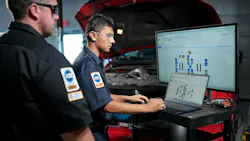
The ASE Education Foundation is receiving a $25 million grant from the U.S. Department of Labor, aimed at increasing registered apprenticeships for automotive, collision, and commercial vehicle service technicians. The four-year award is part of a nearly $162 million federal investment in programs across several critical industries, creating new incentives for employers to recruit and retain entry-level techs.
According to the department, the funding supports the Trump administration's goal of surpassing 1 million active registered apprentices nationwide.
For the transportation service industry, the ASE Education Foundation's grant represents the largest federal workforce investment ever directed toward technician apprenticeships. Instead of focusing solely on recruitment, the initiative aims to improve overall retention by rewarding employers who guide new technicians through their first months on the job.
Employers participating in registered apprenticeship programs can receive up to $3,500 for each apprentice they hire and retain, with payments tied to 90-day and 270-day employment milestones. The incentives are intended to encourage mentorship and a more structured onboarding during what ASE says is the most critical period in a technician's career.
This emphasis on retention comes as the industry continues to struggle with workforce turnover. The Foundation has previously reported that roughly one in five technicians leaves the industry during the first year after graduating, while employers continue to face an ongoing shortage of qualified technicians.
"I think it allows shops to have a little more patience with young technicians," said Jay ASE VP of industry advancement. "By helping offset some of the costs associated with training and development, shops can spend more time teaching instead of expecting a new technician to be fully productive right away. That gives young people the opportunity to mature, build confidence, and develop the skills they need to succeed."
Employers with existing registered apprenticeship programs are eligible to participate, while those without one can use the Foundation's free "Apprenticeship-in-a-Box" toolkit, developed with the National Automobile Dealers Association, to establish a program. The toolkit includes resources such as mentor training, interview guides, and implementation materials.
Goninen acknowledged that many shops struggle to find the time to build training programs while managing day-to-day operations but said registered apprenticeships provide a proven framework.
"It provides a proven framework, so shops don't have to reinvent the wheel," he continued. "This grant helps lower the barrier to entry by making those resources, guidance, and support more accessible."
The Foundation said the initiative will support apprenticeships across franchised dealerships, independent repair shops, fleets, truck and diesel repair facilities, retail service chains, and collision repair businesses. Recruitment is expected to begin immediately.
The grant builds on the Foundation's broader efforts to strengthen the technician pipeline, including its recent partnership with WrenchWay.
"Connecting students with employers is an important first step, but creating a structured path for those students once they're hired is what helps turn an entry-level employee into a long-term technician," Goninen said.
Goninen said the initiative reflects growing industry collaboration around addressing the technician shortage, adding that he "can't remember another time when so many organizations have been this aligned around improving the future of the technician workforce."
About the Author
 Lucas Roberto
Lucas Roberto
Lucas Roberto is a Senior Staff Writer and producer of multimedia content for Fleet Maintenance magazine. He holds a bachelor's in media production and a master's in communication from High Point University in North Carolina.