Why modern productive techs must be as skilled with digital workflows as turning wrenches
Key Highlights
- Diesel technicians now need digital workflow and service management skills alongside traditional repair expertise.
- Trade schools are adding digital work orders, service histories, and customer communication to technician training.
- Early digital training can shorten technician onboarding and help fleets address persistent maintenance staffing shortages.
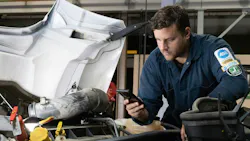
For decades, the diesel technician trade has focused on the fundamentals: finding the problem, following repair best practices, knowing how to turn a wrench and safely operate equipment such as lifts, and then checking the work. It was mechanical and straightforward.
Today's service environment, however, relies on digital workflows, electronic work orders, service management platforms and data-driven communication among technicians, service advisors and customers. Therefore, to ensure shop efficiency and fleet uptime, the list of fundamentals has grown to include basic and advanced diagnostics, as well as proficiency in service and repair processes.
“Digital service management skills help the whole shop operate more efficiently,” said Sam Boerboom, product marketing manager at Noregon. “When technicians learn to document repairs, communicate clearly, and manage work digitally, the repair process becomes more consistent and that drives faster turnaround times.”
The earlier in their careers technicians understand this, the more productive they can be, Boerboom noted.
“Shops are strapped for time when it comes to training new hires,” he said. “Teaching digital service management skills early helps reduce that burden so shops can spend less time onboarding new hires.”
Tommy Lewis, training specialist at North Carolina-based Mangum's Towing & Road Service, has recognized the need for technicians to understand workflows and customer communication before they enter a shop. As an instructor in Johnston Community College’s Diesel and Heavy Equipment Technology program, he has integrated these concepts into the curriculum and advises students on how to document repairs, communicate with customers, and navigate the digital systems that have become standard throughout the commercial vehicle industry.
“We're not a pen-and-paper industry anymore,” Lewis said. “Work orders are digital now, and the transition from traditional service documentation is exactly why digital workflow management belongs in a modern diesel technician curriculum. We were doing students a disservice by not having any exposure to that technology.”
Real-world experience with digital fleet maintenance
For Lewis, developing the next generation of technicians means modernizing the program to reflect today's commercial vehicle service environment.
“My approach as an instructor is to mirror what students will encounter after graduation so they will be ready to go to work,” he said.
To that end, Lewis is integrating the Decisiv Service Relationship Management (SRM) platform into the Johnston curriculum to immerse students in real-world service workflows before they enter a dealership, fleet maintenance operation or independent repair shop.
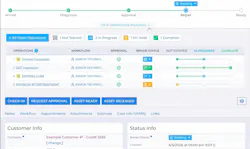
“The objective is to create an authentic service event from start to finish,” Lewis explained. “When they're working in a shop, students will have to interact with the SRM platform, put in notes, complete work orders, research service histories, and order parts.”
Even customer communication will become part of the learning process.
“Instructors are going to act as customers,” Lewis added. “When the student sends a recommendation, we can send it back to them, just like the customer is authorizing a repair.”
Decisiv’s support for the initiative includes sharing access to its Decisiv U training portal.
“It’s a dedicated training environment,” said Robert Nordstrom, VP of product enablement at Decisiv. “We’re also providing access to our training, deployment and product enablement teams.”
That will allow Lewis to present realistic scenarios in which students receive a truck with a specific problem and work through the complete repair event within the SRM platform.
Instilling these new fundamentals at the trade-school level is something many others are also working toward in the industry. ASE has long advocated for shops and other industry stakeholders to partner with local schools. To push those efforts further as the technician shortage becomes more pronounced, ASE recently acquired WrenchWay, a platform that connects shops to schools and potential new hires while also diving into general trends and attitudes through the Voice of Technician Survey. Now part of ASE Connects, the workforce platform will continue to work closely with educators to standardize what the next generation of techs will need, while providing member shop access to national data on pay, workforce trends, and training needs.
Noregon is also directly connecting with students and schools.
“Suppliers can help bridge the gap between the classroom and the shop floor by supporting instructors, helping shape curriculum and giving students hands-on experience with professional tools,” Boerboom said. “Through the Noregon Education Program, we partner with schools to give students access to professional diagnostic and digital shop management tools, helping them build practical skills and confidence before they begin their careers.”
Shortening the learning curve for diesel technicians
The philosophy behind Lewis’ approach is rooted in three decades of experience, a career that includes serving as a mobile technician at major fleets, leasing companies and dealerships. Lewis also plays an active leadership role in the industry through the Technology & Maintenance Council (TMC), where he serves as chairman of the S.14 Last Mile and Vocational Vehicles Study Group.
In his role at Mangum's, he is responsible for training about 100 technicians. The family-owned and operated transportation support company offers maintenance, repair, towing and roadside service at 11 shops across three states, along with 30 service trucks.
Lewis also believes that familiarity with service management platforms can dramatically shorten a newly hired technician’s learning curve.
“If the student's already familiar with digital repair order workflows, that's less time companies need to invest in them when they get into a shop,” he said. “And the more quickly a technician becomes proficient on the platform, the sooner they can contribute to productive shop operations.”
The SRM initiative, Lewis believes, will also build relationships between the college and employers.
“We want to utilize this program to help create partnership opportunities with dealers,” he said. “Exposure to Decisiv SRM can help place some of our students in jobs sooner.”
When students are better prepared for how modern shops work, Boerboom noted, they can discover additional career opportunities.
“These skills also help technicians understand how efficiency, communication and documentation impact profits and customer satisfaction,” he said. “That will help them prepare to become lead technicians, shop managers or even business owners.”
“Immersing students in tools like SRM will build foundational knowledge for service operations and management, including strengthening their problem-solving and decision-making skills,” Lewis said. “With that exposure, they can work in parts or maybe as a maintenance coordinator.”
“This preparation can also help address one of the industry's most persistent challenges,” Lewis added. “We see reports on the technician shortage—something like two-thirds of shops are understaffed—so instead of simply producing more technicians, we’re putting more quality technicians in the pipeline. That equates to better uptime for the customer and better service event outcomes, and those translate into decreasing backlog and more shop throughput.”
About the Author
 Seth Skydel
Seth Skydel
Seth Skydel, a veteran industry editor, has more than 41 years of experience in fleet management, trucking, and transportation and logistics publications. Today, in editorial and marketing roles, he writes about fleet, service, and transportation management, vehicle and information technology, and industry trends and issues.