Fleet reads: Books to improve your leadership style

No two routes to managing a fleet’s maintenance operation are the same. Some take the college route and learn about spreadsheets and depreciating assets. Many more are born into the trade, diesel embedded in their DNA.
Others take unconventional routes. Roger Penske, for example, started out pumping gas and wrenching engines in Cleveland before going to college and making the obvious pivot to race car champion and truck leasing magnate.
However you wound up managing a shift or department, whether running a four-bay shop or a Fortune 500 logistics company, you had to learn how to lead. There may be such a thing as a natural-born leader, but I’ve never heard of a natural-born great leader. You pick up skills along the way, suffer failures, and bask in victories to understand what it truly takes.
To illustrate this and reveal strategies anyone can repeat, we profiled four impressive leaders here:

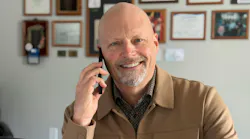
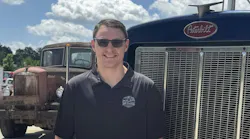
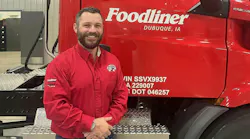
We hope their journeys show what it takes to reach the top, or, if you’re already there, what it takes to get even better. Common threads include embracing new technology, staying curious, and sacrificing in the present to reap rewards later.
In my 15+ years interviewing CEOs and industry leaders, I’ve noticed many leaders are also prolific readers. They’d often suggest a book that influenced them in their careers, so I asked our subjects to do the same.
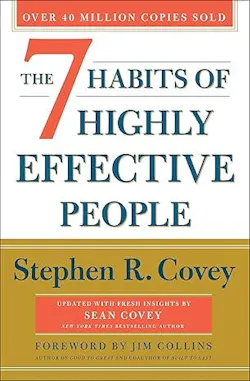
Charles "Chas" Voyles, Jr., associate director of customer service/fleet at International Motors, recommended "The 7 Habits of Highly Effective People," which he encourages everyone he manages to read. The habits most helpful to him were No. 1: Be Proactive, and No. 4: Think Win-Win. To him, these boil down to character and accountability: “Say what you’re going to do, and then do what you say.”
Voyles, regarded as a top relationship builder in the industry and author of a TMC Recommended Practice on conflict management, said the book also reinforced a strong end-of-day habit. His "five o’clock rule" is to check in with customers and colleagues about open tasks and questions. “Even if you don’t have an answer, you owe the customer an update that day, so they go to bed knowing your team is still working on the issue,” he said.
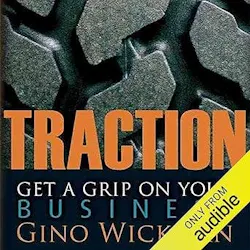
Vincent Myles, the 33-year-old president of Myles Truck Repair, offered two books.
The first is “Traction: Get a Grip on Your Business,” which outlines the Entrepreneurial Operating System (EOS), a framework built around vision, people, data, process, and other relevant skills. Myles said the company began its EOS journey last summer, and the book helped implement strategies “to create accountability for every position.”
It also strengthened culture and clarified expectations. “If someone’s negative and bringing down morale, it doesn’t matter how good of a tech they are—we’ve let people go for that,” Myles said. He does try to coach them up first.
“Extreme Ownership” by former Navy SEAL Jocko Willink reinforced that the buck stops with Myles when mistakes are made. “You have to figure it out and build systems to make sure it doesn’t happen again,” he said.
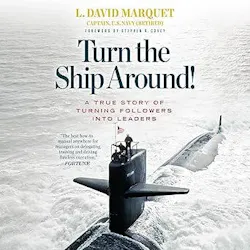
Another popular book among leaders is “Turn the Ship Around!” by Capt. L. David Marquet. From 1998 to 2001, Marquet transformed the USS Santa Fe from one of the worst-performing submarines in the fleet to a standout, earning the Battle Efficiency Award and the Arleigh Burke Fleet Trophy in 2001. The overarching goal: turn followers into leaders by giving them decision-making authority aligned with their expertise.
My boat experienced a similar turnaround on the Atlantic side—winning the Battle “E” in 2000 after a rough go of things in 1999—so I felt Marquet a kindred spirit. When he released “Distancing,” a book focused on helping leaders make better decisions once they’ve distributed authority, I reached out to get more details.
Marquet related that the core skill is self-distancing, which can become a leader’s “superpower,” one that “cuts through cognitive biases, emotional traps, and situational blind spots.” Wielding these powers grants better foresight and decision-making abilities, he added.
Essentially, we become our own worst enemy, dragging new decisions through a minefield of our past experiences and present anxiety. The former sub captain, used to dealing with pressure, said leaders should step back and resist such urges. That doesn’t come easy and does require practice.
“The decision-making apparatus that allows you to pause and distance gets short-circuited and even if you are able to summon it, your brain will still try to convince you that you don’t have time for distancing,” he said.
Ultimately, being too close can cloud a leader’s ability to interpret data and analyze root causes. Capt. Marquet offered that if a fleet manager perceives drivers as “careless about fuel usage,” when fuel costs jump, they might assume drivers are at fault and idle too much or harshly accelerate, though “the actual problem might be inefficient routing or load management.”
Do yourself and your team a solid by giving one or all of these books a read, or even listen to the audio books. One note: actually reading improves brain power. A 2022 study on literacy and cognition in older adults (published in Frontiers in Psychology) found that older adults in an eight-week reading program outperformed a puzzle-solving control group in working and episodic memory. Who couldn’t use a boost in this area?
Beyond the science, though, the ROI is hard to beat. You can buy all of these books (or whatever you prefer) for about the cost of a Friday pizza party. And they’ll feed your team’s minds for life, while keeping them hungry for more leadership responsibilities.
About the Author

John Hitch
Editor-in-chief, Fleet Maintenance
John Hitch is the award-winning editor-in-chief of Fleet Maintenance, where his mission is to provide maintenance leaders and technicians with the the latest information on tools, strategies, and best practices to keep their fleets' commercial vehicles moving.
He is based out of Cleveland, Ohio, and has worked in the B2B journalism space for more than a decade. Hitch was previously senior editor for FleetOwner and before that was technology editor for IndustryWeek and and managing editor of New Equipment Digest.
Hitch graduated from Kent State University and was editor of the student magazine The Burr in 2009.
The former sonar technician served honorably aboard the fast-attack submarine USS Oklahoma City (SSN-723), where he participated in counter-drug ops, an under-ice expedition, and other missions he's not allowed to talk about for several more decades.