How to safely use a tire bead seater
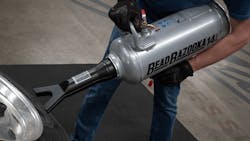
In fleet maintenance operations, few tools combine raw power and precision quite like tire bead seaters. These devices use pressurized tanks to deliver explosive bursts of air to seat stubborn tire beads, making them indispensable, particularly for commercial, HD, and agricultural tire service. Yet despite their critical role, bead seaters remain one of the most misunderstood—and potentially hazardous—tools in the shop when proper safety protocols aren’t followed.
The stakes are particularly high in fleet operations where technicians service dozens of tires daily across varied vehicle types. A single incident can result in equipment damage, costly downtime, and serious injury. Understanding and implementing proper bead seater safety protocols isn’t just good practice—it’s essential for protecting your team and maintaining operational efficiency.
The hidden danger: When bead seaters aren’t used
Perhaps the most significant safety risk doesn’t come from using bead seaters improperly—it comes from not using them at all. When faced with a stubborn tire that won’t seat, some technicians resort to the dangerous “old school” method of spraying flammable liquid around the bead area and igniting it to create a mini-explosion inside the tire. This practice, while sometimes dramatically effective, represents one of the most hazardous procedures in any tire shop.
At best, this method can cause fire damage to wheels and tires. At worst, technicians can suffer burns or fatal injuries. The unpredictability of using ether and an open flame makes every attempt a gamble with safety. Modern bead seaters mitigate this risk while providing consistent, controllable results.
The evolution of bead seaters
Today’s bead seaters have evolved significantly from the large, bulbous tanks with manual butterfly valves that dominated shops a decade ago. Today’s modern designs prioritize operator control and safety through several key improvements. Smaller diameter tanks with ergonomic gun-like grips make units easier to control and less prone to structural failure. Interior anti-corrosion coatings prevent hidden damage that could compromise tank integrity over time. Automatic or semi-automatic trigger mechanisms eliminate the need for manual valve operation that previously required technicians to lose their grip and control during discharge.
These improvements address the fundamental challenge of managing highly pressurized equipment in busy shop environments. When a tank contains 85-116 PSI of compressed air—energy comparable to a small explosion when released—every design element affecting control and reliability becomes a safety factor.
Essential operating procedures
Safe bead seater operation begins long before pulling the trigger. Preparation and proper personal protective equipment (PPE) form the foundation of safe practice. While the demand to work quickly in a busy shop is real, taking time to properly prepare prevents accidents that cause far more delays.
Before operation, clear the work area of any debris or materials that could become projectiles when blown by the massive air discharge. Alert nearby technicians that you’ll be using a bead seater so they can don appropriate PPE or maintain safe distance—typically at least two yards from the operation. Hearing and eye protection are non-negotiable for both the operator and anyone in proximity, as discharge noise can exceed that of a gunshot.
During operation, maintain the barrel one to two inches from the wheel rim and tire gap. Many technicians make the mistake of jamming the barrel directly against or into the tire, which not only reduces effectiveness but increases the risk of slippage and uncontrolled discharge. The powerful air blast works best with slight distance, allowing proper air distribution while maintaining operator control.
Avoiding critical mistakes
Three common errors account for most bead seater incidents.
First:
Never assume a tank isn’t pressurized. Like firearms, bead seaters should always be treated as loaded and ready to discharge. This mindset prevents casual handling that leads to accidental discharge—at best creating noise and property damage, at worst causing serious injury.
Second:
Poor maintenance and storage will compromise tank integrity over time. These tools undergo extreme pressure cycling with each use, creating stress that accumulates without proper care. Tanks thrown in corners or left unsecured suffer damage that may not be immediately visible but can lead to catastrophic failure under pressure. Proper wall-mounted storage protects tanks from impact damage while keeping them readily accessible.
Third:
Ignoring manufacturer specifications for operating pressure creates unnecessary risk. While it might seem that more pressure equals better performance, exceeding the recommended pressure range stresses tanks beyond their design limits. Quality manufacturers include pre-configured safety valves that prevent over-pressurization—these safety features should never be modified or removed.
Maintenance and inspection protocols
Every manufacturer specifies inspection schedules and decommissioning dates for their equipment—these aren’t suggestions but critical safety requirements. While schedules vary by manufacturer and construction type, tanks are typically required to be decommissioned after a few years of use, while other high-quality tools can continue to be used after routine inspections.
Tank construction materials also affect longevity differently. Steel tanks offer superior strength but require anti-corrosion coatings, especially internally where moisture from compressed air can cause hidden rust. Aluminum tanks resist corrosion but may be more susceptible to impact damage. Wall thickness, weld quality and the number of penetrations all affect structural integrity over time.
Watch for warning signs including visible corrosion, dents, weld cracks, or damaged safety components. Pressure gauges and safety valves must remain fully functional and should be immediately replaced if compromised. Document the commissioning date and maintain inspection records—this isn’t bureaucracy but essential safety management.
The crucial investment in training
Because bead seaters are problem-solving tools rather than equipment that is used every day for many shops, they’re sometimes overlooked in training programs. This creates dangerous knowledge gaps when technicians encounter stubborn tires requiring bead seater use. Every technician expected to service wheels and tires needs comprehensive training on proper bead seater operation, regardless of how frequently they’ll use the equipment.
Training should cover manufacturer-specific operating procedures, proper PPE requirements, safe positioning and technique, maintenance requirements, and emergency response procedures. The Tire Industry Association (TIA) offers comprehensive training resources and certification programs that establish industry-standard safety practices.
Selecting safety-focused equipment
When evaluating bead seaters, certain safety features are essential. Quality pressure gauges and safety valves form the absolute minimum—equipment lacking these basics is essentially an uncontrolled pressure vessel. Beyond these elements, look for features that enhance operator control and safety.
Consider smaller diameter tanks that are easier to control, trigger mechanisms with safety guards or caps to prevent accidental discharge, anti-corrosion coatings for long-term integrity, analog pressure gauges that don’t require batteries and serviceable components that allow proper maintenance rather than complete replacement. These features represent the evolution of bead seater technology toward inherently safer designs.
The bottom line
Safe bead seater operation requires three fundamental commitments: research, training, and preparation. Research available equipment options to select tools with appropriate safety features for your operation. Implement comprehensive training ensuring every technician understands both the power and proper use of these tools. Establish preparation protocols that prioritize safety over speed in daily operations.
The few minutes invested in proper setup, PPE, and technique pay dividends in accident prevention. In an industry where efficiency drives profitability, remember that nothing delays operations more than a preventable accident. By treating bead seaters with the respect their power demands and implementing systematic safety protocols, fleet maintenance operations can harness these essential tools while protecting their most valuable asset—their technicians.
About the Author
William Brahler
William Brahler serves as Director of Operations for Gaither Tool Company, where he has contributed to the family business since 2012. With seven years of full-time industry experience spanning roles from logistics to operations management, he brings practical expertise to tire service safety and equipment development. Gaither Tool Company manufactures the Bead Bazooka line of tire bead seaters and other specialized tire service equipment.