Why recalls are rising and how fleets should respond
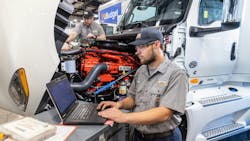
It’s no secret that recalls across light-, medium-, and heavy-duty equipment are on the rise. For example, Ford nearly doubled the previous record for recalls with 152 in 2025. But they are not alone.
Victor Cummings, VP of service operations for Rush Enterprises, said recall volume has roughly doubled over the last few years. Rush Truck Centers completes more than 5,000 campaigns and recalls a month. “A lot of it has to do with the technology behind emission systems and how complex the trucks are,” he said.
Resolving recalls often means taking vehicles out of service and routing them to local shop or dealer, which can disrupt schedules and strain resources.
“[Recalls] often lead to vehicle downtime, scheduling conflicts and additional administrative effort,” said Robert Pardo, Jr., director of central fleet for the Boston Public Works Department. “When recalls are unexpected, they can create setbacks in day-to-day operations, added costs, and driver frustration, ultimately reducing fleet utilization.”
Sara Shaw, corporate service director for Kenworth Truck Sales, noted that recall activity often increases “when reconfigurations are released to meet new EPA standards.”
And a major reset is on the way with the EPA’s upcoming low-NOx rule, which has motivated OEMs to redesign heavy-duty diesel engines for MY2027. Combine that with advances in safety and emissions technology, and fleets have more vehicle components and systems that may be defective or incorrectly installed.
For fleets, this increase is driving the need for strong tracking systems, structured processes, and partners to help manage the recall process. These are things fleets should have in place sooner rather than later, along with a triage plan in place to prioritize recalls that affect safety and uptime, while still finding time to address the less severe issues.
Safety dance
“It becomes a delicate dance of what you get fixed, what you get campaigned, and what you have to let go,” said Gregory Thibodeaux, vice president of maintenance and fleet management at Waste Connections, which operates about 13,000 vehicles daily across the U.S. and Canada. “It’s very difficult to get them all completed.”
Christopher Miller, CEO of Recall Masters, explained recall statistics can also be hard to interpret. “It gets complicated right away as the definition of a recall is a bit fluid,” he said.
Recalls are issued by the National Highway Traffic Safety Administration when the agency determines a vehicle or part has a safety-related defect or does not meet federal safety standards, whereas campaigns are issued by the vendor or factory voluntarily. “Campaigns typically have an expiration or termination date; recalls never expire,” Shaw said.
Recalls also have requirements for how quickly a problem must be addressed. “The pressure on the supplier is higher when there’s a recall. That’s why sometimes they launch voluntary campaigns, even when they know that a recall will come,” said Andreas Haunreiter, associate partner at McKinsey & Company. “They can filter out some vehicles in the field and get a little bit ahead.
Voluntary actions are becoming more prevalent, and Miller said 2024 was the first year that the number of voluntary recalls surpassed the NHTSA-mandated recalls. “You have less enforcement actions, but that doesn’t mean that you’ve got less recalls happening,” he explained.
Stefano Daneri, fleet ecosystem strategist at Fleetio, said the practical takeaway for fleets is that recalls are more common today than in the past. “Whether the year is up or down, fleets still have to figure out what recall applies to which asset, decide what’s urgent, get it scheduled, and keep a clean record that it’s done,” he said.
Software driving more recalls
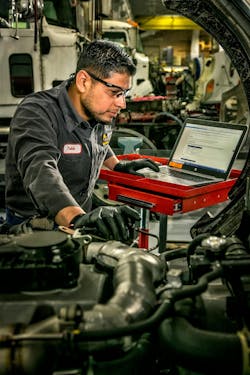
A growing share of recent recalls are software-related, and these issues drive more than 40% of cases in commercial vehicles, Haunreiter said. “It’s not always the software itself, but the top five systems driving recalls include telematics, cameras and sensors, infotainment, brakes and hydraulics, and steering systems.”
This rise in software-related issues is linked to broader vehicle integration. “You have many components that are mechatronic—you have a mechanical component that is integrated with a controller and software on the controller,” Haunreiter said. “It is a more complex system.”
Miller noted that software-related recalls and campaigns can still have hardware-related consequences and span drivetrain, emissions, or transmission functionality that, ultimately, leads to mechanical issues. However, growth in software can also provide opportunities.
“NHTSA is tracking that trend, and the 2024 annual report shows that over-the-air fixes are being used by manufacturers across Classes 1 through 8, reflecting a broader industry shift toward software-based solutions across a range of vehicles,” Daneri said.
Vehicles are also providing more data than they ever have before. “We’re actually very optimistic that the combination of sophisticated on-board technology and improved connectivity and analytics will allow us to become more proactive with early detection processes that can reduce recalls,” said Emily Bishop, head of product safety and certification for Volvo Group North America.
OEMs make every effort to ensure they’re delivering quality products and want to maintain quality in the field, Haunteiter said.
“They first try to eliminate any errors and then they try to make the diagnostic and repair processes better,” he explained. “A recall is a reputational risk for an OEM. That’s why, as soon as they see that there are investigations or there may be a mandatory recall, they start a voluntary campaign.”
Ford Pro, for example, has more than doubled its team of safety and technical experts over the past two years and increased testing-to-failure on critical systems such as powertrains, steering, and braking.
“Ford Pro Intelligence also helps identify issues faster and plan service more efficiently when recalls affect fleets, leveraging insights from connected vehicles with customer authorization,” said Travis Hunt, general manager of parts and service at Ford Pro.
Technology is also allowing OEMs to adopt remote solutions when possible. When a remedy can be delivered through an over-the-air or software update, it can often be resolved faster, sometimes without a service visit, Hunt said.
GM provides software updates via over-the-air delivery. “We’ve introduced a technology for software updates called Vehicle Wide Programming that enables us to update multiple vehicle modules simultaneously,” said Yvonne McKee, service operations senior manager for GM Envolve.
Even still, many recalls require hands-on service, parts, bay time, and coordination with a dealer or certified shop. “For example, some recalls on vehicles like a 2016 Ford Explorer involved more complex corrective procedures rather than simple updates,” Pardo said, citing issues with seat tracks, rear suspensions, and cooling fan relays.
That’s where fleets feel the pinch, according to Daneri. “Now it’s not just, ‘Is there a recall?’ It’s, ‘Is there a resolution available? Can we get an appointment? Can we keep the truck moving while we work through it?’”