Cut CPM with smarter parts and tire strategies
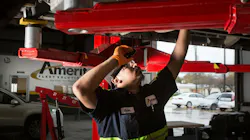
As the freight recession nears an end, more problems have risen. Dormant, undermaintained trucks and trailers could begin seeing more use, creating additional maintenance and repair (M&R) needs, and potentially creating demand-driven pressure on parts pricing. And who knows how the ever-evolving tariff situation is going to play out over the next year or two.
Then there’s the war with Iran, which spiked U.S. average diesel prices 37% over last month. As of March 23, prices hit record highs, with an average $5.73/gal.
In short, expenses are going up.
According to Paul Rosa, SVP of procurement and fleet planning at Penske Truck Leasing, maintenance directors may need to plan on higher cost per mile (CPM), specifically for parts expenses. This is more about getting effective reliable parts that last versus any tariff-related hikes. “You’re not just managing parts,” he said. “You’re managing risk, unpredictability, and uptime.”
This current environment, where costs and M&R demands are going up, puts maintenance departments in a difficult position, as theirs is typically the first budget slashed when a fleet is looking to cut costs. That’s why it’s a really good time to start thinking about parts management strategies, particularly as it relates to CPM.
It’s also a good time for fleets to remind themselves that “choosing cheaper parts” can only drive so much value, because parts comprise around 3% of CPM. In some instances, rolling the dice on a cheap part can result in additional maintenance and technician labor, roadside service calls, tow bills, higher fuel burn, and increased downtime—all of which can drive CPM through the roof.
“There is a fine line between cost and value,” added Brian Antonellis, SVP of fleet operations at Fleet Advantage, which provides asset management services to some of the largest fleets in the industry. “There’s a time and a place for making sure you’re getting a competitive price on the things you use on a regular basis. But for most fleets, saving 30 cents on an oil filter isn’t going to move the needle.
“What really moves the needle,” he added, “is looking at the key parts that affect service and uptime, understanding the lifecycle of those parts relative to the planned lifecycle of the truck, and then managing the lifecycle to better control costs.”
Age has an influence
A common approach to parts selection is “good, better, best.” For older vehicles that are out of warranty, many CPM-minded parts procurers start giving some of the “better” options a serious look. It works out just fine in a lot of cases, helping fleets get the reliability they need at a lower cost.
“The procurement team just needs to know the vendors they are buying from,” said Angelo Cinquegrana, VP of operations at Amerit Fleet Solutions, a nationwide provider of mobile service, on-site service, and central parts purchasing for fleets. “Check out the reviews on a specific part to see what other fleets are saying. When we take over the maintenance for a fleet, we ask for a list of the main parts they’ve been buying. For vehicles that are at least one year old, we’ll go line item by line item and note where we tend to lean toward a proven alternate that is less expensive. We’ll usually get the customer’s buy-in.”
It’s also possible for a fleet to choose the highest-quality “best” parts and still reduce parts CPM. The first step is understanding the lifecycle of each truck. According to data from the American Transportation Research Institute (ATRI), the average truck age has come back down to a more normal level— around three or four years. That’s a good thing from an R&M and overall CPM standpoint.
“Trucks age and they don’t age nicely,” Antonellis said. “R&M really escalates in years five to eight. So controlling overall CPM starts with understanding when you should be replacing a truck, which helps you establish a strategy for maintaining it.”
For example, if you know you’ll be replacing Truck A at 400,000 miles, does it make sense to hold off on that DPF replacement as long as possible? You could end up with a large cost failure right before replacing that truck.
“Why hand that truck over to a new owner with a brand new DPF?” Antonellis asked. “It might make more sense to actually push that replacement up a bit, maybe to 300,000 miles, so you have the highest-quality truck in the last year you use it.”
In that scenario, the fleet still absorbs the cost of that DPF replacement. But by replacing it a little earlier and more preventatively, the fleet could benefit from reduced maintenance and downtime which will help offset that cost, perhaps even pushing CPM a little lower.
This leads to another key concept. When a fleet understands its asset lifecycle and upcoming maintenance needs, it can better understand its parts needs. That’s really important because, according to Penske’s Rosa, parts availability over the past few years has forced many fleets to shift from just-in-time parts inventory management to more of a just-in-case approach. This has underscored the importance of having multiple reliable parts vendors, individual part alternates, and an ability to predict maintenance and parts needs.
Predict and save
With a just-in-case inventory mindset, predictive maintenance has become an incredibly valuable tool for a fleet when it comes to controlling parts cost.
“With the computing power we have today, you can use data to predict when you’ll need X amount of part X,” Rosa said. “That allows you to get ahead of some of the variables that make controlling parts cost a lot harder today. Fleets must demand analytics from their maintenance providers. Fixing things after they fail will not help control cost. It’s not just about parts. It’s about the entire ecosystem that parts are a part of.”
Getting into a predictive maintenance mindset also helps fleets ramp up their purchasing leverage. Antonellis said more fleets are getting back to the practice of putting out RFPs (request for proposal) on parts and tires. Don’t stop at your top 10 or 20 most-used parts, though. That will just generate a list of common consumable items that everybody carries and there isn’t much pricing variance on.
“You might be able to drive a couple pennies out of each of those items, but you’re not going to drive significant value with respect to lowering CPM,” Antonellis said. “On the other hand, you can drive value by focusing on things you know you’re going to have to deal with at 350,000 miles, things like DPFs and injectors. While those things aren’t at the top of the list from a quantity standpoint, they’ll drive a significant portion of your parts spend, as well as a significant portion of your downtime. This is where you can move the needle on CPM.”
Take the time to come up with a list of the top 100 parts you anticipate needing over the next year, along with how many of each. Include a weighted total, and send it out to several vendors to see who offers the best pricing.
Remember, though, reducing R&M and CPM isn’t just about price. Parts are just one part of a CPM ecosystem. Sometimes the best way to reduce CPM is to spend a little more on the most reliable part option available. Similarly, there may be additional parts and accessories that add cost upfront, but help lower overall CPM by driving efficiencies in other areas. As the old saying goes, you have to spend money to make money… or in this case, save money. Fleets just need to spend it on the right things.
Tire tips to keep CPM in check
When you’re talking cost per mile, tires are truly where the rubber meets the road. Tires add another 4.7 cents to CPM, according to the most recent data from ATRI. Poor tire selection can shorten tire lifecycle and cause CPM to climb even higher.
It’s important to match tread pattern to application. Additionally, as detailed on the NACFE website, tire manufacturers have developed single wide tires and improved dual configurations for lower rolling resistance, which help improve fuel efficiency and lower the fuel aspect of CPM.
Overall tire quality is extremely important. This is one area where opting for a cheaper alternative can backfire from a CPM perspective. Tire wear and susceptibility to damage should be key considerations when selecting tires.
Casing quality and retreadability are equally important considerations. According to Kevin Rohlwing, chief technical officer at the Tire Industry Association, the best CPM is going to include multiple retreads because the cost to retread is so much lower than the cost of a new tire. “When a casing has an original tread life followed by one or two retreads, the mileage will typically be in the hundreds of thousands,” Rohlwing pointed out.
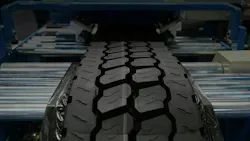
Tire pressure management is just as consequential as tire selection. NACFE’s research suggests there could be up to a 1% increase in fuel consumption when a vehicle is running with tires underinflated by 10 psi. Underinflation can also impact tire life, which impacts CPM.
“Tires have a big impact on cost per mile, and the biggest thing for years has been air pressure,” said Amerit's Cinquegrana. “If technicians can get into a good cadence where they check tire pressure every time they touch a truck, the fleet will see cost savings throughout the year.”
Tire pressure monitoring systems (TPMS) and automated tire inflation systems (ATIS) will help in this regard. NACFE research suggests that approximately 25-30% of tractors and 15% of trailers are equipped with TPMS today.
As a final thought, don’t overlook the influence of driver behavior on tire CPM. Fast starts, hard braking, and high-speed turns are harder on tires and can negatively impact CPM. Some drivers are harder on tires than others. Rohlwing said it’s important to acknowledge this when testing and evaluating tires. It’s also helpful to coach drivers on how their performance can impact tire CPM, which continues to be one of the top cost centers for a fleet.
About the Author
 Gregg Wartgow
Gregg Wartgow
Gregg Wartgow is a freelancer who Fleet Maintenance has relied upon for many years, writing about virtually any trucking topic. He lives in Brodhead, Wisconsin.