Smarter batteries seek to put an end to no-starts
Key Highlights
- Battery monitoring systems help fleets detect charging issues and potential failures before trucks are stranded.
- Connected sensors and predictive analytics are moving battery maintenance toward proactive fault detection.
- Separating engine starting from hotel loads can help preserve starting power in heavy-duty trucks.
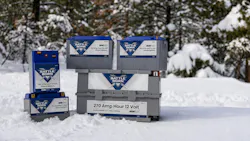
As electrical demands increase across commercial vehicles, fleets have more reasons to monitor battery health beyond the regularly scheduled inspections.
And while winter battery failures often trace back to damage sustained during the summer, fleets don't have to wait for cold weather to discover a problem. Beyond regularly scheduled testing and inspections, emerging battery monitoring and power management technologies are helping maintenance teams track battery health and catch potential failures before they leave trucks stranded.
Battery innovations focus on health monitoring

Among the newest developments is the Clarios Power Management System, which includes IdleLess and Battery Manager. According to Junior Barrett, Clarios global director of business development, the technology addresses two major opportunities.
“We’re talking about how to utilize the same technology to increase fuel savings from reduced idling and as a battery management solution to improve battery health and reduce jump starts,” Barrett said.
The IdleLess system monitors battery charge levels and alerts drivers when they should start or stop the engine. Battery Manager expands on that concept by using battery sensors, an IoT gateway, and cloud-based analytics, and includes Charge System Health Monitoring, which can identify low-voltage system issues caused by things like aging alternators before they create larger concerns.

EnerSys sees a future increasingly driven by sensors and analytics, such as those in the company’s ODYSSEY Connect battery monitoring system. Bevan pointed to expanding vehicle telemetry, battery sensors, cloud-based analytics, and artificial intelligence as key advancements that can help move beyond simple data collection toward predictive insights that identify potential failures before they occur.
Dragonfly described similar trends, including connected battery monitoring, advanced charge-control systems, battery management systems that monitor voltage, current and temperature, and technologies designed to identify abnormal performance before downtime occurs.
“We’re moving toward a much more proactive approach to battery maintenance,” Seaburg said.
International’s My International connected ecosystem also provides vehicle health reports, including battery-related information, enabling fleets to schedule service proactively instead of waiting for failures. “Today’s trucks are getting smarter when it comes to battery health,” Tondola said. “In many cases, fleets can be alerted to a failing battery before it becomes a problem.
“Vehicles now use advanced telematics systems that can alert fleets to low voltage conditions and potential battery issues,” Tondola continued. “In addition, there are different aftermarket options for battery monitoring and power management that constantly track charge level, voltage, and overall battery condition.”
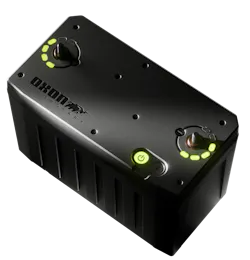
One of the newest technologies aimed directly at starting reliability comes from Oxon Power. The company’s new HyperStart system separates engine starting from hotel load duty instead of asking the same Group 31 battery bank to perform both functions.
“In most heavy-duty trucks, Group 31 batteries are typically connected in parallel for starting and hotel loads,” said Paul Menig, board advisor at Oxon Power. “A single HyperStart assembly can ensure starting power while the remaining batteries continue to support hotel loads.”
The system replaces one standard Group 31 battery in three- or four-battery configurations while retaining the existing lead-acid or AGM batteries for hotel load service. HyperStart operates automatically, requires no driver intervention, installs using existing battery cables without rewiring, and incorporates an internal heater and battery-management controls designed to maintain starting capability in temperatures as low as -40°C.
About the Author
 Seth Skydel
Seth Skydel
Seth Skydel, a veteran industry editor, has more than 41 years of experience in fleet management, trucking, and transportation and logistics publications. Today, in editorial and marketing roles, he writes about fleet, service, and transportation management, vehicle and information technology, and industry trends and issues.