Trump’s ‘Freedom to Fix’ memo targets emission parts bureaucratic bottleneck
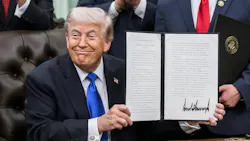
President Donald Trump has issued a memorandum to EPA Administrator Lee Zeldin asking for new guidance on how emissions system aftermarket parts are certified to ultimately cut costs for consumers and expand their choice of repair parts. According to the memo titled “Lowering the Cost of Living by Promoting the Freedom to Fix,” certifying that these parts comply with the Clean Air Act takes more than a year due to a “faulty” bureaucratic process. Currently, only the California Air Resources Board has a certification process recognized as sufficient for demonstrating Clean Air Act compliance.
The memo, which has a scope limited to emissions parts and does not alter any existing laws or rights, stated: “It is increasingly costly, and it effectively hands the determination of Federal compliance over to the State of California. Further, because it is the only currently available and accepted certification process, the certification of parts is bottlenecked at CARB, driving up costs and limiting the supply of compliant parts.”
Trump’s memo reasons that widening the field of certified aftermarket parts will lower consumer costs and “prevent cheap foreign knock-offs.”
The EPA has 30 days to clarify the options vehicle owners or their designated repairer have during the emission system repair process, while still remaining compliant with the CAA. This opens the possibility for other capable third-party organizations to test the conformity of parts, such as oxygen sensors, versus waiting for CARB to clear its backlog.
The EPA was also directed to provide assurances to manufacturers that their intellectual property will be protected. IP protection has been a sticking point in getting federal Right to Repair legislation passed; with OEMs arguing that broader access to vehicle data could open a Pandora’s Box, jeopardizing proprietary technology and cybersecurity.
And Right to Repair has been a more visible topic at the White House this month. Earlier in June, Trump made a remark about meeting with automaker leaders, and that “they don't want people to fix their car.”
Zeldin was also directed to consider de-prioritizing the enforcement of tampering laws in cases where the person was acting “in good faith” to make a repair to return a vehicle to its original configuration. This wording does not cover changes made by repair shops and/or diesel deleting, nor does it supersede existing laws or the authority granted to executive departments or agencies.
According to a statement released by SEMA CEO Mike Spagnola, this memo is: “more bold action in support of vehicle owners and automotive aftermarket industry businesses from across the nation, and an example of federal leadership on behalf of our nation’s vibrant car culture. Specifically, Section 3 of today’s memorandum acknowledges the need for certainty at the federal level for automotive aftermarket businesses who seek to certify the emissions compliance of their products. We look forward to further details from EPA Administrator Lee Zeldin as the agency finalizes its guidance on this memorandum.”
About the Author
 John Hitch
John Hitch
Editor-in-chief, Fleet Maintenance
John Hitch is the award-winning editor-in-chief of Fleet Maintenance, where his mission is to provide maintenance leaders and technicians with the the latest information on tools, strategies, and best practices to keep their fleets' commercial vehicles moving.
He is based out of Cleveland, Ohio, and has worked in the B2B journalism space for more than a decade. Hitch was previously senior editor for FleetOwner and before that was technology editor for IndustryWeek, and managing editor of New Equipment Digest.
Hitch graduated from Kent State University and was editor of the student magazine The Burr in 2009.
The former sonar technician served honorably aboard the fast-attack submarine USS Oklahoma City (SSN-723), where he participated in counter-drug ops, an under-ice expedition, and other missions he's not allowed to talk about for several more decades.