Personal vehicles on the jobsite: Know your liability and risk
Key Highlights
- Construction site managers don't only need to manage their site, but their vehicles, too, whether they belong to the company, are rentals, or are employees' personal trucks
- To understand why managing liability and risk is important, managers need to understand vicarious liability, which holds employers accountable for employees that use vehicles on the job, as well as state and federal regulations
- Mitigating vehicle risk means making sure contracts clearly establish liability, and that your company has clear policies on vehicle usage and driver training
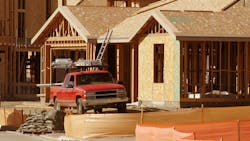
Construction projects aren’t easy to manage and require significant oversight, as they often span multiple job sites and involve up to hundreds of workers and suppliers. This is especially true for industrial and commercial construction. Vehicles play a large role in these projects, but their use comes with risk, especially when considering liability.
Liability doesn’t only cover company-owned commercial vehicles. Personal or rental vehicles can also create significant risk. If you want to protect yourself, your employees, and your company, you need to understand the risks and take appropriate and proactive steps to mitigate them.
Understanding liability exposure in vehicle use
It’s not true that liability concerns only apply to company-owned vehicles. Anytime a worker gets behind the wheel for the job, whether that’s in a company truck or their own pickup, the company has the potential to be legally on the hook in the event of an accident due to the principle of vicarious liability. This means that if an employee causes harm while performing work-related duties, the employer may be financially and legally accountable.
Vicarious liability still comes into play even if an employee is using a personal vehicle or third-party rental. For instance, while it’s not uncommon for employees to use their truck or car for small, work-related tasks, the problem is that standard personal auto insurance often doesn’t cover business use. If that employee gets into an accident while hauling some gear to the jobsite, their insurer might deny the claim, which could lead to out-of-pocket expenses or legal action. And if the driver is at fault in a serious accident, this is where the injured party could seek compensation from the employer under vicarious liability.
Similarly, third-party rental vehicles are common, but they don’t all come with rental agreements that automatically include liability coverage that sufficiently covers all risks. If an employee causes an accident or is injured while driving the rental, the company might be responsible for damages.
These risks all come before considering transportation and safety regulations.
Provincial and federal laws require strict workplace vehicle use, including construction sites. Employers must verify that vehicles are properly maintained, drivers are qualified, and safety protocols are followed. Failure to comply with these regulations can result in legal action and increased liability in the event of a collision or injury.

And more generally, failing to manage vehicle-related risks properly can lead to serious consequences, including lawsuits, regulatory fines, and project delays. A single accident involving an unqualified driver or an improperly maintained vehicle can result in costly legal battles, damage to a company’s reputation, and disruptions that affect project timelines.
Best practices for risk mitigation
Making sure your company is prepared for potential accidents starts long before anyone gets in a vehicle.
Always begin with well-drafted agreements with subcontractors and third-party vendors. These are essential in defining liability and responsibilities in case of an accident, and contracts should clearly outline who is responsible for vehicle maintenance, driver training, and insurance coverage. It’s also vital to ensure that contracts are airtight when working with any vendor that provides vehicles, whether subcontractors or rental companies. In these contracts, identification clauses can help protect your organization from being held responsible for any vehicle-related incidents caused by a third party.
Meanwhile, your own company must establish firm guidelines on when and how personal vehicles can be used for work. Companies should require employees to provide proof of adequate insurance coverage if they plan to use personal vehicles for job-related tasks and set clear rules on renting vehicles, like only using approved rental companies with proper insurance coverage. This helps avoid costly disputes down the line.
Also, just because employees regularly drive for work does not mean they have the necessary training to do so safely. Investing in defensive driving courses for employees can help reduce the risk of accidents, and training should cover topics like distracted driving and be specific about operating vehicles in construction zones.
Finally, construction companies must conduct regular license and insurance checks for both their fleet vehicles and any employee who drives on the job. They should also keep records of vehicle maintenance and rental agreements, which can be useful if a dispute arises.
Protect your workers and your business
Construction projects rely on vehicles to keep operations moving, but failing to manage liability and risk properly can have serious legal consequences.
Companies can reduce the risk of costly lawsuits, insurance disputes, and project delays by implementing clear policies, ensuring proper insurance coverage, enforcing safety training, and securing well-drafted contracts. This is a priority if you want to protect your business, your workers, and your bottom line.
About the Author

Frank Van Dyke
For more than 30 years, Frank Van Dyke, owner and lawyer at Frank Van Dyke Law Office, has been focused on obtaining fair compensation for injured victims in Ontario. Clients from across Southern Ontario turn to him for help with accident claims and catastrophic injuries, insurance issues, disability claims, WSIB claims and human rights violations.