When to call diagnostic tech support
Key Highlights
- Technicians must balance between solving complex issues independently to develop skills and knowing when additional expertise can expedite repairs.
- Utilizing diagnostic resources, manuals, and AI-assisted tools enhances troubleshooting accuracy and efficiency before calling support.
- Signs to seek help include circular troubleshooting patterns, safety concerns, unfamiliar systems, or when diagnostic steps yield no progress.
- Effective communication with technical support involves providing detailed documentation, test results, and a clear problem history to avoid delays.
- Knowing when to call support is crucial for minimizing vehicle downtime, controlling costs, and ensuring safety in modern truck repairs.
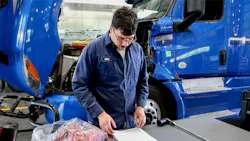
Modern truck technologies and updated electrical architectures can turn what appeared to be a simple repair into hours of troubleshooting. Last October, we published advice on “Who ya’ gonna call” to help navigate the maze of wiring and connections to land on the root cause. The answer was the trained experts at the OEM or diagnostic tool vendor who focus on ensuring complicated issues don’t lead to extended downtime.
Naturally, the next question is when should you call?
This technical support is typically included with the purchase of a new truck or diagnostic tools, as well as through subscriptions. If your shop falls into this category, then you might be inclined to answer, “Early and often.”
But there are other costs to consider. Difficult diagnostic challenges are part of what makes the job rewarding, so asking for help at the first sign of uncertainty can rob techs of an opportunity to build their skills.
On the other hand, waiting too long for the sake of ego and solving a puzzle burns labor hours and possibly replacement parts, and ultimately costs the customer uptime, which Mark Zasucha, manager of technical support at Daimler Truck North America (DTNA), identified as the most important factor.
“Technicians need to balance independent troubleshooting with knowing when additional expertise can help move a repair forward more efficiently,” Zasucha offered. “The goal is not to troubleshoot indefinitely, [but] to arrive at the correct repair as efficiently as possible while minimizing disruption for the customer.”
Where that balance truly lies depends on several variables, so we asked the experts themselves when techs should rely on their wits and grit, and when to quit and give them a call.
When to power through
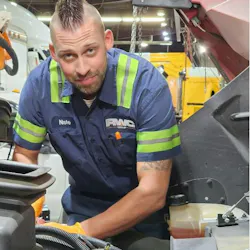
While OEM/OE technical support is a valuable resource, no self-respecting tech rushes to let someone else figure out the problem. And when supervisors grant patience in this area, they are allowing the tech to sharpen their skills. In that regard, difficult challenges make for excellent whetstones.
Techs benefit from working through issues, learning how systems interact with each other and how various fault codes and test results eventually lead to the hidden culprit. Fleet Maintenance has interviewed hundreds of diagnostic techs throughout the years, and they routinely express how this chase keeps them going.
After winning International Motor’s Top Team technical skills competition in 2023, Nathan Reed, a master-certified technician with RWC Group, told us what his favorite part of the job was: “Fixing the hardest stuff, the most complex problems that get me scratching my head. That is the most rewarding when you actually find the solution, especially when fixing the complicated trucks that other people could not find the solutions to.”
Just last month, Jonathan Kelly, the lead mobile diesel technician at Cox Fleet who won the company’s 2026 Top Tech heavy-duty competition, noted that his greatest strength—electrical diagnostics and repair—was once his weakest skill. “But I requested every electrical diagnosis that came through the shop until I was comfortable working through them,” he shared.
For Kelly, that passion and impressive skill set earned him a deserved victory and a hefty prize package. And those attributes help Cox Fleet and his customers win every day through more productivity and uptime.
Even the technical experts waiting for that “phone-a-friend” lifeline agree.
“I think it can be a good thing for a technician to work through a problem on their own before asking for assistance,” said DJ Painter, a longtime diesel tech who serves as Noregon’s Technician as a Service lead, where he virtually guides techs through tough troubleshooting gigs. “Some technicians ask for help too early in the diagnostic process, which can keep them from becoming better diagnostic technicians.”
Painter said the key to becoming better involves creating a clear, repeatable way to perform root cause analysis.
“Our advice is to create a diagnostic procedure or checklist and follow it to completion before reaching out for help,” he explained. “Check the basics and use the resources available to you.”
One of those resources for Noregon customers is JPRO Fault Guidance, which registers active diagnostic trouble codes and suggests various tests to run, while providing wiring diagrams as well.
“Technicians should first utilize the resources available to them, including workshop and troubleshooting manuals, technical service bulletins, and internal dealership support such as service managers, trainers, and master technicians,” Zasucha said.
As of late, those available resources have gotten a major upgrade, with many diagnostic tool makers and maintenance management software providers embedding AI-assisted troubleshooting into their solutions, looking at past work orders to provide historical context to the current repair.
For a more natural way to develop troubleshooting skills, techs can reference TMC Recommended Practice 551, a newer RP that covers Root Cause Analysis and provides ways to leverage the Fishbone Diagram and 5 Whys to solve problems.
But tenacity and high-tech tools can’t solve every problem in the time allotted—and commercial vehicle repair is usually a time-sensitive business.
“Once you’ve [exhausted your resources] and feel like you’ve hit a wall, you should feel confident reaching out for assistance knowing that you gave it a shot.”
DTNA’s Zasucha agreed, offering, “If a technician has completed the recommended diagnostic steps, documented their findings, and is no longer making meaningful progress, involving technical support can help accelerate the repair process and get the customer back on the road sooner.”
When to dial
Having the insight to ask for help is almost as critical as knowing how to troubleshoot in the first place. This is especially true in a fleet shop, where every minute of downtime costs the company.
“Knowing when it’s time to stop troubleshooting and ask for help instead can be situational depending on the shop’s processes and training, but technicians should stop troubleshooting on their own if they’re just replacing modules and hoping to find the problem,” explained Painter. “At this point they’re cutting into a shop’s profits.”
And though time is money, the diagnostic decisions should focus less on the clock and more on the diagnostic flowchart.
“The issue doesn’t necessarily fall in the realm of time; it falls more heavily on process,” explained Daniel Mustafa, director of shop solutions and innovation at Diesel Laptops. "Troubleshooting on modern vehicles can be a lengthy process, but it should be linear. When you are jumping all over the place in an inefficient manner, you will definitely waste time and are less likely to resolve the customer’s complaint. If you do not have a solid plan and process after understanding the complaint, you should get help.”
If the process is more circular than linear, that’s a good sign to call for help, either in the shop or at the uptime support center.
“A common sign that a technician may benefit from another set of eyes is finding themselves repeating diagnostic steps they’ve already completed, hoping the outcome will change,” Painter continued. That is that wall he spoke about earlier.
This is in no way a reflection of a technician’s skill or proficiency in the shop. Modern commercial vehicles can present symptoms that aren’t immediately obvious, and sometimes another look is all it takes to get to the core of the issue.
“Reaching out to technical support is not about whether a technician can solve a problem on their own,” said Zasucha. “It’s about identifying the most efficient path to the correct repair. In some cases, a second perspective can help confirm a diagnosis, uncover something that was overlooked, or provide access to additional technical insight.”
Painter experienced this firsthand when dealing with a network-related issue involving SPN 639.
“I had a vehicle with intermittent communication issues, and after I exhausted my resources, I contacted support,” he recalled. “They suggested checking for telematics. I didn’t see any at first glance, but I eventually found some hidden further back in the dash.”
In that case, calling for help didn’t negate or replace the diag work Painter had already done; it just gave him another point to investigate.
“Getting support involved helped point me in a direction I may not have otherwise considered and saved time that could have been spent continuing down the wrong path,” he said.
While there is value in working through a difficult problem, there is eventually a point where more time spent troubleshooting is unlikely to result in anything new, and that’s where pride can cost a shop money.
How high are the stakes?
There are some situations where the threshold for a call for help should be lower. A technician may be able to work through something straightforward on their own, but unfamiliarity with the situation at hand warrants calling for assistance sooner.
“If the equipment, vehicle, or condition is unfamiliar, oftentimes it saves time to stop and educate yourself on how the system that needs to be serviced functions,” Mustafa said. “Regardless of the type of diagnostic problem, if you do not have the information to understand the system, it is typically good to call for assistance right from the start and request documentation on system function and structure.”
Noregon’s Painter also recommends getting help earlier when an issue could be hazardous or potentially unsafe.
“Certain diagnostic problems might warrant calling for support sooner, particularly when dealing with network-related issues or when a technician comes across a diagnostic test they feel could be risky,” he cautioned. “If a technician questions whether a test is safe, such as applying voltage or jumping a wire, they should reach out for help before proceeding.”
The same idea applies when a technician isn’t familiar with the vehicle architecture, software, or system involved. The goal isn’t to call technical support at the first sign of something unfamiliar. It’s to recognize when a technician doesn’t have the information needed to safely and effectively troubleshoot the problem.
Volvo Trucks North America (VTNA) also recommends contacting Technical Support sooner for questions involving safety systems, including collision mitigation and electronic braking, as well as software-related concerns involving current releases.
In other cases, a problem might not fit neatly into established procedures.
“If there is no published fault code, no documented symptom-based diagnostic procedure, or the issue does not align with known troubleshooting paths, technicians may need to contact support sooner rather than later,” explained Zasucha.
The common theme is information. If a tech has a basic understanding of the system and a process to follow, there’s value in working through it. If they don’t have either, getting help earlier can save time.
“Even the most experienced technicians encounter problems they have never seen before. Asking for help is a sign of professionalism and commitment to the customer,” said Derek Ridge, group manager, technical support, International.
Make the call count

Once technical support is the next step, make sure the call actually moves the repair forward. Support should not have to start the diagnostic process from scratch. Technicians should be prepared to explain what brought the vehicle into the shop, what they’ve already checked, and what those checks revealed.
“In most cases, the technician should have already verified the complaint or condition that brought it to the shop, unless they do not have the information to do so,” Mustafa said. “They should also share what diagnostic steps they have already taken and the results.”
Zasucha similarly stressed the value of providing actual data rather than simply saying a component was checked.
“Thorough documentation is critical,” he explained. “Rather than simply stating a component was tested, technicians should provide the measured values, such as voltage readings, resistance measurements, and other relevant data.”
There is a practical reason for putting in that work before making the call.
“The most common delays occur when critical information is missing from the initial case submission,” Zasucha added. “Every additional request for information adds time to the repair process.”
Technical support can bring another perspective, but it can’t do much without a complete picture of the problem.
And sometimes, knowing when to call for backup—and coming prepared when you do—is part of being a skilled diagnostician.
About the Author
 Lucas Roberto
Lucas Roberto is a Senior Staff Writer and producer of multimedia content for Fleet Maintenance magazine. He holds a bachelor's in media production and a master's in communication from High Point University in North Carolina.