Mobile vs. shop: How to build the right maintenance strategy
Key Highlights
- Mobile repair is best suited for PMs, inspections, brakes, batteries, and many roadside repairs.
- Major engine, transmission, and complex diagnostic work is better handled in a fully equipped shop.
- Match mobile and shop service to fleet size, truck class, and downtime costs to improve uptime.
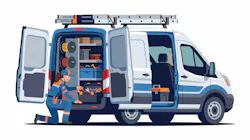
Some of the longest nights of my Army career were spent in the motor pool. When a vehicle went down, crews and mechanics stayed until it was fixed. I can still picture it. Floodlights on, some soldiers covered in hydraulic fluid turning wrenches, while others rummaged through the parts room for the right hose. We weren't there because we loved late nights. We were there because a vehicle that can't roll is, in Army terms, "combat-ineffective." If it can't move when the mission calls, it's a liability taking up space.
That lesson followed me into the fleet world, and it didn't soften. A commercial truck that's down isn't really a maintenance problem; it's a readiness problem: missed loads, idle drivers, and customers who quietly start shopping your competitors. Every choice about where and how that truck gets serviced is, underneath, a choice about how fast you can get it rolling again.
When fleet owners ask me whether they should use mobile repair, I tell them they're asking the wrong question. Mobile versus shop was never an either/or. The real question is which work belongs in the field and which belongs in the bay. And that answer looks different for every fleet.
A niche sector growing at a breakneck pace
A bit of context first: mobile fleet repair is one of the fastest-growing niches of the fleet services industry—and it isn't close. According to a Mordor Intelligence report, mobile repair was identified as the fastest-expanding fleet-servicing model, projecting the CV side of mobile repair would grow 9% annually through 2030. And you don't need a report to see it. Drive through any truck stop, and you'll spot wrapped service vans that weren't there three years ago.
Two very different forces are behind that boom, and understanding them gets you closer to a strategy that protects your uptime.
The two faces of "mobile"
The first force is established shops pushing into mobile service. Heavy-duty operations that have run full repair bays for decades are putting technicians on the road, often to land and hold enterprise fleet accounts. Rush Enterprises, for example, has about 700 techs operating out of mobile trucks or stationed directly at a customer shop.
When the truck will sit idle anyway, fixing it on-site is about as close to free uptime as you'll find, and fleets appear all too willing to pay an extra premium for techs to come to them.
The second face is a flood of newly sprouted mobile-only businesses, many of them only a couple years old. They've seen the explosive demand for preserving uptime and decided to enter the market. But most are built for preventive maintenance and light roadside work: fluids, filters, brakes, batteries, the diagnostics they can clear on the spot. That work matters. It also has a ceiling. A two-person mobile outfit is not pulling your engine in a parking lot.
That difference matters more than the marketing lets on, because who you hire decides which tier of work they can actually service.
The framework: should, could, shouldn't
Should do mobile: PMs, DOT and routine inspections, lubrication, tire and brake service, battery replacement, most emergency roadside breakdowns. This is the bread and butter, high-volume, predictable, and cheaper to handle in your own yard than deadheading a truck and paying a driver to wait on it. Any solid mobile provider can own this tier, and for most fleets it's where the biggest uptime gains hide.
Could do mobile: Mid-level diagnostics, aftertreatment work, electrical troubleshooting, some component replacement. The deciding factor here isn't the task. It's how deep your provider goes. An established shop's mobile arm can take on plenty of this, especially if they have a strong parts pipeline. A young mobile-only startup usually can't, and you do not want to learn that with a loaded trailer on the clock.
Shouldn't do mobile: Major engine and transmission work, heavy diagnostics, anything needing a lift, specialized tooling, or a controlled space. This belongs in the bay, full stop. Forcing it into the field costs you more in rework and repeat downtime than you'll ever save on convenience.
The hidden upside of doing both
And data show that mobile service has quickly moved into the mainstream across the industry. Fullbay's 2026 State of Heavy-Duty Report found that four out of five heavy-duty repair shops now offer some form of mobile service. Mobile labor rates also rose 10% YoY to $160/hour, according to the report.
But how do you achieve the right balance in your shop?
A heavy-duty shop owner I work with said it better than I could. His mobile service and his shop don't compete with each other, he told me. They feed each other. A mobile tech out running a routine PM catches a failing turbo or a transmission starting to slip, and that higher-margin heavy job rolls back into his bay. And the depth of that shop is exactly what lets him promise a mobile customer he can handle whatever the truck throws at them. Mobile builds the relationship. The shop sustains it.
For fleet managers, that flywheel is the whole game. A provider who does both is selling you continuity: one relationship, one set of records, one crew that knows your equipment whether the wrench turns in your lot or theirs. A mobile-only vendor, however sharp, has to hand you off the second a job outgrows its tier. And every handoff is a seam where uptime leaks out.
Building your own strategy
So how much mobile is right for you? It comes down to two things.
Start with size. A small fleet running a handful of trucks might get everything it needs from a capable mobile provider and the occasional shop visit. A bigger fleet, especially one spread across yards or regions, does better with a tiered relationship: mobile handles the volume, a well-equipped shop anchors the heavy work.
Then look at class. A medium-duty or work-truck fleet tilts naturally toward mobile; the jobs are lighter, and the trucks are scattered all over. A Class 8 operation has more work that simply belongs in a bay, and a botched field repair on that equipment hurts a lot more. Match the model to the metal.
And run the math honestly. What does an hour of downtime really cost you? How often does sending a truck to a shop create downtime you could have killed in your own yard? That number, not a sales pitch, should set your mix.
At the end of the day, none of this is about mobile versus shop. It's about whether your trucks are ready when you need them. Sort the work the right way, and they will be.
About the Author
Nick Lee
Nick Lee is a former U.S. Army tank officer who spent eight years leading soldiers, managing operational logistics, and maintaining complex heavy-vehicle fleets before transitioning into the business world. He is the founder and managing partner of NextGen Fleet Solutions. He graduated from the United States Military Academy at West Point, earned a master's in data science from Eastern University, and completed his MBA at Northwestern University's Kellogg School of Management. Nick lives in Chicago.