Seven factors to determine if extending an asset’s useful life is a good option
Key Highlights
- Asset utilization and vehicle specifications help determine whether a truck can handle an extended service life.
- Maintenance records, VMRS codes, and driver feedback can reveal recurring issues before major failures occur.
- Comparing future repair and downtime costs with replacement expenses helps guide fleet life-cycle decisions.
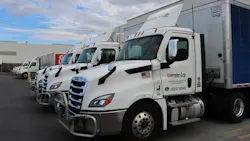
Given high diesel fuel prices and the uncertainty about the cost of trucks with EPA 2027 engines, now might be a good time to look at extending the useful life of your asset. Choosing to keep assets past your typical trade-in cycle should not be taken lightly.
Analyzing the following factors can help you determine if it makes economic sense to extend an asset’s life.
1. Understand current utilization
Gather all the information on how the asset is currently being used. What terrain does it operate in? What percentage of its miles are highway miles vs. urban miles? What is the average weight of the cargo? How many hours a day is the truck in use? How many stops does it make per day?
2. Review maintenance practices
Evaluate your maintenance practices on a per-asset basis to ensure preventive maintenance (PM) schedules align with the asset’s duty cycle. In addition, review PM compliance to ensure the asset it getting to the shop for its scheduled maintenance service. Here’s a pro tip: make sure the assets are being washed on a regular basis. It is easier to spot damage resulting from corrosive road chemicals when a vehicle is clean.
3. Evaluate vehicle specs
Make sure the asset is being used in the application for which it was spec’d. You do not want an over-built asset, but you also do not want an asset that is not robust enough to operate efficiently in its assigned duty cycle. Make sure you are balancing the asset’s functional specifications against your expected mode of operation.
4. Review repair history
When reviewing a vehicle’s service history, do so on a component-by-component basis. Focus on unplanned repairs, not just basic PM. Analyzing component failure will help you determine if the vehicle is spec’d properly. It can also help you determine if you need to move to a different component manufacturer or if you need to use a more robust version of the component with a higher capacity.
5. Rely on VMRS codes
Vehicle Maintenance Reporting Standards (VMRS) let you know exactly how an asset is performing. Using VMRS properly allows you to see recurring issues. Good documentation starts with the three C’s—complaint, cause, and correction.
6. Solicit feedback from drivers
Listen to what drivers have to say about how an asset is performing. They are a great source of information and can add details about how a vehicle was performing before a fault code appeared. Think of driver input this way: PM service is similar to an annual physical, but if you have chest pains in the middle of the year, you don’t wait until your next scheduled physical to talk to the doctor about it. Drivers can give you insight into an asset’s “chest pains,” allowing you to make repairs before a costly roadside breakdown.
7. Understand total cost of ownership
Look at what each asset is currently costing you to operate and what the cost will be if you extend the asset’s life. While newer assets typically come with a higher price tag, extending an asset’s life could mean increased maintenance and repair costs and more downtime.
There is no one set answer on whether it makes sense to extend an asset’s useful life. A thorough analysis of the data you have on each asset can help you make an informed decision. That decision may be to trade the asset as planned, or it could be to keep the asset longer than you typically would.
About the Author
 Mark Finger
Mark Finger is the VP of operations at Transervice Logistics. He is a process-driven professional with operational experience across several areas within the transportation industry, including leasing, logistics, and maintenance. Prior to coming to Transervice, Finger held positions at Laidlaw and UPS. He is an active member of the Technology & Maintenance Council and the National Institute for Automotive Service Excellence.
Related
 Dreamstime Xxl 104037044 Vitpho Trucks Lined Up 6430195472ec0
 dreamstime_xxl_106790730

