AI’s newest role: The ultimate diagnostic sidekick
Key Highlights
- Rising repair costs and technician shortages are pushing fleets to explore AI-assisted maintenance.
- AI diagnostic tools can help technicians identify faults faster, reduce repair time, and support cost control.
- Fleets are adopting AI for diagnostics and predictive maintenance, though data gaps can limit its effectiveness.

While some future sentient super-AI might come to the conclusion that there are too many people, most fleets, particularly in their maintenance departments, don’t have enough. Because of the more advanced vehicle systems, the job is only getting harder and more expensive to perform, despite every fleet striving to do and spend only what is necessary.
The American Trucking Research Institute (ATRI) found that maintenance and repair costs per mile rose 8.6% from 2024 to 2025 and 45% from 2019 to 2025. If that pace continues through 2030, maintenance spend per mile would nearly double over the decade, pricing out the countless trucking companies that opted for longer ownership cycles to mitigate new truck price increases. To survive in this landscape, fleets have to find a way to do more with less.
And this is where AI (not the human-killing kind) comes in. In its many forms—agentic, generative, and LLM, to name a few—AI has shown it can help maintenance departments do everything from speeding up repairs with more accurate diagnostic information to avoiding them through predictive insights.
According to Noregon’s 2026 Unpacking the Commercial Vehicle Diagnostic Market report, the majority of shops and fleets count accurate/effective troubleshooting and technician hiring as their top two issues.
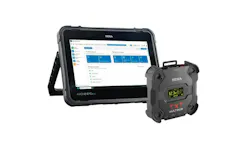
Diagnostic tool providers are adding AI to ease both. For instance, Bosch will soon add an AI assistant to its ESI[tronic] software to identify faults and provide recommended repairs and relevant documentation. Techs can also ask the assistant questions through the diagnostic process about specific steps or to provide alternative solutions, the company said. It won an innovation award at the 2026 Automechanika show. TEXA launched a similar tool, the IDC6 AI Diagnostic Assistant, in 2024. It has already been used by thousands of repair professionals, TEXA said.
And in the back office, AI can find unclaimed warranty opportunities or point out when the shop spends too much on parts. Since the summer, Samsara, Motive and Fleetio have all upgraded their CMMS platforms with features like these and more.
And as these companies continue to embed AI into more workflows and processes, the benefits are poised to grow exponentially. Fleetio’s AI Service Advisor, for example, showed throughout six months of beta testing that its customers have shaved an average of 2.5 hours off of individual repairs. The feature combines driver complaints with fault codes, repair history, and other relevant sources to give technicians a head start on finding an issue’s root cause.
“Instead of receiving a vague description and having to piece together where to begin, technicians start with a clearer picture of the issue, relevant vehicle context, and the work that may resolve it,” explained Brianna Perry-Lang, senior product marketing manager at Fleetio.
She added the collective historical insights could also help companies build a more cost-effective fleet by buying more reliable equipment.
“If a manager is deciding whether to continue investing in a particular vehicle, for example, they have a much richer history of what has been repaired, what it has cost, how often work has required closer review, and what patterns have emerged over the vehicle’s life,” she said.
Simply put, AI is starting to become a trusty sidekick to help troubleshoot virtually every shop problem—from the individual repair to the overall operation.

No longer ‘emerging’
Increased adoption of digitization, paired with the convergence of telematics, remote diagnostics, and data analytics, has provided the perfect ecosystem for AI to thrive. And because AI acts as a force multiplier for innovation, those areas will continue to operate more efficiently as more AI is added. It’s not a stretch to imagine that AI tools will soon be the norm rather than the exception.
On the indie shop side, AI is already taking hold in a few key areas.
According to Fullbay’s latest State of Heavy-Duty Repair report, 19% of survey respondents currently use AI for diagnostic support, with another 61% saying they plan to in the future. On the customer communication side, 18% of shops use AI receptionists to retain otherwise missed calls, with 39% planning to in the future. While very few employ AI for parts/inventory management and predictive maintenance, more than 40% of shops said they would at some point.
Fleet leaders are coming around, too. According to research firm Escalent’s 2026 Q1 survey of over 1,000 fleet decision makers, AI was the only technology to hold its ground on the firm’s Fleet Technology Index. The FTI measures certain core and emerging technologies’ market readiness for adoption. Due to fuel prices, the economy, and regulatory changes, the overall index dropped 16% year over year. EVs’ score went down 8% year over year, and telematics 7%. AI, though, stayed nearly flat and had the highest overall score at 52. Last year it hit 53 after posting a 34 on the FTI in 2024.
“We tend to think of an index score of about 50 as sort of where it’s entered the mainstream consciousness,” said Lucas Lowden, an insights consultant in Escalent’s Automotive & Mobility group. “You could argue really that AI is no longer emerging—it’s here, and it’s in practice.”
AI on the move
Lowden pointed out that while other technologies require a substantial amount of human capital, such as a dedicated professional to monitor and navigate a telematics dashboard, AI can enhance human workers, even at smaller fleets, in a scalable way.
“AI is approachable,” he added. “You can start small and work up and scale it. And it can be used to solve a lot of different problems and challenges.” Lowden said this is particularly advantageous for “fleet decision makers who historically aren’t necessarily tech-oriented.”
The convergence of telematics, data analytics, and AI has also created a “three-headed monster,” Lowden noted. And with fleets feeding this monster more data, it becomes more effective at taking a bite out of downtime.
Sean Cornwell, a lead mobile diesel technician at Cox Fleet, sees this every time he goes out on a job. Aside from the usual repair tools and his Autel scan tool, the most important thing he brings to jobs is his smartphone. From here, he and his colleagues can access Cox Fleet’s AI-embedded app loaded with features to cut down time onsite.
The repair vendor’s agentic solution provides prompts to quickly build repair estimates while another AI solution analyzes diagnostic trouble codes, suggests root causes, and provides a step-by-step repair plan.
And he said he can start work faster because the customer approval process is streamlined: “As quick as like five minutes after I submit [the work order], they’re getting emails with PM forms and recommended repairs…it saves a lot of time and cuts a lot of guesswork out of it.”
The ability to access maintenance history and have a list of probable causes also aids Cornwell’s productivity. One important factor is being able to see the operating conditions when the DTC appeared.
“I can go in on every unit and see previous repairs, which helps eliminate some of that additional troubleshooting time, especially if it’s an on-and-off problem, or if the problem only happens going 50 mph down the road,” he offered.
Cornwell noted that when chasing electrical issues, the ability to see previous readings and specific fault codes saves time by helping narrow his troubleshooting window and more quickly pinpoint the real issue.
The drawback is that Cox’s AI only accesses internal work orders. If, for instance, a trailer light was swapped by another repair vendor and that led to an electrical issue, Cornwell would still have to go through the conventional motions to find it.
He does strongly believe that the industry will someday advance to a point where a customer will have the option to share all of their repair info with whatever vendor they want to get better results.
Even so, while Cornwell sees the value in really tough jobs, he doesn’t envision highly complex AI-assisted diagnostics helping on every job.
“At the end of the day, are we probably going to sift through that information on every job? Probably not,” he surmised.
About the Author
 John Hitch
Editor-in-chief, Fleet Maintenance
John Hitch is the award-winning editor-in-chief of Fleet Maintenance, where his mission is to provide maintenance leaders and technicians with the the latest information on tools, strategies, and best practices to keep their fleets' commercial vehicles moving.
He is based out of Cleveland, Ohio, and has worked in the B2B journalism space for more than a decade. Hitch was previously senior editor for FleetOwner and before that was technology editor for IndustryWeek, and managing editor of New Equipment Digest.
Hitch graduated from Kent State University and was editor of the student magazine The Burr in 2009.
The former sonar technician served honorably aboard the fast-attack submarine USS Oklahoma City (SSN-723), where he participated in counter-drug ops, an under-ice expedition, and other missions he's not allowed to talk about for several more decades.