Truck-Lite training program reaches 10,000 technician completions
Key Highlights
- Truck-Lite's online training helps technicians improve trailer lighting and electrical troubleshooting skills.
- Proper diagnostic tools and electrical knowledge can reduce repair times, improve uptime, and limit CSA violations.
- Smart trailers will require technicians to understand emerging electrical architectures, including Ethernet and CAN bus.
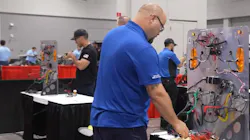
Electrical theory and troubleshooting remains a challenge for many technicians, and as modern electrical systems continue to become more sophisticated and interconnected, with smart trailers gaining in adoption, longer diagnoses and improper repairs will have a noticeable impact on fleet uptime and their ability to make deliveries. On the trailer side, Truck-Lite has been helping mitigate the issue since 2014 through its Truck-Lite Training Institute (TTI), an online tool that educates industry professionals, particularly entry-level technicians, on what they need to know in terms of trailer lighting and electrical maintenance.
"We were getting a lot of requests to come and basically train the technicians at the fleets that we partner with and get them up to speed on lighting and harnessing, electrical, how to diagnose, how to troubleshoot, and how to make the proper repair," recalled John Hoover, Truck-Lite VP of national fleet and technical services. "Because of the shortage, you have guys and girls coming in where they they really don't understand the electrical architecture of a trailer."
Truck-Lite soon discovered that with human trainers alone "we couldn't cover the ground fast enough, so we built an online training program," Hoover said. "It's been a lifesaver for us on the fleet side. Instead of turning our fleet partners away, this is an alternative for them to get in there and learn."
As of May 2026, the truck and trailer lighting provider said 10,000 enrolles, ranging from fleet and repair shop technicians to distributors and students, had completed TTI's Master of Lighting and Harness Technician module.
This in-depth course covers:
- Basics in Electricity, from definitions and major concepts to wire calculations and voltage drops
- The evolution of trailer lighting
- Lighting Fundamentals and troubleshooting
- LED lighting performance
- Wiring harness fundamentals, diagnostics, and repairs
- Federal lighting regulations and legal questions
A total of 14,000 courses have been completed, including a module on reflective tape best practices with 3M and multimeter course developed with Purkeys. Hoover said many techs still were using "old-school test lights," which did not give proper readings of voltage, amperage, or resistance. A test light may illuminate with only 2 volts, even though a trailer light requires 12 volts, he said, creating misleading results.
Getting things right the first time, and building up the techs' overall efficiency confidence, also ensures trailers return to the road faster and avoid any CSA violations while there.
"At the end of the day, [TTI is] geared around saving the fleet money," Hoover said. "We want to affect your total cost of ownership, so when you rotate that piece of equipment out, your TCO was reasonable or lower than reasonable."
Cracking the code
When tasked with creating the lessons, Hoover had been a truck tech for 14 years and did not consider himself an expert on the subject.
"The one thing that I struggled with was understanding electricity," he admitted. "When I came to work for Truck Light, it became pretty important that I understand how electricity flows, how it works, how it operates."
Hoover spent hours and hours becoming more familiar with how electricity works and flows through a tractor-trailer's electrical system. To put the complex theories into words other techs could easily grasp, he compared the flow of electricity in wires to that of water in pipes.
"Water faces the same oppositions as electricity does," he explained. "So what I tried to do was give technicians a visual of how that electricity flows through an electrical architecture."
The training then builds on those fundamentals with instruction on the seven color-coded circuits in a Class 8 trailer, helping technicians identify the color of wires and associated systems. He said not truly understanding how circuits and wires work could waste several hours with no resolution.
A dozen years in, the courses have foudn a place in the curriculum of diesel tech schools as well.
“The students are giving it high marks and enjoying both the content and the way it is presented,” said David Posey, program director of diesel technology at West Georgia Technical College.
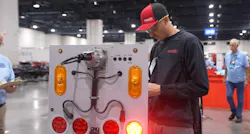
According to Hoover, the training modules continued to evolve to address knowledge gaps identified within the shop.
Looking ahead, Hoover expects the curriculum to continue to accommodate increasingly sophisticated modern trailer electrical systems. The shift toward smart trailers will introduce new architectures and technologies, including Ethernet and CAN bus communications, requiring technicians to understand more than traditional lighting circuits.
As these systems develop, Truck-Lite expects TTI to develop alongside them.
About the Author
 Lucas Roberto
Lucas Roberto is a Senior Staff Writer and producer of multimedia content for Fleet Maintenance magazine. He holds a bachelor's in media production and a master's in communication from High Point University in North Carolina.