Are you covered? Common shop insurance pitfalls
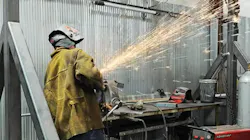
A fire destroys a shop's equipment. A customer's $130,000 truck is damaged while in for service. A technician's faulty repair causes an engine to fail three weeks later. These are all losses that can be detrimental to repair shops if they don’t have the right insurance coverage.
Unfortunately, many operators assume their coverage is adequate until a loss exposes the gaps. “I would say that 90% of the shops out there are insured incorrectly,” said Peter Cooper, CEO of Ascend Consulting. “They go to an insurance agent, they tell the agent what they want, and they find out too late that they’re not insured correctly.”
Jon Lovell, managing agent at Insuring Iowa said most issues arise from a misunderstanding of what standard policies cover. Lovell said the baseline structure typically includes property insurance, general liability, garage liability and garage keepers coverage.
“Property covers anything that you own or are responsible for,” Lovell explained, adding that general liability addresses incidents such as a customer being injured on the premises, while garage liability covers bodily injury or property damage caused by shop operations.
Garage keepers coverage covers customer vehicles that are in for a repair. “You could have a truck that’s $130,000 sitting in your lot,” Lovell said. “Garage keepers coverage protects that vehicle when it’s in your care, custody and control.”
Another common policy is inland marine insurance, which protects tools and equipment that move outside the shop. “Inland marine is any equipment or property that leaves the premises,” Lovell said. “If you are doing fleet operations on site, you’re going to have more of a need for inland marine.”
Ashley Sowell, CEO and co-founder of Integrity Fleet Services, Inc., said having multiple policies is essential for shops responsible for customer equipment. “We carry garage liability insurance to protect against claims related to bodily injury or property damage arising from our operations, and we maintain garage keepers coverage to protect customer vehicles and trailers while they’re in our care, custody and control,” she said. “Insurance within the shop is something we take very seriously because we’re responsible not only for our business, but for our customers’ equipment.”
Lovell said one of the most commonly overlooked policies is errors-and-omissions insurance for techs. While standard garage liability coverage typically addresses damage caused by a repair, it doesn’t cover the work itself. Errors and omissions coverage fills that gap by covering the repair itself if faulty workmanship leads to a larger failure.
“As your ticket grows and as your involvement in systems gets more complex, they’re never going to pay for what you were working on unless you have the errors and omissions,” Lovell said.
Tools represent another area where shops can underestimate their risk. Technicians own their own tools, and they need to make sure they’re valued correctly and covered. “Some people will say they probably have $20,000 worth of tools, but it might be a third of what they actually have,” Lovell said. “If technicians expect their tools to be covered, they should never assume they are. It’s a specialty coverage to cover employee tools.”
Many inland marine policies require individual items above a certain value, typically $1,000 to $1,500, to be scheduled and documented. Without detailed inventories, a repair shop could struggle to prove losses during a claim. “If anything happens to it, they have no ability to prove the claim,” Lovell said. “You might have the coverage and not be able to prove it, or you might have the coverage, and it’s insufficient.”
As repair businesses expand into mobile service and fleet maintenance contracts, policy language around off-site work becomes even more important. Many garage liability and garage keepers policies are written with a shop’s physical location in mind. When technicians perform repairs at a customer’s facility or on the road, coverage may not automatically extend to those operations.
“Think about the tools on a service vehicle. Once it leaves the four walls, it is a different insurance policy, that is the inland marine policy,” Cooper said.
Insurance requirements also evolve as operations grow. Shops that add locations, employees or new service lines may outgrow policies that once fit their business. Lovell recommends reviewing policies annually with an insurance professional and conducting deeper evaluations every few years. “We always like to touch base annually before renewal to say, ‘Is this still sufficient,’ but they should take a more involved look every three years,” he said.
Sowell said Integrity Fleet Services reviews policies regularly to ensure coverage aligns with the size of the operation and the value of the equipment techs service. “Insurance is about protecting our customers, supporting our team and safeguarding the long-term stability of the business,” she said.
For smaller shops, the challenge can be getting all of the coverage they need at a price they can afford. Working with a broker who understands the repair industry and can match the shop’s operations with the right carrier can help. “Don’t be afraid to ask the question, ‘Do you know how to write garages?’ and not, ‘Can you write garages?’”
Cooper said it is not only important for shops to find someone who specializes in the industry, but also to be brutally honest about exactly what the shop does and how it makes money. “You have to really understand insurance because there are a lot of loopholes that you need to be aware of,” he said.
He recommends asking potential partners how many shops they insure and how long they have been in this industry.
Shopping quotes and comparing coverage structures can also help control costs, but Lovell said not to let coverage lapse because the ideal policy is too expensive. “It would be much better to have a slightly inadequate policy that remained in force than one that canceled because they couldn’t afford it,” he said.