Overhaul of Block Diesel’s work-life strategy keeps shop fully staffed
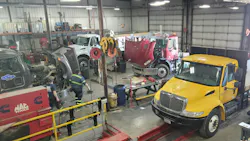
When Block Diesel Repair was founded in 1994 by Kerry Block, the Janesville, Wisconsin-based shop was all about running lean and working as many hours as it took to get the job done, whether it was a pickup, Class 8 tractor, or trailer. Now, management has a different mindset: managing the technicians’ internal motors as carefully as they would for a customer.
“I’d seen these articles about how some companies were finding that productivity actually increased when cutting the typical 40-hour workweek back to 35 hours or so,” said Zach Timm, general manager of Block Diesel Repair. “That got me thinking about how we staffed our shop.”
When Timm first began working for the company 18 years ago, 12-hour days were often the norm. That worked for the four employees there at the time. But as the years went by, things began to change. For the most part, the people they’d hired were talented and hardworking, but not as eager to pull the long hours Timm and his coworkers had in the past. By the time Timm advanced from technician to general manager a few years ago, it was clear the shop needed a different culture. That included work-life balance.
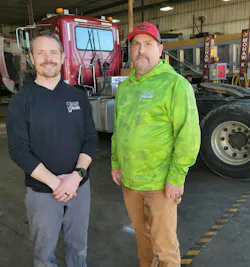
“People really value their personal time these days,” Timm said. “When you can give them that, they enjoy coming to work more and the whole atmosphere improves.”
This new culture led Timm to assert Block has “never had a better team than we have right now.” In an era where finding and retaining technicians is a leading concern for fleets and shops, that alone is an accomplishment. But the shop’s leadership style even lured back a former employee who took less money to rejoin the shop.
Technician Ray Schueller left Block to move to Missouri six years ago. Last fall, he returned to the Janesville area, which is between Madison and Rockford, Illinois, seeking to come back and work for Block and Timm.
There wasn’t an open position at the time, so Schueller accepted a job with a contract maintenance provider. A few days later, Timm called to check on his former employee to see if he had found a job yet.
“I told him I had, but would rather work for him,” Schuller recalled. “He said they did have an opening after all and would like me to come back. I could have made more money at that other job, but it didn’t matter; I wanted to work at Block again.”
That kind of testimonial warrants a deeper exploration into what Block is doing right. After talking to the team, here are four repeatable strategies for shops that want to improve their tech staffing.
1. Staff for growth
The first step to ushering in that new atmosphere was doubling the number of technicians.
“We were getting calls from fleets who said a dealership told them it would be two weeks or more before they could look at their truck,” Timm said. “So we knew there was a lot of additional business out there. For many years, we just grew and tried to figure it out. Then we realized you have to add the personnel first, and then grow with that personnel. Once we had the right amount of people, we learned it’s a lot easier to manage growth and quality at the same time.”
Block Diesel Repair currently employs nine technicians and two shop foremen, along with two parts specialists, a facility maintenance person, and an office manager.
2. Hire for work ethic; train in-house
A big chunk of the team has been home-grown, which is the second reason Block Diesel Repair has had success retaining technicians.
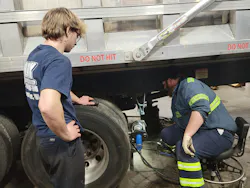
“We’ve hired a few technicians from the local trade school over the years, but the best thing for us is training people in-house,” Block said. “We’ll start someone out assisting other techs and doing small repairs, often on the trailer side. We’ve found that if you can teach someone the basics on a trailer, like brakes, they can move over to trucks pretty easily.”
“When we interview an applicant, we look for mechanical aptitude and work ethic,” Timm added. “If a person has those qualities, we feel like we can teach them the rest.”
And teach them they will.
“The more jobs our technicians can learn, the better,” Block said. “We always tell our guys they don’t have to become the best at everything. You’ll always have people who specialize in certain areas, but we like all of our technicians to be capable of helping out anywhere as needed.”
“That’s really important to a shop like ours because we’re so diverse,” Timm added.
3. Keep techs engaged
Block Diesel Repair’s core customer is a tractor-trailer fleet, but the shop also works on everything from dump trucks and pickups to buses, fire trucks, and even the occasional piece of off-road equipment.
“One thing we’re known for is that we don’t turn much away,” Timm said.
That variety of work is another reason why Block Diesel Repair has had success with technician retention.
“Technicians want work to be fun, and part of that means they won’t be doing the same thing all the time,” Timm said.
“Most technicians don’t just want to do brakes or oil changes day after day,” Block added. “We like a technician to maybe do an oil change in the morning, then work on a transmission, then run out on a roadside call. Avoiding too much repetition seems to keep people more engaged.”
Speaking of roadside calls, that’s exactly how Block Diesel Repair got its start more than 30 years ago. Block started running roadside on the side while running the shop at an area trucking company. Business grew steadily, and Block became a full-time business owner in 1994. Today, Block Diesel Repair operates a 13,000-sq.-ft. shop with six bays. That said, roadside continues to be an important part of the business.
Emergency roadside service has also made technician retention a bit of a challenge in the past. Not anymore.
“When I was still a technician 10 years ago, there were only three of us,” Timm recalled. “It felt like I was having to run overnight roadside calls all the time. Now six of our technicians are trained to do it. That helps with scheduling.”
To achieve 24/7 emergency response and fairly distribute on-call hours, the shop instituted a weekly rotation. After their week on-call, each technician gets a five-week reprieve, which greatly lowers the risk of anyone burning out.
4. Family atmosphere
Block has also improved tech retention via a deliberate shift to a more relaxed, family-oriented atmosphere.
“As the company has grown, we’ve needed to create more of a corporate-like structure to the management and administrative side of the business,” Timm said in reference to developing SOPs for things like clocking in/out of repairs, collecting payment for roadside calls, communicating with customers, etc. “But on the shop floor, we’ve found that it’s best not to get too corporate-like. We want everyone to feel like they can trust each other. I never want someone to feel like they’re going to get in trouble if they help someone else.”
That trust and family-oriented feel must also extend to the front office.
“It really comes down to just caring about your employees,” Block said. “We’ve had employees who had their cars break down, and we made sure they could get back and forth to work.”
This has led to more communication in the shop on a personal level.
“One of the best parts of my day is being able to walk through the shop and talk to someone about something other than work,” Timm said. “When you take a genuine interest in your employees on a personal level, they respect that.”
Block also boosted morale by setting up an archery target outside the shop. He and several employees are pretty avid bow hunters. Heading outside to have a friendly target-shooting contest helps relieve tension and further build camaraderie, he said.
That kind of attitude has been a big reason for Block Diesel Repair’s recent success and ability to draw old techs back. Schueller was one of two techs who came back to the fold, Timm said.
And though it may sound a little cheesy even in the Dairy State, Schueller said he picked his boss’s character over money.
“Kerry [Block] and Zach [Timm] are great to work for,” Schueller said. “I’ve worked for other places where the bosses are nice and polite—but it’s different here. They really care about their people.”
He mentioned a time he was dealing with some personal issues, and thought about lying and calling in sick. He even admitted that to Timm, whom he called and told the real story to. While other bosses might tell the tech to “suck it up” and get to work, Timm took a more empathetic approach.
“Zach said to just take the day off and get my mind straight,” Schueller said. “I’m 52 years old, and no other place I worked at would have done that. They care, and you can’t even put a dollar amount on that.”
About the Author
 Gregg Wartgow
Gregg Wartgow
Gregg Wartgow is a freelancer who Fleet Maintenance has relied upon for many years, writing about virtually any trucking topic. He lives in Brodhead, Wisconsin.