How the ‘human factor’ plays a role in a shop owner’s decision to sell
Key Highlights
- Shop buyers weigh EBITDA alongside technician talent, customer loyalty, and growth potential.
- Owners may delay sales to build stronger teams, improve operations, and increase future value.
- Trust, culture, and employee opportunities can determine whether a truck repair deal succeeds.
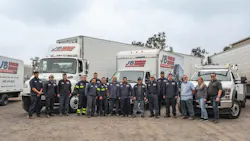
Like most business acquisitions, truck repair shop sales largely come down to numbers on a piece of paper. But fleet maintenance is still largely about people and relationships, so the human element can’t get lost in the shuffle of financial statements and EBITDA calculations.
“A shop’s reputation and culture are our primary gating items before we even move forward with a diligence process,” said Gary Price, CEO of True North Fleet Services, a network of fleet maintenance and repair providers supported by Garnett Station Partners, a New York-based principal investment firm. “We also believe cultural fit and shared values of being technician-focused and putting team members first are imperative.”
Shop owner Bill Kerry, who has acquired several shops in recent months, said the human connection is what makes or breaks deals.
“I’m not a suit,” said Kerry, owner of Kerry Brothers Truck Repair, which has multiple Detroit-area locations. “When I walk into a shop, I understand what the guys are working on and what tools they’re using. So I’ve been able to build a good rapport with the older business owners in our area. Plus, they know I’m not going to buy their business and turn around and sell it in a few years.”
That was a big deal to shop owner Tim Dickey. He sold his shop to Kerry in fall 2025. Dickey ran Downriver Bus & Truck Repair in Trenton, Michigan, a business his father started in 1983, for 30 years. When he started thinking about retiring, a mutual friend connected him to Kerry. Dickey knew Kerry’s dad and uncle when they owned Kerry Brothers Truck Repair years ago.
“Since Bill took over his dad and uncle’s business, he’s had a plan, and they’ve been growing like crazy,” Dickey said. “Putting the deal together ultimately came down to trust. I told my employees that Kerry wasn’t looking to buy me; he was looking to buy them. Plus, they’d have more room for advancement because of how Kerry Brothers was growing and expanding, and we were just a small shop with limited potential. It took a little while to settle in, but eventually everybody was good with the idea of me selling.”
It took a while for Billy Bob’s Repair & Tire in San Antonio, Texas, to get comfortable with the idea of selling too. Lisa Brzozowski, vice president, said they had been approached by potential buyers several times before realizing that selling could be a good move if the right group was involved. Billy Bob’s ended up selling to True North Fleet Services in November 2025.
“True North aligned well with our values and company culture,” Brzozowski said. “We couldn’t be happier with our choice. True North has brought a wealth of knowledge and support to our business. This has been great for both our employees and customers, allowing us to scale and provide even better service, while giving our employees more opportunities to grow.”
Weighing timing, growth, and acquisition value
Like Brzozowski had done, other shop owners are also waiting for what feels like the right time to sell.
Mike Schwarz, co-owner of Iron Buffalo Truck & Trailer Repair, has met with private equity groups in the past, even bringing them in to tour their facilities in Commerce City, Colorado, and Kalispell, Montana. But he and his business partner, Austin White, have only owned Iron Buffalo for seven years. They’ve grown considerably and made a lot of improvements, but feel like they have more work to do.
“We’ve put a great leadership team in place,” Schwarz said. “That can actually work against you when selling to a private equity group. Adding roles like directors of training, operations, and sales adds to your overhead, which impacts your EBITDA. It seems like private equity mainly wants to buy a well-run shop with a good team of technicians, and then provide the platform and ability to scale from there. They don’t want to pay for the scaling you’ve already done. So for now we’re going to just keep doing what we’ve been doing.”
Jim Bartlebaugh, president of JB Trailer Service in Fontana, California, has also been approached about selling. He, too, is holding out for a more opportune time. His late father’s legacy is the primary motivating factor.
“My dad and I started this in 1993,” Bartlebaugh said. “So if I ever do decide to sell, I’ll be awfully selective about who I let in the door. The reason a shop is worth buying is the culture and the people in it, and the wrong owner can undo 30 years of that in about 18 months. The reality is that I still have a lot left to build. I'd rather be the seller who waited and got it right than the one who took the first good number and watched somebody else run it into the ground.”
About the Author
 Gregg Wartgow
Gregg Wartgow
Gregg Wartgow is a freelancer who Fleet Maintenance has relied upon for many years, writing about virtually any trucking topic. He lives in Brodhead, Wisconsin.