As EPA27 approaches, fleets still fighting through regulatory fog
Key Highlights
- The anticipated 2027 pre-buy has been subdued due to market weakness, regulatory uncertainty, and delayed engine technology rollouts.
- EPA's core NOx standard remains at 0.035 grams per brake horsepower-hour, but regulatory revisions are creating ambiguity around compliance timelines and hardware availability.
- OEMs like Cummins and Detroit are introducing new engines gradually, leading to a phased transition rather than a sudden technological shift in 2027.
- Market signals show mixed activity: some fleets are delaying purchases, while demand for used trucks with remaining useful life is increasing.
- Fleet managers are advised to focus on vehicle condition, mileage, and warranty status rather than just model year when planning replacements.

Heading into 2027, Class 8 truck buyers face a familiar problem wrapped in an entirely new kind of uncertainty. For several years, the Environmental Protection Agency’s (EPA's) model-year 2027 NOx regulations promised another costly and complicated emissions transition for North American fleets. To meet tighter emissions standards, these new EPA-compliant engines originally required additional hardware, longer emissions warranties, and more durable aftertreatment systems. Prices were expected to jump dramatically—with estimated increases topping $20,000—as a result.
And, as always happens before a major emissions deadline, talk of a massive Class 8 pre-buy began. After all, that’s what happened before the last major NOx regulation in 2010.
But the 2027 pre-buy has not materialized to the level many predicted.
“And it’s not going to, now,” said Bruce Stockton, sr. freight consultant for the North American Council for Freight Efficiency (NACFE) and founder of Stockton Solutions. “It’s way too late for that.”
Instead, a weak freight market, poor fleet profitability, and regulatory uncertainty kept many buyers on the sidelines—locked in place by uncertainty on virtually every decision-making metric.
Now the industry is approaching 2027 with EPA revisiting significant portions of its own emissions rule. As a result, engine makers are altering new technology and component introduction timelines. And fleets are wondering exactly what hardware will be available when new model-year trucks begin moving down assembly lines.
It’s a mess—to be sure. But it’s not 2010 all over again.
Revisiting 2010
Back then, fleets had a clear-cut technology decision to make. Most engine manufacturers adopted selective catalytic reduction and diesel exhaust fluid to meet EPA’s 2010 NOx standard. Navistar International rejected SCR and pursued an advanced exhaust gas recirculation-only strategy.
Some fleets chose wisely. Others did not.
There is no comparable technology fork in the road for 2027. Fleets generally won’t be choosing between two radically different emissions strategies. Instead, they must decide when to buy while the regulations and engine-production schedules remain constantly in motion.
“The problem isn’t that fleets have two technology paths to choose from—it’s much more basic than that,” Stockton offered. “The problem now is that people don’t know what they’re going to get if they order a truck for 2027.”
The rule remains…mostly
At the center of the uncertainty is EPA’s heavy-duty NOx standard.
The 2023 regulation reduces the primary heavy-duty NOx limit from today’s 0.20 grams per brake horsepower-hour to 0.035 g/bhp beginning with model-year 2027 engines. It also originally included longer emissions-warranty and regulatory useful-life requirements, along with tighter in-use emissions controls.
The Trump administration has proposed revising several of those supporting provisions. EPA wants to shorten the emissions-warranty periods, delay implementation of the longer useful-life requirements, create temporary nonconformance penalties, and eliminate DEF-related engine derates in favor of visual and audible warnings.
But the central NOx number remains unchanged, which complicates matters further.
“Nobody took away the NOx standard,” said Allen Schaeffer, executive director of the Engine Technology Forum. “The coordinates for the future are still 0.035. EPA is changing some things about the path manufacturers take to get there. But the standard itself is still in place. And that will matter in the long run.”
That distinction has been lost in much of the political noise surrounding EPA’s actions.
Presidential pardons in emissions-tampering cases, right-to-repair announcements, and proposals to eliminate DEF derates (wrapped now into the proposed revisions for EPA27) have led some operators to conclude that emissions regulations are disappearing altogether.
They are not. Deleting or defeating an emissions system remains illegal. And manufacturers have invested billions of dollars developing engines and aftertreatment systems capable of reaching the 2027 limit. That technology is not simply going away. And at some point, OEMs are going to have to recoup those investment costs.
But no one is sure what of that technology debut will occur now. And the OEMs all seem to have set their own timelines for introducing it.
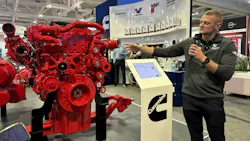
Cummins, for example, originally developed its next-generation X15 around a more advanced twin-module aftertreatment system with electric heating supplied by a belt-driven 48-volt alternator. The heaters bring the catalysts to operating temperature quickly during cold starts and low-load operation, when controlling NOx is most difficult.
Cummins now plans limited production of the model-year 2027 X15 beginning in January, with full production expected in the fourth quarter. Its current-generation X15 is expected to remain available during the transition.
The X10 will follow a similar phased introduction, reaching full production during the third quarter of 2027.
Detroit, meanwhile, has announced that its Gen 6 DD13 and DD15 engines will enter production in January 2027, with the DD16 following in January 2028.
The result is a transition year in which engine availability may differ by OEM, truck model, application, and production date.
Market sending mixed signals
The Class 8 market itself is adding another layer of confusion.
Stockton recently ordered eight specialized heavy-haul trucks in late June. They were built roughly four weeks later—hardly evidence of the kind of production backlog normally associated with a major pre-buy, he noted.
Moreover, Stockton said, all eight of the trucks were missing components when they arrived. One truck was even missing its hood. “That tells me the OEMs are not manned up and geared up for any kind of elevated production runs heading into the new year,” he added.
But on the other side of the Class 8 coin, Stockton said he also sees increasing demand for clean 2022 and 2023 model-year used trucks with 350,000 to 450,000 miles. Prices have risen as more buyers compete for late-model equipment in order to avoid committing to new truck purchases.
But broader order activity has recently strengthened. ACT Research reported preliminary July Class 8 orders of 22,100 units, up 68% year over year, although down 30% from June on a seasonally adjusted basis. ACT noted that regulatory, pricing and penalty questions could affect ordering until OEMs receive enough clarity to open their 2027 order boards confidently.
In other words, replacement demand is returning. But buyers remain cautious.
Stockton said many fleets also have more life left in their existing equipment than vehicle age alone suggests. Several years of poor freight conditions reduced utilization. A four-year-old tractor that might normally have 450,000 miles may have only 330,000 on its odometer now.
That’s why Stockton is advising his clients to look at mileage, condition, and remaining warranty—not simply model year—when deciding to dispose of old trucks and acquire new ones.
“If those trucks have another 80,000 or 100,000 miles of useful life, I’d run them,” he recommended. “But if you have excess equipment, the used market is strong right now. I’d consider selling it.”
For fleets that must replace trucks, Stockton recommends completing specifications early in the fourth quarter and negotiating delivery schedules extending from January through October 2027.
His expectation is that 2027 will be less of a hard technological break than a prolonged transition.
That, he cautioned, may be the best way to think about the coming year.
The new NOx standard remains. New engine technology is coming. But legacy engines, transitional regulatory provisions and phased production plans may give fleets more flexibility than anyone expected a year ago.
But unlike in 2010, Stockton cautioned, the risk isn’t choosing the wrong technology.
The risk fleets face today is assuming that every truck labeled “2027” will contain the same technology, carry the same price, or present the same specification challenges.
For Class 8 buyers, Stockton said, the smartest move now is to understand exactly what they are ordering—and not let the model year printed on the paperwork answer that question for them.
About the Author
Jack Roberts
With nearly three decades covering trucking, Jack Roberts is known for reporting on advanced technology, such as intelligent drivetrains and autonomous vehicles, in an industry being transformed by technology.
In his Truck Tech blog, he offers his insights on everything from the latest equipment, systems, and components, to telematics and autonomous vehicle technologies. A commercial driver’s license holder, he also does test drives of new equipment and covers topics such as maintenance, fuel economy, vocational and medium-duty trucks, and tires.
He has been covering trucking since 1995.