Daimler updates Detroit DEF software to reduce derates
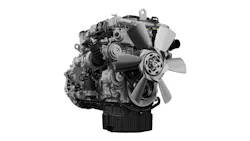
Daimler Truck North America is updating approximately 330,000 in-service Detroit engines with revised diesel exhaust fluid (DEF) inducement software designed to reduce the unnecessary downtime caused by emissions system faults and derates.
The software update aligns with EPA guidance issued last summer, which requires "that all new diesel on-road trucks must be engineered to avoid sudden and severe power loss after running out of DEF." At the time, EPA had urged engine OEMs to update software to mitigate the issue for existing trucks and heavy equipment.
The update has already been incorporated into newly produced Freightliner and Western Star trucks equipped with Detroit engines, while the over-the-air and service rollout for existing vehicles began in February 2026 and will continue throughout the year. The change covers DD15 engines from model years 2021–2025 and DD13 engines from model years 2022–2025.
Although DEF inducements are designed to ensure proper operation of emissions systems by reducing engine performance when issues like low DEF levels or faulty sensors are detected, the strategy has long frustrated drivers because component failures could trigger severe derates, reducing vehicles to speeds as low as 5 mph and creating costly downtime.
“For too long, small businesses like farmers, truckers, and construction workers have borne the cost of unreliable DEF systems through expensive repairs and needless downtime," said Administrator Kelly Loeffler, U.S. Small Business Administration (SBA). "This is why the SBA has been calling on OEMs to implement recent EPA guidance. The SBA welcomes Daimler Truck North America’s decision to equip vehicles with updated DEF inducement software, a common-sense step that gives operators greater reliability while reducing costs. This is exactly the kind of relief that the hardest working Americans deserve.”
The EPA-revised guidance announced in 2025 aims to provide fleets more time to diagnose and repair emissions-related faults. Under the updated guidelines, vehicles with component-related issues can operate longer before failure, and the final speed restriction increases from 5 mph to 25 mph.
The changes are intended to reduce unnecessary towing, roadside repairs, and operational disruptions while maintaining compliance with federal emissions requirements.
Detroit’s EPA27-compliant Gen 6 DD13, DD15, and DD16 engines were developed with the updated DEF inducement strategy integrated into their software, with officials noting that updated service calibrations for Gen 5 engines had already been released to address this revised EPA guidance.
DTNA has also informed its dealer network of the changes to support implementation across its service locations.
About the Author
 Lucas Roberto
Lucas Roberto
Lucas Roberto is a Senior Staff Writer and producer of multimedia content for Fleet Maintenance magazine. He holds a bachelor's in media production and a master's in communication from High Point University in North Carolina.