Smarter diagnostic tools still need the right troubleshooting process
Key Highlights
- Diagnostic tools are becoming essential as commercial vehicle systems grow more complex.
- Fault codes are starting points, not answers; technicians must verify root causes before replacing parts.
- Misdiagnosis and limited software access can increase repair costs, repeat visits, and vehicle downtime.
Modern diagnostic tools give technicians a more comprehensive view of vehicle health than ever before and have become a critical part of repairs, but they don’t always make it easy to get to the root cause of an issue. Guided troubleshooting, interactive wiring diagrams, and remote data are narrowing the gap between a dashboard warning and a completed repair, but a fault code is still just the starting point of what can be a complex process.
“The biggest misconception people have about modern diagnostics is that connecting a computer to a truck will tell you exactly what to do,” said Ryan Richard of Guy’s Truck and Tractor Service. “You have a laptop, and it gets you to the right church, but you have to get to the pew.”
As commercial vehicles add electronic control units, sensors, emissions systems, advanced driver assistance systems, and interconnected networks, technicians have more information to interpret and more possible causes to rule out.
“As a result, diagnostics are becoming less about simply reading fault codes and more about understanding how multiple systems interact with each other,” said Bruno Gattamorta, chief commercial officer at Cojali USA, which makes Jaltest.
This is only one of many recent shifts that shop leaders need to consider to stay ahead.
Diagnostic tool growth
As we report every year, shops are moving toward a higher ratio of diagnostic tools to technicians, with a 1:1 ratio not far off.
“The reality is that you can no longer diagnose many of these systems effectively with traditional mechanical tools alone,” Gattamorta said. If a shop is not equipped with tools that address the challenges of today and tomorrow, uptime will suffer.
“If every technician must wait for access to a diagnostic tool before they can begin or continue a job, the tool itself becomes a limitation on workshop productivity,” Gattamorta offered.
As the number of available tools continues to expand, so do the features.
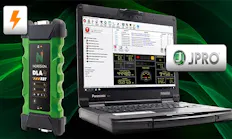
For example, this past year Noregon added CAN network diagnostics to JPRO and introduced its CAN Mentor application. The company also expanded verified repair procedures in NextStep Repair and added interactive wiring diagrams to Fault Guidance.
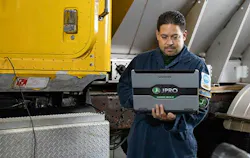
“As trucks have added more modules, sensors, ADAS technology, and vehicle networks, technicians need better visibility into CAN communication issues, root causes, and how systems interact,” said Jason Hedman, product manager at Noregon. “Fleets are also asking for more remote and predictive capabilities so they can understand what’s happening before the truck ever reaches the bay.”
Hedman said all-makes tools can give technicians an understanding of a vehicle’s overall health across components regardless of make or model. Aftermarket tools can now also handle much of the daily diagnostic workload, including reading and clearing codes across makes and systems, monitoring live data, performing bidirectional commands such as regens and resets, and linking technicians with repair information.
OEM software, however, is still needed for some programming and reflashing, specialized tests, security-access procedures, and certain newer or less common faults.
Richard said his shop initially used OEM programs because that was what technicians knew, but later added JPRO, in part, because its consistent interface is simpler for less experienced techs and those working on the road.
“The technicians are grabbing the JPRO first; the simplicity is awesome,” Richard said, adding that aftermarket platforms can’t fully replace OEM software. “They’re knocking on the door, but when you get to a more complex problem, they’re not there yet.”
Finding the right solutions
Managing the required mix of OEM and aftermarket solutions can create another layer of complexity. Richard said one Dell laptop at the shop has about 15 OEM platforms loaded on it. “We just got a laptop and it took us two days to get it set up,” he said.
Independent shops are also constrained by which programs manufacturers make available. Abraham Sandoval, owner of T&T Repair, said the software mix a shop needs is largely dictated by the equipment it sees most often.
T&T Repair handles a high volume of over-the-road equipment and has invested in software from Detroit Diesel and Cummins. “With Volvo and Paccar, you have to have the right software to accurately diagnose,” Sandoval said.
However, some equipment may require its own specialized software to see operating data, clear faults, or perform calibrations, and gaining access to those programs can be difficult for independent shops.
“We have customers with forklifts and have no way of hooking up to it,” Sandoval said, adding that specialty software for cranes and reefer units is often restricted to dealers or larger fleet customers. “The dealers don’t like to give it up. They want you to take it to the dealership.”
Mobile and on-site provider Uptime Fleet Service also maintains multiple software types. “We are fully brand agnostic,” said Justin Steen, operating partner at the company. “Being brand agnostic, we load all OEM software on each laptop.”
Access to the hardware itself has become important enough that Uptime now equips one laptop per service truck. “We had circumstances where we had someone driving three hours to run a laptop to someone,” Steen said.
Still, having the software available is only part of the equation. “You need to know how to use it to get to the root cause,” Steen said.
Getting to the root cause
Shop operators and technology providers said fault codes should be viewed as guidance rather than an answer. “Fault codes read are assumptions made, but they’re not a process to be followed,” Gattamorta said, adding that the same code can point in several directions at once. “An emissions-related code might be caused by a failing sensor, a wiring issue, a communication problem or another fault elsewhere in the system.”
Mike Heath, marketing manager at Diesel Laptops, said a code simply tells techs what a truck noticed, not what’s broken. “If it flags a sensor circuit, that could mean the sensor is bad, a wire is chafed through, a connector is corroded, or something mechanical is throwing the sensor off in the first place,” he said.
One fault can also be related to another system or be the result of a problem farther upstream, which makes focusing on a single code risky, particularly as systems become increasingly interconnected.
“Because trucks have complex systems that are all interconnected, even one fault code may not tell the full story or identify the root cause,” Hedman said. “Technicians need to go through the proper diagnostic process, including checking things like batteries, power and ground, wiring and related components.”
Multiple active faults can complicate the process further. Sandoval said some OEM diagnostic systems help technicians determine which fault should be addressed first since it may be triggering the others. “It makes it 10 times easier. You’re going in there blind if you have all three check-engine lights on,” he explained.
Diesel Laptops outlines a similar progression through its Diesel Repair. After identifying a code, techs can look at the live data present when the fault occurred, review other codes logged around the same time, physically inspect wiring, connectors, and grounds, run bidirectional tests instead of relying on stored data alone, compare readings with known-good specifications, and then follow the appropriate troubleshooting procedure.
Heath said techs and drivers can get into trouble when they treat the code as the answer instead of evidence to investigate. Mistakes he sees include clearing a code instead of fixing it, “assuming one code means one problem, when one cause can trigger codes across DPF, SCR, and EGR all at once.” He also discouraged “swapping a part just because the code named it, without checking if it’s really the problem, which can lead to repeat visits and longer downtime.”
Ultimately, the diagnostic tool can narrow the search, but it shouldn’t replace physical verification. “Somebody still has to get their hands on it, check the wiring, watch the live data, and physically test to know for sure what’s wrong,” Heath said.
Building out a structured process
For shops, the challenge is creating a diagnostic process that technicians follow consistently rather than relying primarily on intuition, previous experience, or the first fault that appears.
“Technicians have a massive impact on our business,” Gattamorta said. “They decide what to check, what to assume and what to ignore.”
High-performing shops don’t jump directly to replacing parts. “Instead, they review fault history, verify the basics through visual inspections, analyze live vehicle data, follow guided troubleshooting procedures and validate the failure before making a repair decision,” Gattamorta added. “Ultimately, root-cause diagnosis is about replacing assumptions with evidence.”
Hidden problems, knowledge gaps, fragmented information, and misdiagnosis can all result in repeated repair cycles, and roughly 30% of service calls aren’t resolved on the first attempt, according to Gattamorta. He added that misdiagnoses that lead to a comeback typically cost about three times more than the original repair.
A low-fuel-delivery-pressure fault, for example, could lead a technician toward injectors, a high-pressure fuel pump or more extensive fuel-system repairs, Gattamorta said. Working through the diagnostic process could instead identify a plugged fuel filter, contaminated fuel or a lift-pump problem. Assuming the worst can lead to a repair that costs $2,500 to $12,000, but the actual fix, once the process rules out the obvious causes, could be as little as $150 to $350.
In some cases, fault codes may not even be part of the jumping-off point. A truck can have an operating complaint without setting an obvious code, leaving the technician to evaluate the vehicle through live data and functional testing. “Maybe the engine is sounding weird, and there isn’t a check-engine light, so you have to go in there and check parameters, do a cylinder cutout test,” Sandoval said.
About the Author
Related
 TravelCenters of America
 Getting surgical with truck diagnostics