As EPA27 looms, Petro-Canada provides more info on PC-12 version of Duron HDEOs
Key Highlights
- API PC-12 oils introduce new performance requirements and lower phosphorus limits for next-generation diesel engines.
- Fleets must verify OEM oil recommendations before switching between CL-4 and FB-4 categories.
- Oil analysis can help maintenance teams monitor new formulations and evaluate potential drain interval changes.
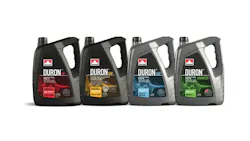
There are only 41 days left until the EPA’s low-NOx rule takes effect—and with it come new heavy-duty engines and the engine oils that lubricate them. On the engine side, OEMs (excluding Paccar) have each outlined how they plan to reduce NOx emissions by 82.5% from current limits. But fewer specifics have been revealed by the oil marketers developing API PC-12 products to pair with the new engines.
That is starting to change as the deadline approaches, with Petro-Canada releasing new reports this week on its CL-4 and FB-4 oils.
The PC-12 specifications replace the CK-4 and FA-4 categories introduced in 2017 and are intended to meet the needs of newer diesel engines and emissions systems, with tighter limits on sulfated ash, phosphorus, and sulfur (SAPS), along with additional performance requirements for wear protection and oxidation control.
For fleets, this change means taking a closer look at which oils are approved for each engine. CL-4 is designed as the successor to CK-4 and is backward-compatible with previous active API C-category oils, subject to OEM recommendations. FB-4 covers lower-viscosity oils intended for engines designed to use them and is not universally backward-compatible with FA-4.
Maintaining wear protection with less phosphorus
One of the biggest changes is the limit on phosphorus. The new categories limit phosphorus to 0.08%, and while the additive has long played an important role in engine wear protection, it can also contribute to contamination of aftertreatment systems. That puts more pressure on lubricant developers to maintain wear protection while reducing the amount of phosphorus in the formulation.
Petro-Canada said advances in additive chemistry are helping to address that challenge. Dispersants, for example, "are more efficient at binding humidity in solution," which reduces soot-related wear. The company also pointed to changes in engine design and materials that have helped reduce soot production and improve wear resistance.
“More is demanded of the oil from less chemistry, and that's the formulation challenge in one picture,” said Darryl Purificati, senior technical advisor for OEM and automotive at Petro-Canada Lubricants, during a press event promoting the coming changes to its Duron lineup. “It's a story of taking something away and adding performance anyway.”
The company reported that its next-generation Duron formulations exceeded several PC-12 engine-test requirements. In the Detroit Diesel DD13 liner-scuffing test, the company's CL-4 formulation ran for more than 200 hours, far surpassing the 31-hour minimum requirement. The company also reported results above the required performance levels in Cummins and Caterpillar engine tests.
Lower-viscosity oils for the right application
The new specifications also bring more options for lower-viscosity oil, which can help reduce internal engine friction and improve fuel economy. But that doesn't mean a lower-viscosity oil is right for every truck.
The FB-4 category is designed for lower-viscosity oils and engines approved for their use. CL-4, meanwhile, succeeds CK-4 and is backward-compatible with previous active API C-category oils, subject to OEM recommendations. FB-4 is not universally backward-compatible with FA-4 or older engines.
For fleets with a mix of engine models and model years, that distinction matters. Using the wrong oil can cause issues, particularly within shops that have multiple products stocked and serviced. Fleets should check OEM recommendations before changing viscosity grades or moving to a different category.
"The majority of fleets are familiar with the split categories, but now we have that little added nuance where FB-4 isn't necessarily backward compatible with FA-4," said Purificati. "One of the biggest missteps is misapplication, using the wrong oil in the wrong units... It will continue to be a story of education with OEM recommendations and lubricants technical advisor support."
Oil analysis can help guide the transition
Fleets should also review their oil analysis programs as they begin using the new categories. A change in formulation or viscosity grade gives maintenance teams an opportunity to monitor how the oil is performing in specific engines and applications, and make adjustments as necessary.
Steve Krawiec, R&D product development manager for Petro-Canada, recommended establishing a baseline with a fresh sample of the new oil before putting it into service.
The company also said the new formulations could provide opportunities to extend drain intervals, but that shouldn't be an automatic change. Fleets should continue to use OEM recommendations as their starting point and rely on analysis and guidance from a lubricant technical advisor before extending intervals.
For maintenance teams, the takeaway is to approach the transition as a management decision, not simply a product replacement. Review engine requirements, make sure the correct oil is being used, and monitor results before making any broader changes to the maintenance program.
About the Author
 Lucas Roberto
Lucas Roberto is a Senior Staff Writer and producer of multimedia content for Fleet Maintenance magazine. He holds a bachelor's in media production and a master's in communication from High Point University in North Carolina.