How cordless welding technology is changing mobile repair
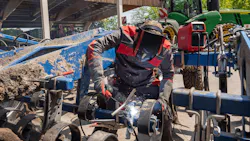
In the last 50 years, a revolution has unfolded in the professional power tool market as corded tools used for drilling, grinding, sawing, driving, and lighting have given way to cordless versions, providing convenient and powerful solutions for skilled trades in the field. In 2013, the Accupocket 150 was the first professional-grade cordless stick welding solution on the market, meeting the needs of skilled trades, fleet maintenance, and heavy equipment service techs.
Fast forward to 2026 with the second-generation cordless Stick and TIG welding solution, Ignis Battery 150/750, a new machine that offers a 90% increase in battery capacity but still weighs under 27lbs., fits easily in your service truck, and charges off a 120V 15A circuit. For larger jobs, hybrid mode allows users to charge while welding.
Features like Stick Pulse make it easy for the occasional user to weld out of position with ease. It is designed for great 6010 performance and makes repairs or the occasional broken bolt extraction a simple task.
Fabricating in the shop gets easier
New welding systems with the general fabricator and truck repair service center in mind have taken lessons learned from larger-scale production welding to make setup easier. Welding equipment suppliers take the knowledge developed over the years from production welding companies building gravel trains, trash haulers, and grain trailers:
Torch improvements
New technology allows welding torches to have game-changing features like an LED light on the handle for welding in hard-to-access locations and inspecting welds after completion – you always have a flashlight in your hand. The new Fortis machine senses when you pick up the torch and will activate the LED light, making it easier to see where you want to weld and inspect it after completion – even under a trailer.
Wire speed and JOB selection on the torch
The torches now take advantage of improvements where you can adjust the wire speed but also select a completely different schedule – you can go from a tacking parameter to weld schedule that even has trigger lock for long welds. The new feature keeps you on task, saving time and eliminating the need for walking back to the machine or a co-worker making parameter changes for you.
Another tough task common for the industry is welding different metals and wires, but knowing where to start with settings for the metal, position, and joint type. Fronius has developed Weld Wizard, a tool in their newest Fortis platform that lets you select some basic information and sets up the machine for the best success on the first try. The settings are available in metric and standard units along with AWS and European terminology – no matter what brand or type of equipment you are working on, you can start out with the best settings by using decades of production welding experience to assist you.
The advances in LCD displays have made significant improvements as well, with settings spelled out and graphics that give the user a much better idea of what their adjustment is doing to the weld performance. You no longer have to guess at what a parameter adjusts or keep “cheat sheets” around to remember your preferred setup.
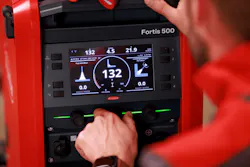
The controls are kept simple as well, with three easy-to-use knobs, menu settings, and four Easy Jobs for fast saving and recalling of favorite parameters. The system can be expanded to save and name hundreds of jobs for use on the next project.
About the Author
Wes Doneth
Regional Strategic Product Manager, Fronius USA, AWS District 11 Director