Translogik TLGX tire tool speeds up inspections, deepens tire insights
Key Highlights
- Digital tread tools can shorten tire inspections while capturing more consistent measurements.
- Tread-depth history can help fleets make better decisions about tire replacement timing.
- Tread wear patterns can reveal potential alignment or suspension issues requiring further diagnostics.
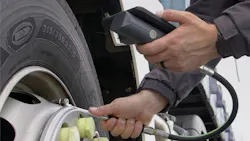
A tread depth gauge is an indispensable tool for staying on top of tire wear, as well as abnormal wear patterns that might suggest an upstream issue that’s compromising safety, performance, and tire life. The challenge some techs face is that the traditional method of using a manual tread depth gauge can be clumsy and time-consuming. Manually recording the data also eats up time and opens the door for logkeeping mistakes.
Bergey’s Commercial Tire Centers, which operates four Pennsylvania locations and a fifth in New Jersey, says it has found an efficient solution for both problems with the Translogik TLGX Series, a digital tread depth and pressure gauge from Transense distributed in North America by Haltec. When used in conjunction with Haltec’s shop inspection app, Haltec GO, their technicians are capturing more accurate tread depth measurements in one-third of the time it had been taking with traditional methods.
“Our guys had been using a manual tread depth gauge and handheld air pressure gauge, and were writing everything down on a clipboard,” said Dylan Mattio, commercial and wholesale tire operations manager at Bergey’s. “It typically took around 8 minutes per truck (10 wheels).”
Now, because the TLGX digital tool captures the data and communicates with the phone app via Bluetooth, users don’t have to stop and write everything down anymore. They just touch the tool to each rib on the tire, and tap on their phone to move from tire to tire. Mattio said it’s also easy to connect the air pressure hose to capture accurate tire pressure readings if you want.
“Once you get proficient with the digital tool, you can check tread depth and pressure on a 10-wheel truck in 2.5 minutes, tops,” Mattio said. “The app is easy to use. Some apps can go overboard with options. It’s very easy to figure out what you need to do. If you’re checking the left-front tire, you just tap on the left-front tire. It’s simple.”
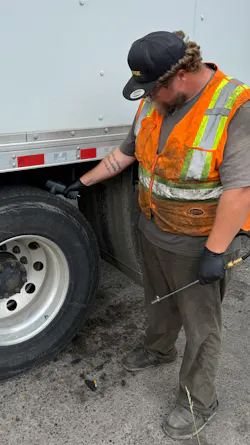
TLGX Series at a glance
- Probe measures tread depth with ±0.1 mm accuracy
- Manual hose measures tire psi
- Bluetooth connection sends data to compatible software, such as the Haltec Shop Inspect app
There are four different options that escalate in features:
- TLGX1 measures tread depth only
- TLGX2 adds tire pressure measurement
- TLGX3 adds tire pressure and RFID reader
- TLGX4 adds tire pressure, RFID, and TPMS readers
Predicting wear, analyzing defects
Quick and accurate tread depth measurements help technicians quickly determine what kind of life is left in a tire. Additionally, historical data saved in the app can help from a predictive maintenance standpoint.
“We have some fleets who want to maximize the life of each tire, which means we’ll usually pull it at 6/32,” Mattio said. “If we’re checking treads and see that a tire is still at 7/32, we could let that tire go back on the road. The digital tool makes it a lot easier to stay on top of this and make the right decisions. But we could also look at the historical data and see that a fleet really burns 32nds at a certain time of year. That kind of data and analysis helps us make better decisions at the right times.”
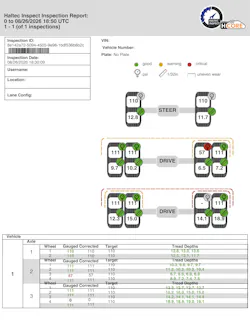
Sometimes those decisions lead to additional diagnostics. Irregular wear patterns could point to upstream issues that need to be further investigated, such as suspension component failures or alignment issues. The Haltec GO app tracks tread depth on every rib of every tire. That allows a technician to identify things like camber or toe based on the tread depth measurements and wear pattern that is taking place. In fact, the system flags any data pointing to abnormal wear, saving the technician additional time in diagnostics.
About the Author
 Gregg Wartgow
Gregg Wartgow
Gregg Wartgow is a freelancer who Fleet Maintenance has relied upon for many years, writing about virtually any trucking topic. He lives in Brodhead, Wisconsin.