Don’t let diesel tech training fall behind diagnostic tool deployments
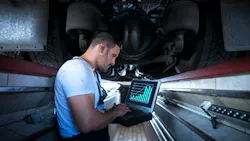
New diagnostic scan tools, cloud-based shop management platforms, and telematics-integrated repair systems promise to make fewer hands do more work. The equipment shows up on schedule. The training does not always keep pace.
A pattern that keeps repeating in mid-sized diesel shops looks something like this: A shop manager signs off on a new diagnostic platform or work order system, expecting it to close some of the gap created by an understaffed bay. The software goes live on a Monday with expectations high for the potential new efficiencies.
But by Wednesday, work orders are backing up because only two of the six technicians on the floor are comfortable navigating the new interface. The senior tech who knows the system fastest gets pulled off his own repair queue to walk junior techs through basic functions. This means the trucks they were supposed to be turning around sit longer. A few technicians quietly slide back into the paper process they trust. Now the shop is running two systems at once, and neither one has clean data. Uptime, the exact metric the new technology was supposed to protect, takes a hit during the transition instead.
That scenario will sound familiar to a lot of shop managers, even if the specific tool changes from one location to the next. The issue is not simply whether a new technology will work better than the current solution, but whether it will work for your shop and your employees. And while vendors promise quick installs and integrations, only you and your team can determine the right pace for a new deployment.
The pressure behind the pattern
The reason so many shops are reaching for new diagnostic and management technology in the first place is not hard to find. According to the American Transportation Research Institute's 2025 workforce research, 65.5% of diesel repair shops report being understaffed, with a vacancy rate near 19%. The same research found that 61.8% of technicians arrive with no formal training behind them. Getting one ready for the floor takes an average of 357 hours. A shop that is short-handed and building technicians from scratch at the same time has very little slack to absorb a new system.
Technology adoption is one logical response to a labor problem this size. The trouble is in how it gets rolled out. Shops that treat a new system launch as a single event, switched on for the whole floor at once, tend to have a slower and messier transition than shops that treat it as a phased process: a pilot group first, a defined training cadence, and a parallel period where the old process is still allowed to run while people find their feet. The line that gets underestimated here is almost never the software. It is the training and workflow time wrapped around it.
Where the real problem sits
The technology is rarely the reason a rollout stalls. A diagnostic tool or a shop management platform is only as fast as the workflow built around it, and most shops do not build that workflow before the purchase order gets signed. New equipment gets treated like a swap — pull the old scanner off the bench and put the new one in its place — instead of a change to how a technician actually moves through a shift.
That gap matters more now than it would have ten years ago, because the same shops adopting new technology are also the shops with the least slack in their schedule to absorb a bad week of training. A rollout that would have been a minor bump in a fully staffed shop becomes a real uptime problem in a shop already running short-handed.
How shops are protecting uptime during the rollout
The diesel shops handling this well are not skipping the technology. They are sequencing it differently.
They start with a single bay or a single technician group instead of switching the whole floor at once, which limits the damage if something in the new workflow does not fit the way the shop actually operates. They keep a defined parallel period where the previous process is still available, rather than cutting it off the day the new system launches, so a bad first week does not turn into a missed inspection or a lost work order. They pick one or two senior technicians to learn the new diagnostic and calibration tools first and lean on them as floor-level trainers, because technicians tend to trust a peer walking them through a new scan tool more than a memo from the office.
They lock down the diagnostic workflow and documentation standard before the rollout starts, not after, so the new platform is capturing consistent data from week one instead of six months of inconsistent entries that need to be cleaned up later. And they track uptime-specific metrics through the transition — mean time to repair, preventive maintenance compliance, and work order backlog — so a stalling rollout gets caught in week two instead of month three.
None of this requires slowing down the decision to invest in better tools. It requires accepting that the rollout is a separate project from the purchase, with its own timeline and its own owner on the shop floor.
For a general plain-language overview of OBD fault structure and the surrounding scan tool workflow, visit my blog on EngineGo.com.
About the Author
Derek Miller
Derek Miller is a Colorado-based automotive technician and columnist for EngineGo.com, bringing over 12 years of hands-on experience to major diesel performance upgrades and practical troubleshooting.