How fleets can verify technicians before hiring
Key Highlights
- Unverified technician credentials can expose fleets to safety, compliance, and liability risks.
- Regular credential checks help maintenance managers prevent expired certifications from going unnoticed.
- Digital credentials can simplify technician verification and strengthen maintenance hiring practices.

In August, Fleet Maintenance spoke with Sean Carson about the Diamond Fleet Tech Network, and one line from that conversation deserves a place on every shop wall: turnover problems usually start in the selection process, not during employment. Most maintenance managers read that as a point about attitude and fit. It applies just as much to paperwork.
A diesel tech's application can list ASE T series tests, EPA Section 609 certification, OEM training, and a brake inspector qualification. On paper, a genuine credential and an expired or invented one look exactly the same. Most shops are busy, short-handed, and eager to fill a bay, so the paper is often taken at face value.
What happens when nobody checks
In August 2025, prosecutors in Montgomery County, Pennsylvania, charged a mechanic with 81 felony counts after state troopers found commercial vehicles carrying inspection stickers with missing security features.
According to the District Attorney's Office, as reported by NBC10 Philadelphia, he had been suspended and was not allowed to perform state inspections, but he kept advertising the service and issued counterfeit state inspection certificates and annual inspection forms for commercial vehicles and entire fleets. Investigators said many of his hundreds of customers did not know he was suspended. Prosecutors said that if the vehicles had been inspected properly, they would have been taken off the road.
Every fleet that used him had a piece of paper that looked right. None of them had checked whether the person behind it was still authorized to sign it. That is the gap this article is about, and it is not limited to inspections. The same gap exists every time a shop hires a tech on the strength of certificates nobody has verified.
Why it matters beyond the shop floor
The first cost is safety. A brake job or an annual inspection done by someone who is not qualified puts drivers and the public at risk.
The second is compliance. Under 49 CFR 396.19 and 396.25, motor carriers must make sure the people doing annual inspections and brake work are qualified, and must keep evidence of those qualifications. An auditor will ask for that evidence, and "his resume said so" is not evidence.
The third is liability. After a crash, a plaintiff's attorney will look at who last worked on the vehicle and what the fleet did to confirm that person's qualifications.
The fourth is reputation. Customers who send trucks to an outside shop, and drivers who rely on in-house maintenance, trust that the right people are doing the work.
A practical verification routine
None of this needs new software. It needs a habit.
- Ask for credentials early. Put certification details on the application: credential name, number, issuing body, and expiry date. A candidate with genuine credentials will have no trouble providing them.
- Verify at the source before the offer. Check each credential with the organization that issued it, not with a photocopy or a photo on a phone. ASE certifications must be renewed every five years, so check that each test is current, not just that it was once passed. Check EPA Section 609 cards with the approved training program that issued them. For OEM training, ask the dealer network or manufacturer training portal. Keep a short record of each check: who looked, when, where, and what they found.
- Treat a lapsed credential as information, not a dead end. A good tech whose certification has expired may be worth hiring with a clear plan and date for recertification. The point is to know, and to assign work accordingly.
- Track renewals across the whole shop. One spreadsheet with every tech, every credential, and every expiry date, reviewed monthly, prevents the slow drift where a qualification lapses and nobody notices until an audit or an incident.
- Match work to qualifications. Make sure annual inspections and brake adjustments are only assigned to techs whose qualifications are on file and current. This is where verification pays for itself.
- Re-verify when something changes. Promotions, transfers between locations, and returning techs are all good moments to check again.
- Be able to show your work. When a customer or auditor asks who worked on a vehicle and how you know they were qualified, you should be able to answer in minutes, not days.
Making credentials easier to check
Verification is easier when the credential itself is easy to check. More certifying bodies now issue digital credentials with a live verification page that shows whether a certification is current, expired, or revoked.
For a hiring manager, that turns a phone call or an email to a certifying body into a 30-second check, and it means a fake or lapsed certificate is much harder to pass off.
Where your techs' certifying bodies offer this, use it. Where they do not, the routine above still works; it just takes a little longer.
Selection is where trust starts
Carson's point about turnover holds true for credentials too. Problems that surface months later as a failed audit, a comeback, or worse often started with a certificate nobody checked. Verifying tech certifications before the offer, and keeping them current afterward, protects your customers, your drivers, and your repair business.
About the Author
Rakshit Manga
Rakshit Manga is Chief Business Officer at CredSure, a digital credentialing company headquartered in Cologne, Germany. He works with certification bodies, training providers, professional associations, and employers on how credentials are issued, verified, and kept current. His focus is the practical side of trust: making sure a certificate on a resume can be checked quickly and still means what it says.
Related
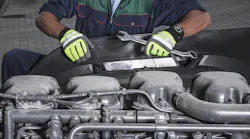 Technican Engine 189536611
 American Diesel Centers Technicians