Best Young Diesel Tech of the Year: Tommy Crenshaw
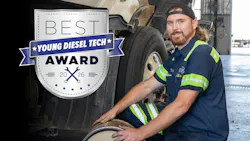
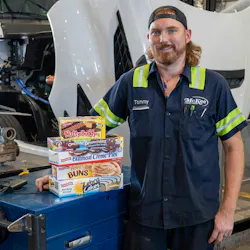
After lengthy consideration, our judges have selected Tommy Crenshaw as the inaugural Fleet Maintenance Best Young Diesel Technician of the Year. The 33-year-old is everything a fleet shop would want in a lead diesel tech. Tommy meets each shift at McKee Foods Transportation’s Gentry, Arkansas repair shop with equal measures of tenacity, loyalty, and composure, and then ends them covered in grease and with several more trucks back on the road, ensuring the supply chain of Little Debbie snack cakes remains unbroken between the bakery and the school lunch table.
Sean Carson, Tommy’s former supervisor who nominated the winning diesel tech, wrote pages and pages of complimentary words, but this is our favorite: “Tommy doesn’t just fix trucks—he elevates the team. A champion-level technician who brings heart, reliability, and leadership to every shift. You can’t teach what he brings.”
When Carson told Tommy he nominated him, he replied: “I don’t know if I would say I’m the best, but I always try to be better every day.”
That’s only a small fraction of what made Tommy our inaugural winner. Here’s the rest of his story:
Though he has become one of Arkansas’ foremost diesel technicians, Tommy Crenshaw’s first love was the two-stroke engine. And though this simple internal combustion system never broke his heart, one broke his leg.
Technically, a friend’s homemade motocross track did the damage, but Tommy, 19 at the time, did say he should have been going faster up the newly formed jump the boys had just made. But he didn’t, and when his dirt bike hit the earth, Tommy’s right leg snapped in half, splintered bits of tibia and fibula poking through the skin.
“It was pretty rough,” he recalled. “When I got to the hospital, they picked my leg up from my ankle, and my knee just bowed.”
The compound fracture took Tommy off his feet for four months. The worst part was he had only a few months away from finishing the diesel technician program at Northwest Technical Institute. The school was 50 miles from his home, a drive he could not make in his strap-on brace, nor would it be safe to work on a truck.
It was a bad break, for sure, but breaking things was always in his nature.
“Anytime I’d get an RC truck or some sort of toy when I was younger, I’d take it all apart and sometimes get it back together,” he said.
We asked his father, Douglas Crenshaw, about it, who quickly responded, “Oh yeah, he liked to destroy everything,” chuckling that Tommy always “had a curiosity” about him.
“I just like seeing how everything works,” Tommy reasoned. “If you don’t understand how it works, you’ll never fix it.”
Destined for diesel
In 1993, when Tommy was six months old, the family moved from Sacramento to Fayetteville, Arkansas. The region is dominated by trucking, serving as a major logistics hub and home to Walmart, Tyson Foods, and JB Hunt, with FedEx, founded in Little Rock, also casting a large shadow.
Tommy couldn’t go five minutes outside without seeing a big rig rumble by. And he spent most of his time outside.
“He was more of an old-school kid and did most of his playing outside,” his dad described. “He didn’t do a lot of video games.”
And Doug told Tommy and his sister Christina to stay out, using a bell to signal they could come inside for dinner.
“I turned the cable off during the summer, so they didn’t sit in the house watching TV all day,” he said.
Tommy held down a part-time job in kindergarten—holding the flashlight while Doug, a self-professed “shade tree mechanic,” worked under the family pickup’s hood. His focus and determination were not what they are today, and Tommy would occasionally get distracted and move the light, as most kids do. “That’s probably why they invented magnetic flashlights,” Doug mused.
Tommy also spent a lot of time with his maternal grandfather, who owned a cattle farm, where he helped out and learned to repair fences and tractors, and sometimes even drive the tractors and trucks.
“He probably wasn’t seven or eight years old and driving the tractor through the pasture—and it was a manual,” Doug said proudly, emphasizing, “he had to learn how to drive a manual!” Tommy thinks he may have been 10.
Today, the McKee fleet still has one local truck with a manual transmission, and Tommy always enjoys getting to drive it, perhaps remembering those early days on the farm.
In the ‘90s, Doug also worked at a farm, a large poultry producer, as a store manager. Towards the end of the decade, he got a job at the McKee plant, working the mixing lines to ensure the plant kept pumping out the various Little Debbie confections on time. He then got a job as a truck driver while Tommy was a teen.
Revving up a career
The dirt bike accident in 2012 was a true test of young Tommy’s patience. He spent his whole life outdoors, working and racing. The injury failed to sully his easy-going demeanor or straighten his disarming smile.
“He didn’t whine or cry about it or let it get to him,” his father recalled. “He overcomes anything that comes in front of him. He’s not one of these ‘why me’ guys.”
Eventually he recovered, and Tommy said NWTI graciously comped his last semester’s tuition. It also came with a bonus: more hands-on training.
“I was able to do more live work because I had done the previous [classroom] stuff,” Tommy offered cheerfully.
Still, this setback made Tommy repeat a grueling weekly schedule which started at 9 p.m. Sunday. He got a job at the McKee plant as a utility worker, or as he puts it, “the really low person on the totem pole who does all the crappy work.”
The plan was to move over to the truck repair facility when he graduated from the diesel program. Nationally, the shop had a stellar reputation, with one of the technicians, Tyson Sontag, named grand champion of the second TMCSuperTech skills competition in 2006.
But he would have to work the graveyard shift for many months to get there. Once the workday ended at 5 a.m., he would drive over to Springdale. He’d catch a power nap in his car until classes started. Then he’d drive home and sleep a little more before his next shift.
“I would come home Friday and like sleep for like 20 hours,” he said.
Because of the distance between his home in Sulphur Springs and the plant and school, Tommy would drive around 500 miles a week.
But he muscled through it, and it was not long after finishing his “fourth” semester at the diesel school that a position opened up in the McKee shop. Now his career plan was truly coming together, and he got to move up to second shift.
And for a time, Doug even drove for McKee—and Tommy would be the one addressing his maintenance issues.
“He pretty much has accomplished everything he set his sights to,” Doug said. “I’m real proud of him.”
Winning every day
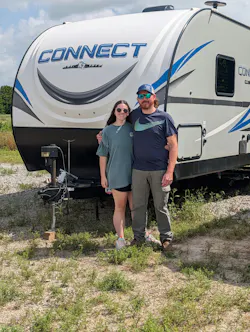
Thirteen years later, Tommy is exactly where he wants to be, with a wall full of certifications and mastery of several engines and systems. He even got married to his wife, Cady, a few years ago.
Tommy Crenshaw at a glance
- Born: 1993
- Company: McKee Foods Transportation
- Title: Master Lead Technician
- Location: Gentry, Arkansas
- Education: Northwest Technical Institute diesel program
- Certifications: ASE Master (T2–T8) and L2 Advanced Diagnostics; Master-Level Welder; certified under EPA 608 & 609; CDL-A; TIA.
- OEM training: Cummins, Detroit/DTNA, International, Paccar, Volvo. Also master-trained on Bendix, ConMet, and Meritor systems.
- Awards: Arkansas Trucking Championship Team Award & 3rd place (2026); 2nd place (2025); finished 2nd place in 6 of 12 skills stations (2024).
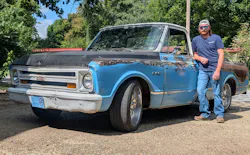
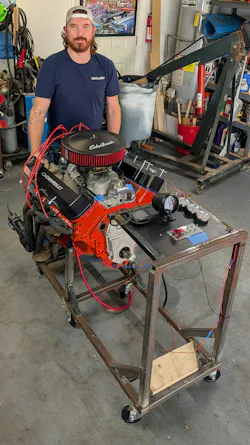
Somehow he has maintained a prodigious workload, accruing up to 60 hours (frequently 50) a week as McKee’s lead tech and another 10 on Mondays at his friend’s shop, where he works on anything with a motor.
That extra job does not seem to impact his McKee performance.
According to Eric Rusk, McKee’s Gentry fleet maintenance superintendent, “Tommy is almost always here, even during inclement weather— and when he is, he’s engaged in his work.”
What’s more impressive is the high performer’s consistent, steady demeanor. Rusk noted that “Tommy’s almost always upbeat and ready to tackle things head-on. And he always seems to stay pretty level-headed even during stressful repairs.”
And when younger techs need to attend OE training, Rusk said Tommy will stay late and fill in. And of course, if a crucial job needs finishing, Tommy doesn’t leave until it’s done.
“When the shop is short-staffed on Saturday nights due to illness or any other circumstances, he covers the shift, showing true leadership and ownership of his team and the shop,” his former supervisor Carson said.
When asked what keeps him going, he replied without pause, “I just love fixing things.”
In particular, the 6-foot-tall diesel tech likes fixing big things, noting “it’s the most fun thing in the world to have to crane your stuff off because it’s so heavy.”
That fun often converts to higher uptime for the fleet. For example, Tommy leverages that crane to far outpace certain standard repair times, specifically when the mostly Volvo fleet needs a D13 engine rear-structure reseal. When the timing plate gasket near the gear train fails, it causes an external oil leak. Instead of removing the entire engine to access the various gears, Tommy uses a crane to support the engine and complete the extensive repairs. It’s by no means an easy job: “Nothing quite fits,” Tommy explained. “You’ve got to really finagle everything out, and then obviously reset the backlash on all your gears—a lot of torquing in a very small spot.”
Volvo recommends several OEM specialty tools to perform the job, which Tommy said are very expensive and the shop does not have, but he makes do with what is available. Dealers quote the repair time between 40 and 50 hours if you take the engine out of the frame rails; Tommy can do it consistently in 23 hours.
“I’m sure there’s people that can do it faster,” he offered humbly, before proudly adding “but I’ve done like 50 of them and can literally tell you every nut and bolt, and there are no extra parts…I just kind of [streamlined] it.”
Rusk noted Tommy is “constantly looking for some improvement and a quicker way to do the job, but still get it done in a quality way.”
Like anyone, he has his off days, and shortcuts don’t always go as planned. A few years ago, when Rusk was his direct supervisor, Tommy broke some bad news: He was doing a clutch replacement and “instead of following the exact process to remove this thing, he thought he’d take a shortcut.” This led to Tommy dropping a $1,000 clutch disc.
Rusk was impressed that Tommy came right to him and admitted he screwed up.
“He doesn’t try to hide things,” Rusk said. “He’s up front, and he’ll own his mistakes.”
And if he is “going down a rabbit hole” and spending too much time on a job, Rusk said Tommy has no problem asking for help or advice if it benefits the overall fleet uptime.
The shop also uses Volvo’s OEM-level repair software, including Case Based Reasoning (CBR) and Workshop Toolbox. Rusk explained that Tommy will often refer to these, checking for other reported cases, and will even pull a similar truck into the bay to compare measurements “to see if we can really pinpoint the issue.”
Tommy enjoys the small jobs just as much as long as they are challenging: “I find more joy in searching through, you know, 13 miles of wire than I do changing oil.”
He also appreciates when the answer doesn’t come easy. That’s been the case with the All-new Volvo VNL 860s that come through the shop. The redesigned trucks use a 24V architecture. Even for a master tech, it takes all his skills to clear the “Christmas tree on the dash,” representing all the fault codes that need resolved.
“When you release a truck that’s 85% new, it takes many years for it to figure out what actually works and what doesn’t,” he said of the Volvo changes. He noted using higher voltage requires less amperage, so the wires can be smaller and reduce overall weight.
“There’s nothing better than getting your butt kicked for a while and then finally just landing on the problem,” Tommy asserted.
Leading by example
Carson said Tommy’s technical abilities, which do help the shop “save significant labor costs by keeping major work in-house,” were not the main reason he spent the time to nominate him. It was more about the intangibles Carson saw that he brought to the team.
“Tommy was the heartbeat of that shop,” Carson said. “The personality of the shop could change depending on how Tommy interacted with everyone around him. He genuinely cared about the other technicians, joked with them, made people laugh, and had a way of getting people engaged while still being one of the strongest technicians in the operation.”
Carson also said Tommy implemented pre-shift inspections to help the shop stay clean, safe, and organized, reducing injuries and lost parts. He’ll also take the time to help troubleshoot other techs’ work and test drive those trucks to ensure repair accuracy.
Rusk agreed, saying if co-workers “have questions and want to bounce ideas or get some direction, he’s always more than willing to help them.”
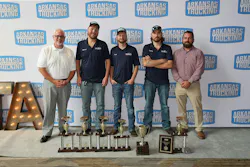
All those years of help and picked-up shifts paid off during the Arkansas Trucking Championship skills competition this summer. Alone, Tommy's best finish was in 2025: second place. This year, he finished first in the written exam and fifth-wheel competition, which, combined with his teammates’ average scores, helped McKee win the Team Award.
Rusk asserted this was a true underdog win, as his techs were truly up against major fleets with vast training resources like Walmart and FedEx, as well as Rush Truck Centers.
Tommy added he and his coworkers go straight from live work on Thursday to the competition on Friday, allowing little to no time to prepare. What you see is what you get, which adequately sums up Tommy.
And while it’s clear Tommy has the will to do just about anything in his career, and does enjoy leading the team, he doesn’t plan on taking a full-time managerial role anytime soon.
That would mean giving up the thing he loves most: fixing things.
“I am going to keep slinging wrenches until it’s not my passion,” he concluded. “When I don’t wake up and breathe for it every day, that’s when I’ll look into slowing down and doing more of a leadership role.”
About the Author
 John Hitch
John Hitch
Editor-in-chief, Fleet Maintenance
John Hitch is the award-winning editor-in-chief of Fleet Maintenance, where his mission is to provide maintenance leaders and technicians with the the latest information on tools, strategies, and best practices to keep their fleets' commercial vehicles moving.
He is based out of Cleveland, Ohio, and has worked in the B2B journalism space for more than a decade. Hitch was previously senior editor for FleetOwner and before that was technology editor for IndustryWeek, and managing editor of New Equipment Digest.
Hitch graduated from Kent State University and was editor of the student magazine The Burr in 2009.
The former sonar technician served honorably aboard the fast-attack submarine USS Oklahoma City (SSN-723), where he participated in counter-drug ops, an under-ice expedition, and other missions he's not allowed to talk about for several more decades.