2025 Fleet Maintenance Benchmarking Report: The technician shortage

Throughout 2025, the technician shortage remained a big topic of conversation. Industry numbers point to a major problem brewing as we approach 2030, as too few new techs are entering the field as older ones retire or leave the shop. So dire is the situation that even a six-figure salary from Ford cannot lure enough candidates through their dealers' bay doors. Ford CEO Jim Farley lamented in November that the OEM has 5,000 open technician positions that pay $120,000.
That got a ton of mixed responses, and plenty of well-deserved skepticism from actual wrenchturners. As David Macholz, founder and president of the International Advanced Vehicle Technology Education and Credentialing Coalition (AVTECC), pointed out in an opinion piece for us, "Less than 20% of the industry comes anywhere near $100,00 per year." Data compiled by PersonalFinanceData.com found that only 5% make over $105,000 annually.
There's also skepticism that there even is a tech shortage. Shops that pay well and treat their employees with respect are rich in able bodies, so they may dismiss warnings about the tech shortage as complaints from poorly run shops, or that the data is cherry-picked to stoke fear and manipulate the masses. On the other hand, fleets that have to wait weeks for their asset to be repaired will think the problem is very real. Whether you run an auto or diesel shop, and where you live, will also determine your point of view.
We are constantly trying to make sense of it ourselves here at Fleet Maintenance. We caution making assumptions based on anecdotal evidence. If you wait several days or weeks for a vehicle repair, yes, it could be because the shop is understaffed. Or it could be the shop is staffed appropriately, but it's just a busy time of year. Or maybe they are so much better than the competition that everyone has learned to go to them and they are still planning how to meet the new demand through expansion.
In essence, the tech shortage is in the eye of the beholder. That said, here are several data points from the industry paired with technician-related results from our 2025 benchmarking survey. They won't prove the validity and severity of the tech shortage, but should give you a snapshot of the current environment as you prepare your future staffing plans.
Notes: Numbers rounded for ease of reporting and may not add up to 100. All data collected by Fleet Maintenance Management Survey unless otherwise noted.
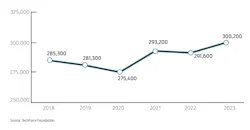
Total diesel techs employed
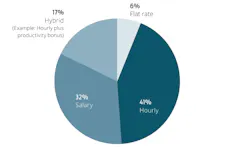
Pay structure: How fleets, independent shops, and dealers differ

How do Fleet Maintenance survey respondents compensate technicians?
- 63% of diesel techs believe their shop offers good benefits
- 78% of technicians and students agree that pay is the biggest industry issue
Hiring woes
Hiring techs was the top issue for shops (61%) and second biggest issue for fleets (48%), according to respondents surveyed for Noregon's Unpacking the Commercial Vehicle Diagnostics Market.
Does the industry have an image problem?
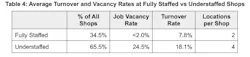
Nearly two-thirds of shops (65%) surveyed by the American Transportation Research Institute said they were understaffed. Those shops had a 18% turnover rate,while fully staffed shops reported a 7.8% rate, according to the "Addressing the Shortage of Qualified Diesel Technicians 2025 report.
Fleet Maintenance survey respondents said their employee levels are:
- Just right: 54%
- Understaffed: 33%
- Overstaffed: 1%
- N/A: 11%
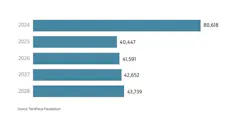
New diesel tech projections
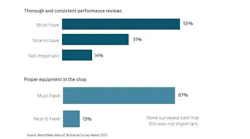
What are technicians and students looking for in potential employers?
2023 Postsecondary diesel completions:
- 11,310 total
- 7,646 graduated from 307 public schools/institutions
- 3,664 graduated from 44 private schools/institutions
Source: IPEDS database
Shops reported one-third of graduates were unqualified in 20 core skill areas.
Four-day work week
- 94% of techs surveyed by FM in July were in favor of a 4-day work week.
- 27% said they had implemented it and it was successful. 6% said they tried and went back to five days.
About the Author

John Hitch
Editor-in-chief, Fleet Maintenance
John Hitch is the award-winning editor-in-chief of Fleet Maintenance, where his mission is to provide maintenance leaders and technicians with the the latest information on tools, strategies, and best practices to keep their fleets' commercial vehicles moving.
He is based out of Cleveland, Ohio, and has worked in the B2B journalism space for more than a decade. Hitch was previously senior editor for FleetOwner and before that was technology editor for IndustryWeek and and managing editor of New Equipment Digest.
Hitch graduated from Kent State University and was editor of the student magazine The Burr in 2009.
The former sonar technician served honorably aboard the fast-attack submarine USS Oklahoma City (SSN-723), where he participated in counter-drug ops, an under-ice expedition, and other missions he's not allowed to talk about for several more decades.

Alex Keenan
Alex Keenan is an Associate Editor for Fleet Maintenance magazine. She has written on a variety of topics for the past several years and recently joined the transportation industry, reviewing content covering technician challenges and breaking industry news. She holds a bachelor's degree in English from Colorado State University in Fort Collins, Colorado.

Lucas Roberto
Lucas Roberto is an Associate Editor for Fleet Maintenance magazine. He has written and produced multimedia content over the past few years and is a newcomer to the commercial vehicle industry. He holds a bachelor's in media production and a master's in communication from High Point University in North Carolina.