By end of 2027, derates will be thing of past for eligible Mack, Volvo trucks
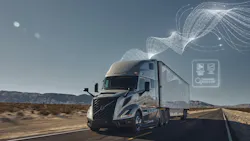
By the end of 2027, inducement software will be available for all eligible Mack and Volvo diesel trucks in the U.S. made in 2010 and beyond, parent company Volvo Group announced in separate releases. The updated software will provide a longer timeframe for operators to address issues with the DEF system before the vehicle derates.
The software update reflects revised guidance from EPA that affords fleets substantially more time to repair DEF-related faults before the vehicle enters reduced-speed operation. Under the updated guidance, the final inducement speed increases from 5 mph to 25 mph, while the repair window massively widens from four hours to as much as 160 hours.
Volvo Trucks North America has installed the updated software on all-new VNL and VNR models equipped with D13 VGT and D13 Turbo Compound engines built since May 2026. Mack Trucks began incorporating the software at the same time on Pioneer and all-new Anthem models powered by the MP13 engine.
Read more: Mack Pioneer vs. Anthem: How to optimize fleet operations
The update has also been available through remote software downloads for many newer trucks already in service. Both manufacturers expect remote updates to be available for trucks MY2024 and up by the end of the summer. The rollout will expand to all eligible post-2014 vehicles by the second quarter of 2027 and all eligible post-2010 vehicles by the end of 2027. Owners of trucks without remote update capability will be able to receive the software through Volvo Trucks and Mack dealerships.
"These updates are about giving our customers more flexibility and confidence when they are on the road," said Peter Voorhoeve, president of Volvo Trucks North America. "By extending the repair window and increasing the final inducement speed, we are helping drivers keep their trucks on the road and safely reach a service location, reducing the risk of unexpected downtime and supporting the uptime and productivity our customers depend on every day."
Mack President Jonathan Randall said the expanded rollout supports both regulatory compliance and fleet productivity.
"Providing customers with practical solutions that support both compliance and operational efficiency remains a priority for Mack," Randall said. "By introducing this capability on new vehicles and establishing a clear path for legacy vehicle updates, we are helping customers maintain productivity while meeting evolving regulatory requirements."
DEF issues heard 'loud and clear'
The inducements were initially conceived as a compliance measure to ensure SCR systems remained functional and continued scrubbing NOx from diesel exhaust. To ensure this, the systems have included inducement logic to automatically slow the vehicle down if the system registered an issue, such as a sensor fault or lack of DEF in the system. Basically, you either get the issue fixed or you don’t move. If trucks were people, the Supreme Court would have struck this down under the eight amendment years ago for being “cruel and unusual punishment.”
For smaller fleets and farmers, derates have been cruel, and unfortunately, all too usual. It could take weeks to get a DEF sensor replaced and the truck or tractor up and running, EPA Administrator Lee Zeldin noted last summer, when he revealed the new strategy to reduce the measure’s severity.
“We have heard loud and clear from small businesses across the United States that the current DEF system is unacceptable," Zeldin said at the Iowa State Fair in 2025. "It is unacceptable that farmers, truckers, construction workers, and many other small businesses continually experience failures of diesel-powered equipment when they need it most—costing millions of dollars in lost productivity.”
The EPA later requested critical fault data from 14 OEMs. Eleven provided the data, and shortly after the EPA issued new guidance that removed the requirement for DEF sensors entirely, allowing NOx sensors to perform their monitoring responsibilities.
The EPA has included provisions to remove derates entirely as part of a significant revision to the 2027 low-NOx regulation. Under the new guiance, deartes would be replaced by audible alerts and dashboard warning lights.
This July, Congress also introduced a bill called the Diesel Engine Flexibility Act (H.R. 9619), which would create a 10-year”safe harbor” for recent guidance around DEF systems. It would also protect repair shops that make temporary adjustments to the systems, now allowable under certain conditions, from future prosecution by an EPA that would classify the changes as tampering. The DEF Act does not allow the permanent disabling of emissions systems.
About the Author
 John Hitch
John Hitch
Editor-in-chief, Fleet Maintenance
John Hitch is the award-winning editor-in-chief of Fleet Maintenance, where his mission is to provide maintenance leaders and technicians with the the latest information on tools, strategies, and best practices to keep their fleets' commercial vehicles moving.
He is based out of Cleveland, Ohio, and has worked in the B2B journalism space for more than a decade. Hitch was previously senior editor for FleetOwner and before that was technology editor for IndustryWeek, and managing editor of New Equipment Digest.
Hitch graduated from Kent State University and was editor of the student magazine The Burr in 2009.
The former sonar technician served honorably aboard the fast-attack submarine USS Oklahoma City (SSN-723), where he participated in counter-drug ops, an under-ice expedition, and other missions he's not allowed to talk about for several more decades.